|
|

|
|
|
|
|
|
This website contains information about recent changes mainly in GST laws. It also contains Articles on various topic in GST. Please visit the website and read more.
|
|
|
|
Dear Reader,
|
Please find newsletter for your reading and reference.
|
|
Newsletter no. 89 dated 25.06.2023
|
|
|
Index of the Newsletter
- Recent updates
- GST in Media
- Press Release
- Article
- Lawgics by Ms.Nidhi Aggarwal
- GST notes by CMA Anil Sharma
- Book by CMA Anil Sharma
|
|
|
|
|
|
|
The Hon’ble Gujarat High Court in the case of M/s Shivani Enterprise Proprietor Vibhor Shivkumar Vaid dismissed the writ petition challenging the Show Cause Notice and the consequent Order-in-Original imposing penalties for alleged fraudulent availment of ITC from a non-existent supplier
|
Industry bodies have sought relief from goods and services tax (GST) rules that prevent businesses from claiming input tax credit (ITC) — the credit for GST already paid on goods and services used for business — on certain expenses, according to people familiar with the matter.
|
Based on ground intelligence and analysis of data on outward foreign remittances, the Income Tax Department has identified several suspicious entities that remitted large amounts of foreign exchange over the last three years.
|
|
|
|
|
|
|
|
Industry bodies have sought relief from goods and services tax (GST) rules that prevent businesses from claiming input tax credit (ITC) — the credit for GST already paid on goods and services used for business — on certain expenses, according to people familiar with the matter.
|
A key demand is to allow companies to claim ITC on GST paid on construction work and materials such as cement and steel used to build warehouses, data centres, and other properties that are later used to provide taxable services.
|
Currently, Section 17(5) of the Central GST Act restricts ITC on certain construction-related expenses for immovable property, including works contract services and goods and services used for construction, subject to specified exceptions.
|
Industry argues that this increases the cost of setting up such facilities. For instance, a data centre may pay GST on construction work, cement and steel, but cannot fully use the tax paid as a credit against the GST it collects on its services.
|
Industry bodies have also sought a review of Section 17(5)(b), which blocks ITC on several expenses that are part of regular business operations. These include food and beverages, outdoor catering, health services, leasing, renting or hiring of motor vehicles, and life and health insurance, subject to specified exceptions.
|
These expenses can account for a significant share of spending in employee-heavy sectors such as global capability centres (GCCs), industry representatives said. Allowing ITC on such expenses would reduce tax costs, improve the competitiveness of Indian operations, and support the government’s ease-of-doing-business objective, they said.
|
Industry has proposed amending Section 17(5)(b) to allow ITC on these expenses. It has also cited practices in countries such as the UK, Canada, Singapore, and Germany, where indirect taxes paid on certain business expenses can, subject to local rules, be offset against tax liabilities.
|
“The construction cost for warehouses and data centres used to provide taxable services stops credit from getting stuck as a cost in the supply chain. That lower cost of doing business will make India a more attractive investment destination, especially for capital-intensive sectors like data centres, logistics and warehousing,” said Nitin Vijaivergia, partner, PwC & Co LLP.
|
He said allowing such credit would also bring India closer to global value-added tax (VAT) norms, where credit on construction costs is generally allowed as part of the VAT system.
|
“The same logic applies to food, health insurance, and other employee-related spends. These blocks were written when GST was new; business models have since moved on, with companies investing heavily in employee wellness as part of retention strategy or statutory need. Freeing up credit here will meaningfully cut operating costs and bring India’s ITC regime in line with global practice,” Vijaivergia said
|
Source: Business Standard
|
|
|
|
|
|
|
|
Income Tax, Income Tax misc
|
Income tax department issued FAQs on the Taxation and Other laws (Amendment) Bill, 2026.
|
|
|
|
|
|
|
|
The Goods and services tax (GST) authorities are planning to electronically record details of invoices issued by shops and businesses to retail consumers under a pilot project covering select sectors from April 1, 2027, to improve tax compliance, two officials told Business Standard.
|
The move will enable tax officials to access the large volume of retail transactions in sectors prone to tax evasion and assess whether businesses are correctly reporting their sales and paying the appropriate amount of GST, they said.
|
Currently, businesses with annual sales of more than ₹5 crore have to electronically register invoices issued to other businesses on a government-designated portal, subject to certain exemptions. Extending this reporting requirement, known as e-invoicing, to sales to end consumers is the next logical step towards enhancing tax compliance.
|
Businesses currently report their aggregate sales through GST returns rather than individual retail transactions. E-invoicing at the retail level is expected to help tax officials match these transactions with the sales reported by businesses in their tax returns, one of the officials said.
|
The GST Council, at its 54th meeting in September 2024, had recommended a voluntary trial of electronic recording of consumer bills in select sectors and states.
|
The Council proposed introducing the system on a voluntary basis initially and subsequently making it mandatory in sectors prone to tax evasion, according to the minutes of the meeting, which are publicly available. Restaurants were cited as one of the sectors where retail e-invoicing could be introduced.
|
The Council had identified several potential benefits, including better tax compliance, environmental gains from avoiding physical invoices and lower costs. Consumers would receive e-invoices on their mobile phones.
|
Officials said the government was now keen to take the pilot project forward.
|
An email sent to the Ministry of Finance on October 23 seeking comments for the story remained unanswered till press time.
|
Banks, insurers and non-banking financial companies (NBFCs) are among those currently exempt from e-invoicing for transactions with other businesses. However, the Centre and state governments are also considering bringing their business-to-business invoices under the requirement, the first official said. This is not part of the proposed pilot project.
|
Managing retail sales data
A third official, who also spoke on condition of anonymity, said the idea of electronically capturing retail invoices had been discussed for years, but implementation was delayed by the challenge of processing the enormous volume of small-value transactions taking place every day.
|
Storing and processing such volumes would require substantial server capacity, and the earlier technology infrastructure was not equipped to handle that scale, the official said.
|
Retail e-invoicing could also help foreign tourists claim GST refunds on purchases made in India before taking the goods back to their home countries, as customs officers would be able to verify the tax paid more easily, the official said.
|
Another government official said the GST Network (GSTN), which manages the technology backbone of the GST system, awarded Infosys a fresh seven-year contract in 2025 after the original arrangement, which had already been extended beyond its initial five-year term, ended.
|
Officials believe the new arrangement has factored in the need for higher storage and processing capacity.
|
They said storing invoices in a common system could reduce compliance costs by enabling more efficient invoice matching and audits, instead of relying on separate statements and manual checks.
|
Digital records carrying timestamps could also improve transparency and make subsequent changes to invoices easier to track, they said.
|
The government is also studying how countries such as Brazil and Chile operate their e-invoicing systems. Both have long used electronic invoices for business and consumer transactions, officials said.
|
Experts said the impact of e-invoicing in retail could be significant. “E-invoicing could be leveraged by the government to incentivise customers who seek GST valid invoice for their purchases, thereby encouraging the unorganised sector moving to the organised,” an tax expert said.
|
Experts also welcomed the possibility of withdrawing the business-to-business (B2B) exemption for financial sector entities. Another tax expert said e-invoicing in sectors such as banking, NBFCs and insurance would bring all B2B transactions in the economy under the system.
|
“Customers of these sectors would also benefit. It would be important to give sufficient time to these sectors as they have very high volumes of B2B transactions, and also use several custom/bespoke billing systems,” he said.
|
“Overall, it is a positive change and the GST Policy wing can collaborate with the sector associations to make this a success,” he said.
|
On B2C e-invoicing, he said it could enable better integration of digital payment and invoicing systems, supporting automated reconciliation and reporting.
|
Another tax expert said banks and NBFCs handle millions of small charges every day.
|
“Keeping the B2C pilot focused on technology-enabled sectors such as organised retail, e-commerce, quick commerce and online gaming while moving financial institutions only on the B2B side first, is a practical approach,” he said.
|
Source: Business Standard
|
|
|
|
|
|
|
|
Under the current GST returns framework, taxpayers are required to furnish details of their outward supplies in FORM GSTR-1. Based on such details, a statement of input tax credit (ITC) is made available to the recipients in FORM GSTR-2B for availment of input tax credit. To aid furnishing of return in FORM GSTR-3B of a tax period, tax liability of a supplier is being auto-populated on the portal based on the details furnished in his FORM GSTR-1, and available input tax credit is being autopopulated in his FORM GSTR-3B on the portal based on his FORM GSTR-2B. Currently, taxpayers can edit such auto-populated tax liability and available input tax credit in FORM GSTR-3B, before filing the same. Such editing may result in discrepancies between
|
a. tax liability reported in FORM GSTR-1 and tax paid in FORM GSTR-3B; and
|
b. ITC available in FORM GSTR-2B and ITC availed in FORM GSTR-3B.
|
2. These discrepancies often lead to issuance of demand notices by tax officers and system generated intimations to taxpayers. In view of reducing the mismatches between the tax liability reported in FORM GSTR-1 and the tax paid in FORM GSTR3B, and between the ITC available in FORM GSTR-2B and the ITC availed in FORM GSTR-3B, various facilities have been introduced on the portal in the past. These facilities enable correct reporting of tax liability and ITC details in FORM GSTR-3B, including correction of such details, wherever required, in the source statements i.e. FORM GSTR-1 and FORM GSTR-2B, rather than direct editing in FORM GSTR-3B. These facilities include:
|
a. FORM GSTR-1A, to enable taxpayers to amend their FORM GSTR-1 details before filing FORM GSTR-3B;
|
b. Invoice Management System (IMS), to facilitate reconciliation of ITC available in FORM GSTR-2B with the ITC availed in FORM GSTR-3B;
|
c. Electronic Credit Reversal and Re-claimed Statement, to facilitate accurate reporting of reversal and re-claim of ITC; and
|
d. RCM Ledger/ITC Statement, to facilitate accurate reporting of ITC availment in respect of supplies liable to reverse charge
|
3. The above-mentioned facilities though made available on the portal, have, except for FORM GSTR-1A, not been notified in CGST Rules, 2017. It is seen that some taxpayers are either not using or not properly using these facilities and continue to manually edit auto-populated details in FORM GSTR-3B, resulting in continued issuance of demand notices by tax officers and system generated intimations to taxpayers on account of mismatches in tax liability and ITC, causing inconvenience to taxpayers while also weakening the ITC chain integrity.
|
4. Accordingly, there is a need to further strengthen the return-filing framework, so as to provide an improved alternate mechanism of amendment of tax liability and ITC details in return in FORM GSTR-3B, which reconciles with the details of outward supplies furnished in FORM GSTR-1 and the details of available ITC in FORM GSTR2B, thereby minimizing mismatches. Such a framework will improve the accuracy of tax liability and ITC reporting, enhance compliance, and strengthen the foundation for the effective implementation of other process reforms recommended by the GST Council.
|
GST Council recommendations
5. In view of the above, the GST Council in its 57th meeting held on 8th October, 2026, took note of the various scenarios which require the taxpayers to edit autopopulated values in FORM GSTR-3B and recommended an Alternate mechanism of amendment of tax liability and ITC details in return in FORM GSTR-3B, building on the existing facilities and recommending certain new facilities as follows:
|
- i. Enhancement of FORM GSTR-1/1A/IFF for better reconciliation with FORM GSTR-3B and other statements
- The absence of supply-type-wise granularity in FORM GSTR-1/1A/IFF may lead to incorrect auto-population of the corresponding tables in FORM GSTR-3B, requiring manual correction by taxpayers. For instance, credit notes, debit notes, advances received, and advances adjusted are not categorised by the nature of supply, such as regular outward supplies, supplies under section 9(5), or zero-rated supplies. As a result, they may be reported under the table for taxable outward supplies in FORM GSTR- 3B, instead of the appropriate relevant table.
- Further, the existing format of FORM GSTR-1 does not enable taxpayers to reconcile supplies made through electronic commerce operators with the corresponding details furnished by the ECOs in FORM GSTR-8 and made available on the common portal.
- Accordingly, enhancements to FORM GSTR-1/1A/IFF have been recommended to enable identification of the nature of the underlying supply in respect of credit notes, advances, and similar documents. This would ensure correct auto-population of tax liability in FORM GSTR-3B and obviate the need for amending the auto-populated liability in FORM GSTR-3B.
- Further, to facilitate the taxpayers in furnishing details in FORM GSTR1/1A/IFF on the portal, user interface improvements, such as tool tips and guided navigational paths on the portal have been suggested.
- ii. Expanding the scope of rectifications to be made through FORM GSTR-1A
- At present, FORM GSTR-1A cannot be used to add or amend details relating to earlier tax periods, or to correct the GSTIN of the recipient. This restricts taxpayers from rectifying any error regarding the earlier tax period or relating to change in GSTIN of the recipient before filing FORM GSTR-3B. Accordingly, it has been recommended that this restriction may be removed.
- iii. Rectification of details furnished in FORM GSTR-3B of an earlier tax period
- It was observed that certain taxpayers rectify tax liability for outward supplies of an earlier tax period directly in FORM GSTR-3B, without correcting the underlying details in FORM GSTR-1/1A. Accordingly, it has been recommended that such rectification be made only through the amendment tables of FORM GSTR-1/1A, instead of amending the autopopulated liability detail in FORM GSTR-3B, directly. However, rectification of reverse-charge tax liability may be made directly through adjustments in the FORM GSTR-3B of a subsequent tax period.
- iv. Reporting of details of outward supplies in FORM GSTR-1 where tax had been discharged through FORM GST DRC-03
- Where any amount of tax has been paid through FORM GST DRC-03 in pursuance of a proceeding such as the audit, inspection, scrutiny or enforcement activity by the tax authorities, and the taxpayer intends to pass on the ITC in respect of the same to the recipient, then if he reports the invoice or debit note details in FORM GSTR-1/1A, the liability gets auto-populated in FORM GSTR-3B. As the taxpayer has already paid the tax liability through FORM GST DRC-03, he may be resorting to editing liability in FORM GSTR-3B, so as to avoid duplication of payment of said tax liability.
- To prevent such duplication, it has been recommended that FORM GST DRC-03 be enhanced to enable the taxpayer to declare, within seven days of payment, the details of the underlying invoice(s) or debit note(s). In such cases, when the said invoice or debit note details are reported in FORM GSTR-1/1A, the corresponding tax liability for the said invoice or debit note will not be added to the auto-populated liability in FORM GSTR-3B, thus avoiding any duplication of payment of tax. The details of such invoice or debit note will also be made available in corresponding FORM GSTR-2B of the recipient for availment of ITC.
- v. Correct reporting of reverse charge liability in FORM GSTR-3B
- To facilitate the taxpayers in correct reporting of tax liability and input tax credit in respect of supplies liable to reverse charge, RCM Liability and ITC Statement was introduced on the portal from August 2024 period onwards for monthly filers and July-September 2024 period onwards for quarterly filers. A facility was also provided to report cumulative closing balance, if any, upto that period.
- To further streamline correct reporting of such tax liability and ITC, it has been recommended to notify the said statement in CGST Rules, 2017 and to require that ITC claimed on inward supplies under reverse charge (other than import of goods) in FORM GSTR-3B of a tax period should not exceed the tax liability under RCM declared in the said FORM GSTR-3B and the closing balance available in the said statement.
- Accordingly, an Electronic Statement of tax paid on Reverse charge basis and input tax credit claimed has been recommended in FORM GST PMT-02B. Also, amendment has been recommended in FORM GST PMT-04, so as to allow a taxpayer to report discrepancies, if any, in the said statement.
- vi. Mandating and clarifying the usage of Invoice Management System (IMS) for better reconciliation of input tax credit details in FORM GSTR-3B
- IMS has been available on the portal since October 2024. It allows recipients to accept, reject, or keep pending inward supply details communicated by supplier. The salient features of IMS are as follows:
- The taxpayer may keep documents pending on IMS, in respect of which the conditions of eligibility of ITC under section 16(2) of CGST Act are presently not fulfilled, but which may get fulfilled subsequently. Upon fulfillment of the requisite conditions, such documents may be subsequently accepted by the recipient on IMS.
- The taxpayer may reject a document on IMS, if any discrepancy in the document communicated on IMS is noticed or where the document is found to not pertain to him.
- If no action is taken on a document communicated on IMS for generation of FORM GSTR-2B of a tax period before filing of FORM GSTR-3B for the said tax period, the same is considered to have been accepted by the recipient on IMS.
- ITC pertaining to accepted or deemed accepted documents is made available in FORM GSTR-2B and accordingly autopopulated in Table 4(A) of FORM GSTR-3B for the corresponding tax period. Conversely, the ITC pertaining to documents kept pending or rejected in IMS is not made available in FORM GSTR2B and accordingly not auto-populated in Table 4(A) of FORM GSTR-3B for the corresponding tax period.
- An action taken on any document on IMS by the recipient can be revised any number of times upto the filing of his FORM GSTR3B for the tax period for which FORM GSTR-2B is being generated. Based on the revised action taken on IMS, FORM GSTR-2B can be also revised, which will also revise the autopopulated ITC in FORM GSTR 3B.
- These above-mentioned features of IMS improve the reconciliation between ITC available in FORM GSTR-2B and ITC availed in FORM GSTR-3B.
- With a view to facilitate ease of taking action on IMS, offline tool has been made available on GST Portal, to enable taxpayers to undertake actions on both individual as well as bulk invoices in an efficient manner.
- To reduce inadvertent rejections or premature acceptance of credit notes, it has been recommended to extend the period for which a credit note may be kept pending on IMS:
a) By Monthly filers: Until filing of FORM GSTR-3B for next-to-next month, to the month in which the credit note was communicated to the taxpayer, but not later than the end of the month in which the due date for filing of the return in FORM GSTR-3B for the said next to next month falls. Thereafter, the credit note will be deemed accepted.
|
Example: Say a credit note was communicated by the supplier in his FORM GSTR-1 filed on 11th May, 2026, for the month of April 2026, to the recipient “A”. The same shall reflect in the IMS of “A” for the month April 2026. This credit note can be kept pending on the IMS by “A” till the date of filing of FORM GSTR-3B for the month of June, 2026 (which is next to next month of April 2026). However, if FORM GSTR-3B of June 2026 is not filed by “A” upto 31st July 2026 (which is the last date of the month in which the return for the month June 2026 was due), then the said credit note shall be deemed to have been accepted by “A” on IMS.
|
b) By Quarterly filers: Until filing of FORM GSTR-3B for the next quarter after the quarter in which the credit note was communicated to the taxpayer, but not later than the end of the month in which the due date for filing of the return in FORM GSTR-3B for the said next quarter falls. Thereafter, the credit note will be deemed accepted.
|
Example: Say a credit note was communicated by the supplier in his FORM GSTR-1 filed on 11th May, 2026 for the month of April 2026, to a recipient “A”,. The same shall reflect in the IMS of “A” for the quarter April–June 2026. This credit note can be kept pending on the IMS by “A” till the date of filing of FORM GSTR-3B for the quarter of July–September 2026 (which is next quarter to April–June 2026). However, if FORM GSTR-3B of July–September 2026 is not filed by “A” upto 31st October 2026 (which is the last date of the month in which the return for the quarter July–September 2026 was due), then the said credit note shall be deemed to have been accepted by “A” on IMS.
|
-
- It has further been recommended to provide an option for the suppliers to link credit notes and debit notes with the underlying invoices in FORM GSTR-1/1A/IFF, on a purely voluntary basis, to help recipients take informed decisions and to reduce the need of keeping credit notes pending or rejecting them on IMS.
- Since acceptance, rejection, and keeping documents pending on IMS improve ITC reconciliation, the GST Council has recommended that management of available ITC in FORM GSTR-3B should be carried through IMS instead of directly amending auto-populated ITC in FORM GSTR-3B. GST Council has also recommended notifying relevant amendment in GST Rules and FORMS for the same purpose.
- The Council also recommended issuance of a circular to guide the taxpayers in correct manner of taking action on IMS.
- vii. Facilitating taxpayers in correct reporting of reversal and reclaim of ITC in FORM GSTR-3B:
- In order to facilitate the taxpayers in correct and accurate reporting of reversal and reclaim of input tax credit, a statement namely, Electronic Credit Reversal and Reclaim Statement was introduced on the GST portal from August 2023 return period onwards, with a facility to report their cumulative closing balance of input tax credit, if any, which had been reversed but not re-availed upto that time.
- To further streamline correct reporting, it has been recommended to notify the said statement in CGST Rules, 2017 and to require that reclaimed input tax credit in FORM GSTR-3B shall not exceed the balance available in the said statement.
- Accordingly, an Electronic Credit Reversal and Reclaim Statement has been recommended in FORM GST PMT-02A. Also, amendment has been recommended in FORM GST PMT-04, so as to allow a taxpayer to report discrepancies, if any, in the said statement.
- Further, amendment has been recommended in Table 4 of FORM GSTR3B to provide for a separate Table 4(AA) in FORM GSTR-3B for reporting reclaimed ITC, so as to obviate the need for amending the auto-populated ITC details in Table 4(A)(5) of FORM GSTR-3B.
- viii. Streamlining the manner of rectification of errors made in reporting input tax credit in FORM GSTR-3B
- After suppliers furnish outward supply details, recipients act on IMS to generate FORM GSTR-2B and are generally required to manually report RCM ITC, ITC reversals, and ITC re-claims in FORM GSTR-3B. Such manual interventions are prone to errors and omissions.
- As the temporary reversals made in Table 4(B)(2) of FORM GSTR-3B are credited to the Electronic Credit Reversal and Re-claim Statement, any excess temporary reversal done in Table 4(B)(2) can be rectified by reclaiming the excess amount so reversed in a subsequent return. However, no such systematic mechanism exists to rectify any excess reversal of ITC, reversed permanently in Table 4(B)(1) of FORM GSTR3B.
- Accordingly, it has been recommended to provide a systemic mechanism, by way of a new form, FORM GST PMT-10 to undertake rectifications of such excess reversals of permanent nature reported in Table 4(B)(1) of FORM GSTR-3B of an earlier tax period, on the basis of self-assessment.
- ix. Enhancement in FORM GSTR-2B in respect of ITC distributed by ISD
- ITC distributed by an Input Service Distributor (ISD) as ineligible in FORM GSTR-6 does not currently flow as available ITC in FORM GSTR2B and is therefore not auto-populated in Table 4(A)(4) of FORM GSTR3B.
- Accordingly, enhancements have been recommended in FORM GSTR2B and FORM GSTR-3B, to provide that ITC distributed by an ISD as ineligible need not be reversed again by recipients in Table 4(B)(1) of FORM GSTR-3B as such ITC will be auto-populated as ineligible ITC in Table 4(D)(2) of FORM GSTR-3B.
- Currently, ITC attributable to an ineligible ISD credit note is reduced from eligible ITC on the portal. Since such a credit note relates to ineligible ITC, its impact should instead flow to the ineligible ITC section, i.e., Table 4(D)(2) of FORM GSTR-3B.
- Accordingly, enhancements have been recommended in FORM GSTR2B to ensure that ITC relating to ineligible credit notes distributed by an ISD is not adjusted against eligible ITC distributed by the ISD.
6. Besides the above, the GST Council also recommended issuance of a circular to clarify the correct manner of reporting ITC availment and its reversal in FORM GSTR3B, in the context of IMS, the Electronic Credit Reversal and Re-claimed Statement, and the Electronic Statement of tax paid on reverse charge basis and ITC claimed.
|
7. The Council recommended that, with the above proposed measures, there may not be any need for directly rectifying/amending the details of liability (autopopulated from FORM GSTR 1/1A/IFF) and details of ITC (auto-populated from FORM GSTR-2B) in FORM GSTR-3B. Thus, any amendment/correction of liability will be done through FORM GSTR-1/1A/IFF instead of directly amending auto-populated values in FORM GSTR-3B. Further, any management of ITC will be done through IMS, Electronic Credit Reversal and Re-claimed Statement, and the Electronic Statement of tax paid on reverse charge basis and ITC claimed, FORM GST PMT-04 and FORM GST PMT-10, instead of directly amending the auto-populated details in FORM GSTR-3B. To allow stakeholders sufficient time to align their systems and practices, the Council recommended that this proposed Alternate mechanism of amendment of tax liability and ITC details in return in FORM GSTR-3B, and corresponding amendments to the CGST Rules, 2017, may be brought into force from the return period of April, 2027.
|
Public consultation
8. Furthermore, the Council recommended that the proposed measures be placed in the public domain for a time-bound consultation to provide an opportunity to taxpayers, tax practitioners, industry associations, and other stakeholders to submit comments and suggestions on the proposed measures. In this regard, the amendments recommended by the Council in CGST Rules, 2017 and in the CGST FORMs are placed at Annexure A* and Annexure B*, respectively. The circular recommended by the Council for clarifying the correct manner of reporting ITC availment and its reversal in FORM GSTR-3B is placed at Annexure C*.
|
9. Accordingly, all the stakeholders are invited to examine the proposed measures and submit their comments, suggestions, and inputs by Monday, 30th November. The same shall be examined and duly considered before finalisation of the amendments to the said Forms and Rules.
|
* Kindly note that the amendments proposed in the CGST Rules, 2017 and CGST Forms placed in Annexure A and Annexure B respectively, have been highlighted in red.
|
|
|
|
|
|
|
|
India’s ambition to become a Viksit Bharat requires an economy in which enterprises of every size can grow, wherever they begin. Over the past twelve years, our government has worked to create those conditions. The introduction of the goods and services tax (GST) in 2017 established a common national framework for indirect taxation. Next-Gen GST carries that effort forward, drawing on nine years of implementation and the experience of taxpayers and states.
|
Under Prime Minister Narendra Modi’s vision, Next-Gen GST was conceived with two connected purposes: To reduce and rationalise rates, and to make compliance easier. The rate changes took effect on September 22, 2025. The next phase of process reforms will come before the GST Council shortly. Together, these efforts seek to give households relief, businesses greater certainty and taxpayers a system in which they can fulfil their obligations without avoidable difficulty.
|
The states have been partners throughout. They brought their priorities and experience to the Council, helped shape the decisions and undertook their implementation. I thank them for that commitment. GST’s progress rests on this willingness to pursue a shared national purpose while respecting each government's responsibilities.
|
The results provide grounds for confidence. Between October 2025 and July 2026, the value of reported taxable supplies grew by 25.8 per cent over the corresponding period a year earlier. A lighter rate structure has been accompanied by a substantial expansion in reported economic activity. This is an encouraging foundation for a reform intended to support both enterprise and public finances.
|
That resilience is visible in the latest revenue figures. Gross GST collections reached ₹12.46 trillion during April-September 2026, up 11.6 per cent over the corresponding period last year. Every month from June through September recorded double-digit annual growth; together, collections for these four months accelerated by nearly 15 per cent. Net collections, after refunds, also grew by 10.4 per cent over the half year. Taxpayer relief has coexisted with growth in the resources available for development.
|
The breadth of the expansion matters as much as its scale. Reported taxable supplies grew across all 11 sector groups and all major states. In an economy as diverse as India’s, this spread is significant. Growth across sectors and regions creates opportunities for more businesses to participate in expanding markets, and for more communities to benefit from the demand, investment and employment that follow.
|
Reported sales to consumers (B2C) also rose by 26.7 per cent in the post-reform comparison. When tax relief is reflected in prices, families have more room to meet other needs or save. Consumer relief and enterprise growth are closely connected: The purchasing power of households sustains demand for the goods and services that businesses provide. The benefits can extend from the household to the retailer, the supplier and the producer.
|
For small and medium enterprises, a national market is valuable when it opens a practical route to customers beyond their immediate surroundings. Businesses in Tier-II and Tier-III towns should be able to build those relationships while continuing to invest and employ people locally. Enterprises expanding into these towns, in turn, can create opportunities for local suppliers and distributors. GST’s common framework supports these connections; simpler administration must make them easier to sustain.
|
Participation in that framework is substantial. GST registrations across Central and state jurisdictions stood at approximately 17.1 million at the end of August, up nearly 15 per cent from a year ago. For the April–July 2026 tax periods, GSTR-3B returns filed by their due dates were 12.6 per cent higher than for the same periods last year. These improvements place a corresponding responsibility on the administration: Regular compliance must be supported by reliable service, clear guidance and timely resolution of difficulties.
|
The functioning of input tax credit is another important part of this experience. The post-reform figures show that the share of tax liability discharged through credits rose, while accumulated credit declined relative to taxable supplies. This is encouraging for businesses that depend on the effective use of eligible credit. For a smaller firm, working capital determines how readily it can purchase inputs, fulfil an order and take on the next one.
|
Refunds are equally relevant. Approximately ₹1.80 trillion was refunded during April-September. Returning amounts due to businesses is part of a well-functioning tax system. Greater predictability in this process would help enterprises plan purchases and production with more confidence. The taxpayer’s experience of receiving an eligible refund is an important measure of administrative performance.
|
The states also have a stronger revenue position. Their aggregate SGST (state GST) receipts, including their share of IGST (integrated GST) settlements, grew by about 16 per cent during April-September this year. These resources support investment in infrastructure and public services, which improve the conditions in which families and enterprises pursue their aspirations. The gains can therefore reinforce one another: Household relief supports demand, enterprise strengthens economic activity, and public revenues help sustain development.
|
The experience also points to the work ahead. A growing system must remain attentive to the costs it imposes on smaller participants. Their time and resources are limited. Each improvement in filing, credit or refunds should allow more of those resources to be devoted to running and expanding a business.
|
The proposals before the Council on October 7 have been developed through sustained work with the states. They address registration, returns, refunds, disputes and improved flow of input tax credit, with the aim of reducing the time and cost of compliance. Taxpayer experience must continue to guide implementation.
|
The GST’s growing maturity gives us a stronger foundation for the next stage of reform. The same commitment to clarity, certainty and respect for the taxpayer guides our work on direct taxes. A dependable tax system enables enterprises to plan beyond their immediate obligations and invest in opportunities that take time to mature. Giving them that confidence, wherever they operate, helps build the economic strength of a Viksit Bharat as envisioned by Prime Minister Narendra Modi.
|
The writer is the Union Minister of Finance and Corporate Affairs
|
Source: Business Standard
|
|
|
|
|
|
|
|
The Preventive Wing of the Central Goods and Services Tax (CGST) Commissionerate, Shimla, has uncovered an alleged GST fraud involving input tax credit of around ₹5.55 crore in the Kala Amb industrial area of Sirmaur district. The investigation has also led to the arrest of Gaurav Jain, managing director of M/s Samay Pharma India Private Limited, Trilokpur.
|
How Was the Alleged GST Fraud Carried Out?
CGST officials alleged that Samay Pharma and M/s Dual Healthcare claimed input tax credit using fake invoices issued by several firms that either did not exist or were found to be non-genuine.
|
The investigation found that ITC worth around ₹5.55 crore was allegedly claimed through invoices linked to 10 such firms. Officials examined the transactions to determine whether the supplies mentioned in these invoices had actually taken place.
|
What Did Officials Find About the Goods?
Officials said the invoices showed the purchase of goods, but there was no evidence confirming that those goods were actually transported.
|
E-way bills and toll-plaza records also did not support the movement of goods mentioned in the invoices, raising questions about whether the transactions reflected genuine supplies.
|
How Were GST Refund Claims Allegedly Involved?
Officials further alleged that the fake input tax credit was later included in GST refund claims.
|
The suspected credit was allegedly used in an attempt to obtain money back from the government through the GST refund mechanism.
|
What Other Irregularities Were Found?
During the investigation, officials found several suspicious transactions, fake firms and invoices without actual movement of goods.
|
They also alleged that shell entities were being used to manipulate the GST credit and refund system.
|
What Evidence Did Investigators Examine?
The CGST team recorded statements from several people during the investigation and examined digital evidence.
|
The inquiry also looked at invoices, the firms connected to them and records relating to the alleged movement of goods.
|
Why Was the Managing Director Arrested?
Based on the evidence collected during the investigation, Gaurav Jain, managing director of M/s Samay Pharma India Private Limited, was arrested.
|
The arrest was made under Section 69(1) of the Central Goods and Services Tax Act, 2017.
|
Follow for daily updates on cybercrime, corporate fraud, DFIR, hacking, investigations, and digital forensics
|
|
|
|
|
|
|
|
GSTN issued Advisory no. 689 dated 20.11.2026
|
In accordance with Notification No. 05/2026–Central Tax dated 26.10.2026, effective from 01.11.2026, Metro Rail has been included under Rule 138(2A) of the CGST Rules, 2017, for the transportation of goods.
|
Accordingly, Metro Rail has been introduced as an additional mode of transport in the E-Way Bill system. Taxpayers and transporters can now select Metro Rail as the mode of transportation while generating E-Way Bills or updating Part-B details.
|
1. Availability of the Facility
|
The new transport mode has been enabled for the following functionalities through Web, Excel and API interfaces:
|
- E-Way Bill Generation
- Part-B Update
- Vehicle Update
- Consolidated E-Way Bill Generation
- Consolidated E-Way Bill Re-generation
Current Deployment Status:
|
•Web Users: The facility is currently available in the Production environment.
|
•API Users: The functionality has been released in the Sandbox environment to facilitate integration and testing. API users are advised to undertake the necessary changes and complete testing before its rollout in Production.
|
2. Important Instructions
|
a) Taxpayers and transporters transporting goods through Metro Rail are required to select Metro Rail as the mode of transportation.
|
b) Entry of the Transport Document Number is mandatory when Metro Rail is selected.
|
c) The correct Transport Document Number and other relevant transportation details must be furnished before submission.
|
Taxpayers and transporters are advised to select Metro Rail as the appropriate mode of transport while generating E-Way Bills or updating Part-B details for goods transported through Metro Rail.
|
API users are advised to make the necessary changes in their systems and validate the functionality in the Sandbox environment. The availability of the facility in the API Production environment will be communicated separately.
|
All stakeholders are requested to take note of the above changes.
|
|
|
|
|
|
|
|
The Hon’ble Supreme Court of India in the case of Commissioner of Central Goods and Service Tax, Navi Mumbai v. Hindustan Construction Company disposed of the case and held that the Court did not find any good ground and reason to interfere with the CESTAT Judgment, where it was held that no service tax should be charged on reimbursement of expenses because no service element is involved.
|
M/s. Hindustan Construction Company (“the Respondent”) was engaged in the business of providing taxable services under the head of ‘construction and other services’. For provision of such services, the Respondents were initially registered with the Service Tax department w.e.f. September, 2004 and subsequently, obtained the centralized registration w.e.f. May, 2007.
|
The Respondents incurred certain expenditure such as insurance premium, advance tax payment, stamp paper/duty, hotel expenses etc. on behalf of their group companies. The said expenses did not relate to any supplies made to the Respondents. Incurrence of such expenses were used to be reimbursed by the group companies at actual.
|
The Respondents also shared cost of common expenditure that has been incurred by them, with their group companies in accordance with company’s group policy. To recover the said expenses, the Respondents issued debit notes in favour of their group companies. The Respondents did not pay any service tax on the transactions made by them with their group companies, owing to the reason that there is no provision of any taxable service between them and it was mere arrangement of accounting such reimbursable expenditure.
|
During the course of audit of the books of accounts, the officers of the service tax department (“the Petitioner”) observed that the Respondents had recovered amounts from their related party by raising debit notes on two broad heads viz.,
|
- debit notes raised for reimbursement of various revenue expenses; and
- debit note raised for reimbursement of expenses incurred on behalf of group companies.
On the basis of such observation, the audit wing had alleged that the amount so recovered by the Respondents should be considered as a taxable service under the category of ‘business support service’, defined under Section 65 (104c) of the Finance Act, 1994 (“the Finance Act”).
|
Based on the audit report, the Department had issued periodical Show Cause Notices (“SCNs”) dated April 21, 2014, March 24, 2015 and February 19, 2016, proposing for recovery of the service tax demand for the period October, 2008 to March, 2015. The said SCNs were adjudicated vide Order-in-Original dated April 28, 2017, in confirming the proposed demands against the Respondents. On appeal against the said adjudication order dated April 28, 2017, this Tribunal vide Final Order dated September 24, 2021 had set aside the adjudication order and allowed the appeals in favour of the Respondent.
|
In continuation to the earlier show cause proceedings, the Department had issued another SCN dated March 09, 2018, proposing for recovery of service tax demand for the period April 01, 2015 to March 31, 2017. The said SCN was adjudicated by Commissioner, CGST & Central Excise vide Order-in-Original dated March 30, 2019 (‘the Impugned Order’), in confirming service tax demand of Rs.11,71,17,556/- along with interest. Besides, the Impugned Order has also imposed penalties of Rs. 1,17,11,756/- and Rs. 10,000/- under Section 76 the Finance Act and 77 the Finance Act, respectively.
|
Hence, aggrieved with the Impugned Order, the Respondent filed an Appeal before the Customs, Excise & Service Tax Appellate Tribunal (“CESTAT”).
|
Whether Service Tax is chargeable on reimbursement of expenses?
|
The CESTAT, Mumbai in 87430 of 2019 held as under:
|
- Observed that, in order to have the cost effectiveness, the Respondents incur various expenses for and on behalf of their group companies and cost of such services were recovered as reimbursement by way of raising debit notes. The service tax demands raised for the earlier period viz., October, 2008 to March, 2015 were set aside vide Final Order dated October 24, 2021, by relying upon the judgement of the Hon’ble Supreme Court in the case of Intercontinental Consultants and Technocrats Pvt. Ltd. .
- Noted that, the period involved in the present dispute is from April 01, 2015 to March 31, 2017. The phrase ‘service’ has been defined in Section 65B to mean ‘any activity carried out by a person for another for consideration, and includes a declared service…..’. On reading of the said definition clause, it transpires that in order to constitute a service, there must be involvement of more than one person i.e., a service provider and a service receiver; and that there must be ‘consideration’ for provision of such service. The phrase ‘consideration’ explained in the Explanation, appended to Section 67 has provided that ‘consideration’ includes any amount that is payable for the taxable services provided or to be provided. The said explanation clause, providing the meaning of the phrase ‘consideration’ was substituted by the Finance Act, 2015, dated May 14, 2015.
- Opined that, clause (ii) in the Explanation is relevant, which provides that any reimbursable expenditure or cost incurred by the service provider for provision of the taxable service is to be considered as ‘consideration’, for the purpose of levy of service tax thereon. In the present case, the Respondent herein have not provided any taxable service to their group companies, which is evident from both the SCN and the Impugned Order. The nature of activities undertaken by the Respondents were discussed by the original authority in the Impugned Order.
- Held that, the Impugned Order has not specifically discussed as to how and which particular services were provided by the Respondents to their group companies. Though, the original authority stated that the act of sourcing of the service for the group companies would be categorized under ‘business support service’, but has not dealt with the vital aspect regarding the manner of provision of a service, that too a taxable service. Rather, the facts of the case indicate that the mode of operation undertaken by the Respondents in making payment for the services and getting the same reimbursed are not for provision of any service, but are only reimbursement for the services procured for their group companies. Thus, the reimbursement of the cost/expenses incurred by the Respondents as per actual, cannot be regarded as consideration, flowing to the Respondents towards the taxable services provided by them. In other words, the amount claimed in the debit notes are for the simple reimbursement of the cost/expenses incurred by the Respondents in terms of the cost sharing arrangements with the group entities, with the only purpose of cost effectiveness, having no service element involved therein. in absence of any provision of service by the Respondents to their group companies, mere claim of reimbursement of actual cost and expenses should not form a part of provision of any taxable service, for payment of service tax thereon. Hence, the Impugned Order was set aside.
The Petitioner filed writ application before the Hon’ble Supreme Court in Civil Appeal Diary No. 53372/2024 which was disposed of because the Court did not find any good ground and reason to interfere with the CESTAT Judgment.
|
DISCLAIMER: The views expressed are strictly of the author and A2Z Taxcorp LLP. The contents of this article are solely for informational purpose and for the reader’s personal non-commercial use. It does not constitute professional advice or recommendation of firm. Neither the author nor firm and its affiliates accepts any liabilities for any loss or damage of any kind arising out of any information in this article nor for any actions taken in reliance thereon. Further, no portion of our article or newsletter should be used for any purpose(s) unless authorized in writing and we reserve a legal right for any infringement on usage of our article or newsletter without prior permission.
|
|
|
|
|
|
5. Lawgics by Ms.Nidhi Aggarwal
|
|
Ms. Nidhi Aggarwal is delighted to present GST Notes/Law in a simplified manner under the title “ Lawgics ”. The note is prepared in a series of PDFs encompassing GST Law and the interpretations thereof in simple manner. The author with a great vision to spread complex GST law in a simple manner amongst the taxpayers, tax professionals, students and knowledge seeker is presenting the Lawgics in piecemeal at regular interval.
|
|
|
|
|
|
6. GST Notes by CMA Anil Sharma
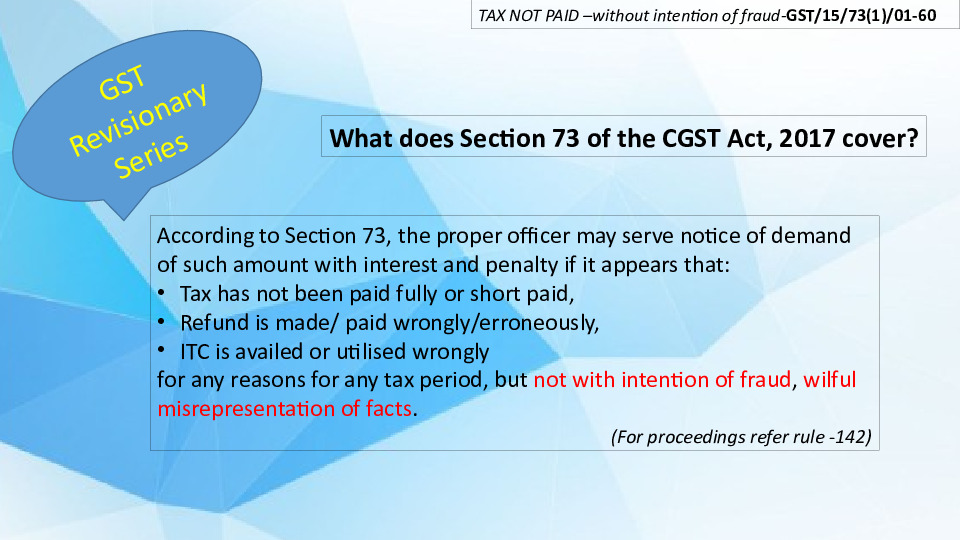
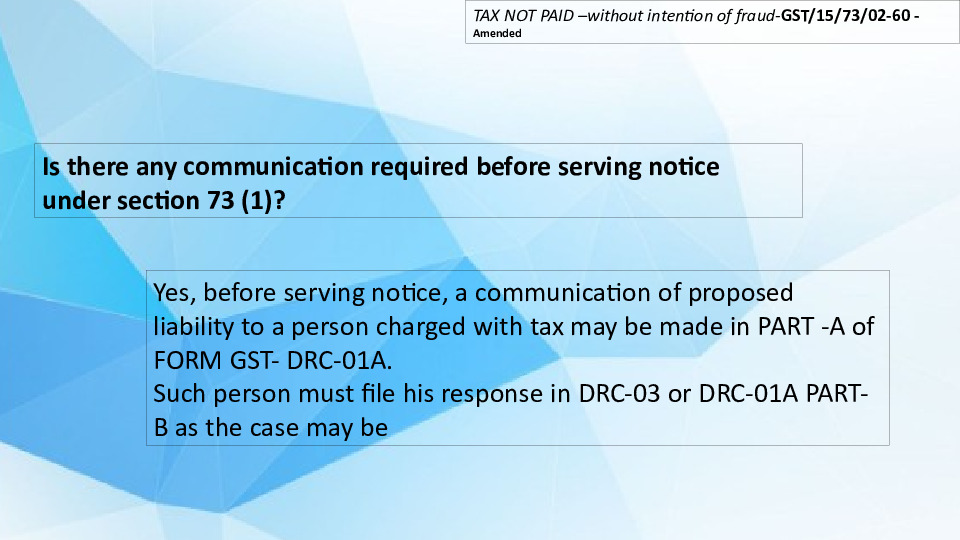
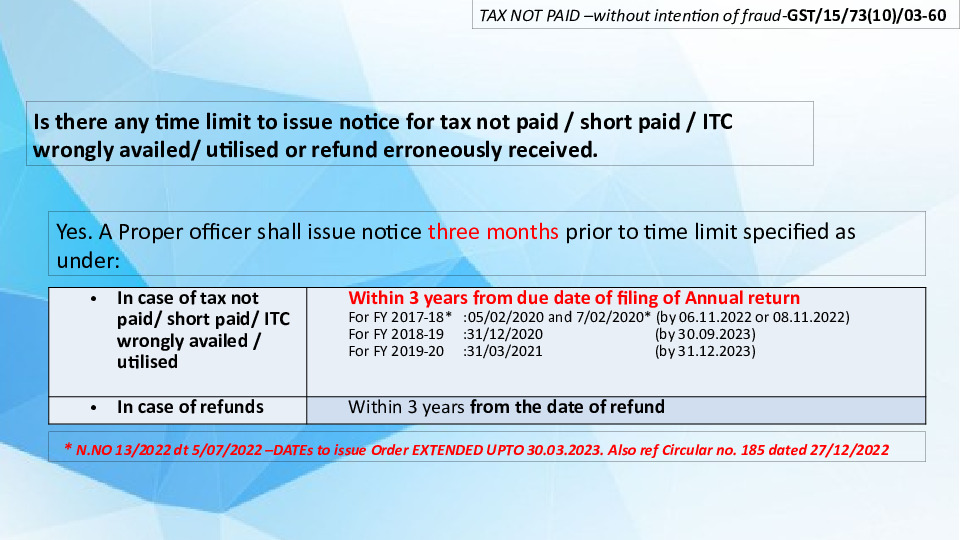
1) Shri CMA Anil Sharma, Shri CMA Gurdev Singh Saini and Smt. CMA Bhawna Sharma posted Chapter-15 containing CGST Act in simple language in PPT format. This is to make dealers, professionals, academicians, students etc. understand the basics of GST laws. Each Chapter in CGST Act, 2017 is explained in the form of Slides as given below for easy understanding of the Act:
|
Chapter-15 slides given below:-
|
|
|
|
|
|
|
|
|
|
|
7) Book by CMA Anil Sharma
|
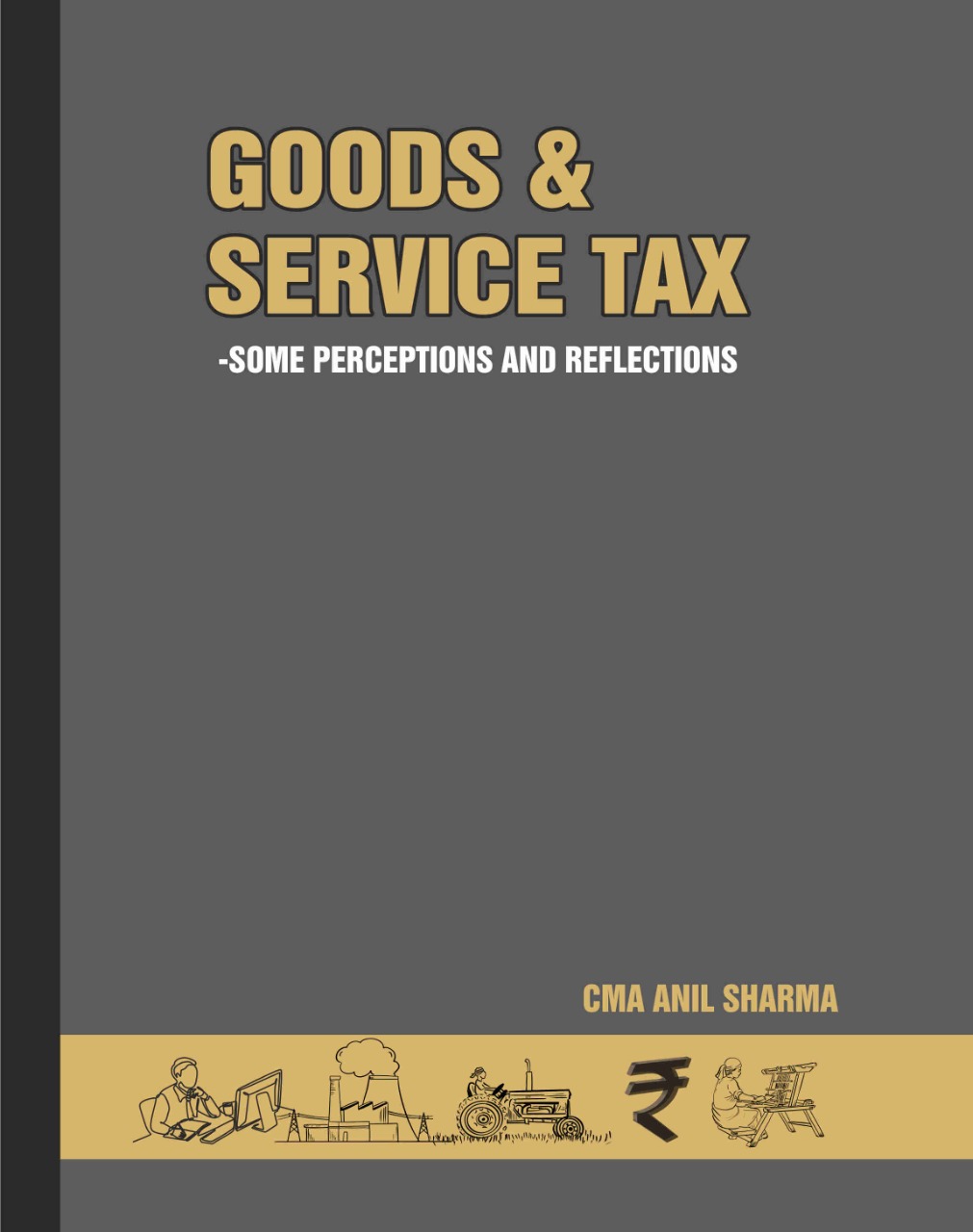
Book by CMA Anil Sharma, B.Com (Honrs), M.Com, FCMA co-author of the book "Handbook on GST Audit by Tax Authorities" has authored yet another book title Goods & Service Tax – Some Perceptions and Reflections. Buy now at Price Rs. 240- (Rs.300/- minus 20% Discount).
|
|
|
|
|
|
|
You wish to publish your Article?
|
If you wish to share your article with maximum readers then please send the article at taxupdate.otu@gmail.com. We shall publish it with all due credit to you.
|
|
|
|
|
|
|
Hope the above updates is of use to you. Please share your input and feedback at taxupdate.otu@gmail.com
|
|
|
|
|
|
 
|
Visit our website
|
OTU provides you
|
- Articles on various topics
|
|
- Media - GST, Income Tax & Press R.
|
|
- Notes / Newsletter etc.
|
|
|
|
|