|
|

|
Newsletter no. 71 dated 13.02.2023
|
|
|
|
|
|
This website contains information about recent changes mainly in GST laws. It also contains Articles on various topic in GST. Please visit the website and read more.
|
|
|
|
Index
|
4. GST Notes by CMA Anil Sharma
|
|
5. Book by CMA Anil Sharma
|
|
|
|
|
|
|
|
Complete CGST, IGST, and Compensation Cess Acts & All Rules and GSTAT Rules
|
- Tracking of Notifications, Circulars and Orders, and
- Content Links through Bookmarks
by Adv. (CA) Rakesh Garg & Sandeep Garg, CMA, FCA
|
|
|
|
|
|
|
|
The Institute of Chartered Accountants of India (ICAI) published Handbook on Finalisation of Accounts with GST Perspective in June, 2026.
|
|
|
|
|
|
|
|
The Institute of Chartered Accountants of India (ICAI) published 4th Edition of "Handbook on Job Work under GST" in June, 2026
|
|
|
|
|
|
|
|
CBIC -
To commemorate nine years of the Goods and Services Tax (GST), the Central Board of Indirect Taxes and Customs (CBIC) organized a special celebration at CSOI, New Delhi, on 1 July 2026. The event was held under the theme, ‘सुगम कर व्यवस्था, सशक्त भारत’, highlighting GST's
|
GST Indore -
The 9th #GSTDay was celebrated with great enthusiasm at CGST & Central Excise Commissionerate, Indore under the theme "सुगम कर व्यवस्था, सशक्त भारत".
|
GST Samvad an interaction among officers, taxpayers, trade & industry representatives, and tax professionals was organised on 30.06.2026 to commemorate nine years of GST as a transformative reform. The programme highlighted taxpayer facilitation initiatives, digital services, policy updates, and the importance of timely and voluntary compliance.
|
9 Years of GST! The CGST Indore Commissionerate celebrated the 9th anniversary of the Goods and Services Tax. The event marked nearly a decade of economic transformation and a unified national market.
|
Recognizing Excellence: The Department felicitated leading revenue contributors-Bharat Petroleum( @BPCLimited), HDFC Limited(@HDFCLTD), and MRF Limited(@MRF_Corporate)-for their exemplary tax compliance.10 dedicated departmental officers and a meritorious student were also honored
|
Taxpayer First: CGST Indore Commissioner Shri Peeyoush Bhati highlighted GST’s role in nation-building and announced that the Commissionerate will now regularly host monthly meetings with taxpayers to address grievances and ensure a transparent, efficient regime.
|
GST Aurangabad Commissionerate -
CGST AURANGABAD building lit up to kick in early 9th GST day celebrations
|
CGST Mumbai West -
As part of the #GSTPakhwada on occasion of upcoming 9th GST Day, on this year’s theme "सुगम कर व्यवस्था, सशक्त भारत” (Easy Tax System, Empowered India), CGST Mumbai West Commissionerate organised an Essay Writing Competition for officers and staff.
|
The winners and participants were felicitated by the Hon’ble Commissioner, CGST&C.Ex. Mumbai West appreciating their enthusiasm and insightful contributions.
|
WIRC of The Institute of Cost Accountants of India
Celebrating one of India’s landmark tax reforms that strengthened transparency, unity and the vision of One Nation, One Tax, One Market.
|
DGTPS MUMBAI CBIC
9वें GST दिवस के उपलक्ष्य में DGTS MZU & AZU द्वारा "Nine Years of GST: Perspective from Taxpayers" विषय पर Kendriya Vidyalayas के विद्यार्थियों हेतु एक वेबिनार आयोजित किया गया।
|
इस सत्र के माध्यम से GST के प्रति जागरूकता, वित्तीय साक्षरता को बढ़ावा दिया गया तथा विद्यार्थियों को राष्ट्र निर्माण में कराधान की भूमिका से अवगत कराया गया।
|
CGST Thane -
CGST Thane organized a 'Hindi & Marathi Essay Competition' for officers & staff
|
The Commissioner honored winners with certificates for outstanding performance
|
Celebrating language, awareness & commitment to GST
|
CGST MUMBAI EAST
As part of the 9th GST Day celebrations, CGST & Central Excise, Mumbai East Commissionerate organised Essay Writing and Drawing Competitions for students of Sandesh Vidyalaya & Junior College, Vikhroli (East), on 30.06.2026, with enthusiastic participation from young students.
|
The essay competition focused on GST and citizens’ responsibility towards tax compliance, while the drawing competition encouraged students to express ideas creatively. Prizes were awarded to winners, promoting taxation awareness and responsible citizenship among young minds.
|
As part of the 9th Anniversary celebrations of GST, CGST & Central Excise, Mumbai East Commissionerate organised GST "SAMVAD" and interactive session with members of trade and tax professionals on 29 June 2026 at Vikhroli to mark the occasion with active participation.
|
The session witnessed enthusiastic participation. Queries on filing of appeals, GST returns and other GST-related issues were addressed by officers, making it a valuable platform for knowledge sharing, constructive dialogue and promoting voluntary tax compliance across sectors.
|
CGST & Customs Thiruvananthapuram Zone
On the occasion of International Day Against Drug Abuse & Illicit Trafficking, the officers and staff of CGST & Customs Thiruvananthapuram Zone took a solemn pledge under the #NashaMuktBharatAbhiyan to build a society free from the menace of drugs.
|
DGTS AHMEDABAD CBIC
30.06.2026 को,DGTS AZU और MZU ने JG University के साथ मिलकर GST Awareness & Overview पर एक हाइब्रिड सेमिनार आयोजित किया।DGTS के Pr. ADG,श्री सुमित कुमार ने उद्घाटन भाषण दिया। CBIC के रिटायर्ड सुपरिटेंडेंट श्री जॉन क्रिश्चियन मुख्य वक्ता थे। #DGTS #GST #GSTDAY2026 #CBIC
|
Article Writing Competition 2026
To commemorate 9th Year of GST, Online Tax Update (OTU) launched 'Article Writing Competition 2026'. Registration starts today 1st July 2026 and ends on 15th July 2026. Article submission till 31st July 2026 and Winner Announcement in August, 2026. Cash Award + Certificate of Participation. Participation fees Rs. 300/- Read more
|
|
|
|
|
|
|
|
Centre has extended the last date for filing appeals before the Goods and Services Tax Appellate Tribunal (GSTAT) to July 31, 2026, giving taxpayers an additional month to submit their cases after a surge in filings led to technical difficulties on the GSTAT portal.
|
The extension applies to appeals filed under Section 112(1) read with Section 112(3) of the Goods and Services Tax (GST) law.
|
The revised deadline replaces the earlier cut-off of June 30, 2026, which had been notified by the government on September 17, 2025.
|
The decision follows recent representations from various stakeholders who flagged technical issues arising from a rush of appeals being filed on the GSTAT portal ahead of the deadline.
|
While noting that the original due date had been notified well in advance in September 2025, the government said filing activity had intensified sharply in recent weeks. It said 30,000 appeals were filed in the last 15 days alone, with daily filings touching a peak of 5,500 appeals.
|
Advising against eleventh-hour filings, the government urged taxpayers to complete their appeal submissions well in advance to ease pressure on the GSTAT portal.
|
The GST Appellate Tribunal serves as the first judicial appellate forum for taxpayers seeking to challenge orders issued by GST authorities after the disposal of their first appeals.
|
Source: The Economic Times
|
|
|
|
|
|
|
|
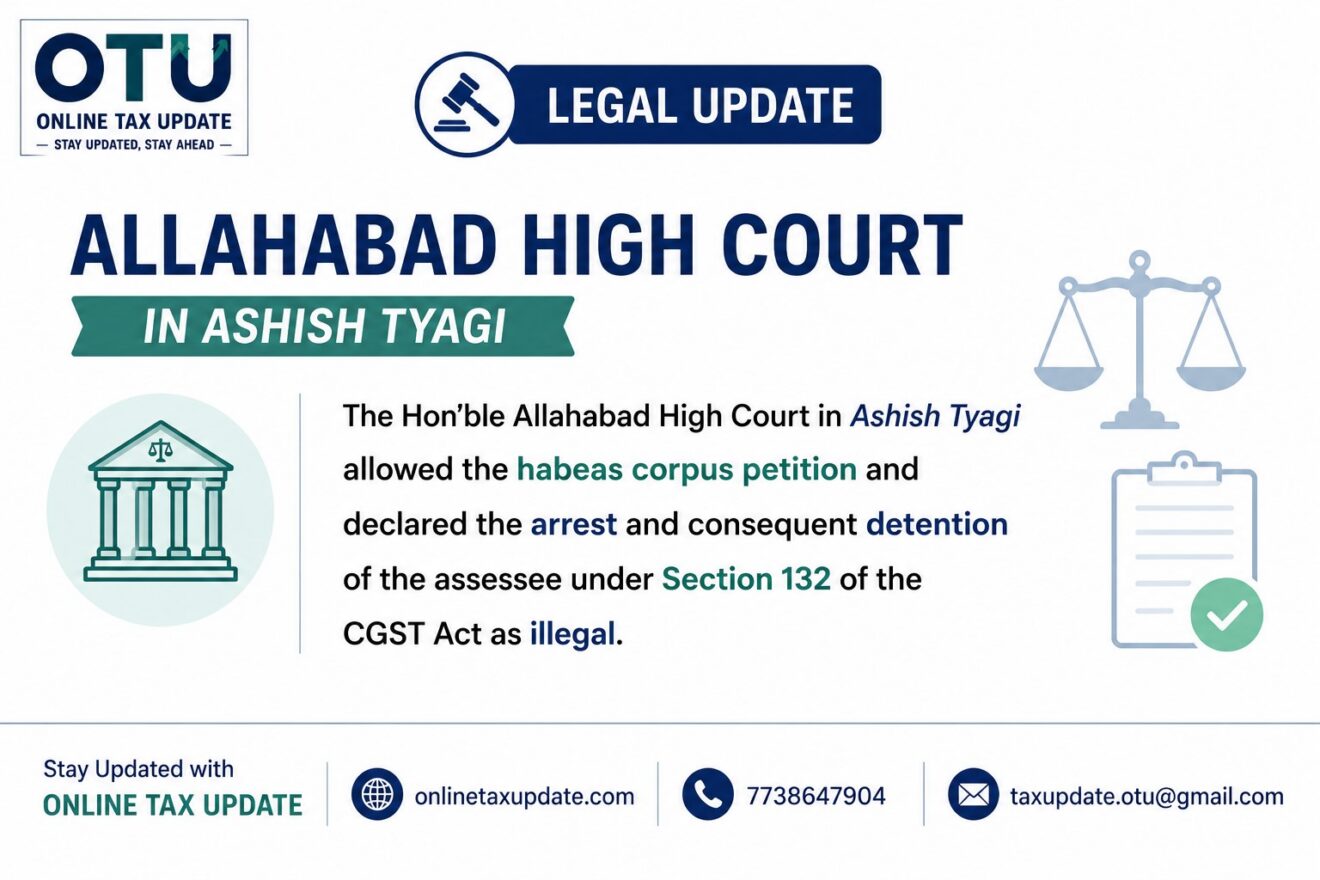
The Hon’ble Allahabad High Court in Ashish Tyagi v. Director General of GST Intelligence & Ors. allowed the habeas corpus petition and declared the arrest and consequent detention of the assessee under Section 132 of the Central Goods and Services Tax Act, 2017 (“the CGST Act”) as illegal, on the ground that the arrest memo neither contained the specific grounds of arrest nor disclosed the place of arrest, and the grounds of arrest did not bear the mandatory CBIC-Document Identification Number (“DIN”), thereby violating the mandate of law and the safeguards laid down by the Hon’ble Supreme Court in D.K. Basu v. State of West Bengal . Accordingly, the Court directed the immediate release of the assessee, while granting liberty to the Revenue to proceed afresh strictly in accordance with law.
|
- Mr. Ashish Tyagi (“the Petitioner”) was arrested by the officers of the Directorate General of GST Intelligence, Ghaziabad (“the Respondent”) for alleged offences under Section 132(1)(a), Section 132(1)(f) and Section 132(1)(i) of the CGST Act. The grounds of arrest were dated December 10, 2025.
- The Petitioner was thereafter remanded to judicial custody by the Special Chief Judicial Magistrate, Meerut vide order dated February 18, 2026 passed in Case No. 2122 of 2025 (Union of India v. Ashish Tyagi).
- The Petitioner contended that neither were the grounds of arrest mentioned in the arrest memo nor were they supplied as an annexure thereto, in clear violation of Circular No. 02/2022-23 issued by the CGST Department, which mandates communication of the grounds of arrest.
- It was further contended that the arrest memo merely recorded that the grounds of arrest were “explained” to the arrestee, without any recital indicating that the grounds were actually supplied to the Petitioner. Moreover, columns (i) to (iv) of the jamatalashi (personal search memo) were left blank and the Petitioner’s signatures were obtained thereon mechanically.
- The Petitioner also urged that the arrest memo did not disclose the place of arrest and that the Remand Magistrate failed to consider these discrepancies while granting remand, rendering the arrest, detention and remand illegal.
- The Respondent filed a counter affidavit; however, it could not rebut the submissions of the Petitioner by placing any material or document on record.
- Aggrieved by the illegal arrest and detention, the Petitioner filed a habeas corpus writ petition before the Hon’ble Allahabad High Court seeking a declaration that the arrest, detention and subsequent remand were unconstitutional, illegal and arbitrary, and praying for release forthwith.
Whether the arrest and consequent detention of the Petitioner under Section 132 of the CGST Act can be sustained when the arrest memo neither contains the specific grounds of arrest nor discloses the place of arrest, and the grounds of arrest do not bear the mandatory CBIC-DIN?
|
The Hon’ble Allahabad High Court in Writ Petition No. 509 of 2026 held as under:
|
- Observed that, the arrest memo did not disclose the place of arrest of the Petitioner, which is in violation of the law laid down by the Hon’ble Supreme Court in D.K. Basu v. State of West Bengal .
- Noted that, the grounds of arrest dated December 10, 2025 did not bear any CBIC-DIN, and the Petitioner was merely made to endorse on the arrest memo that he had received the arrest memo along with the grounds of arrest and that he had informed his friend about his arrest through a mobile phone call.
- Noted that, the submission of the Petitioner that, in terms of Circular No. 02/2022-23 issued by the CGST Department, every document is required to bear a CBIC-DIN, remained uncontroverted by the Respondent, who failed to place any material on record to rebut the allegations.
- Held that, the Petitioner has been illegally detained in violation of the mandate of law, and accordingly, the arrest and detention of the Petitioner are declared illegal and the Petitioner is directed to be released forthwith.
- Directed that, it shall, however, remain open to the Respondent to proceed against the Petitioner afresh, strictly in accordance with law.
The power of arrest under GST flows from Section 69 of the CGST Act, which empowers the Commissioner to authorise the arrest of a person where he has “reasons to believe” that such person has committed specified offences under Section 132 of the CGST Act. Section 69(2) of the CGST Act, read with Article 22(1) of the Constitution of India, casts a mandatory obligation on the arresting officer to inform the arrested person of the grounds of arrest and to produce him before a Magistrate within twenty-four hours. These safeguards are not empty formalities but constitutional imperatives, as repeatedly emphasised by the Hon’ble Supreme Court since D.K. Basu v. State of West Bengal , which prescribed, inter alia, the preparation of a proper arrest memo recording the time and place of arrest, duly attested and countersigned.
|
Insofar as the DIN requirement is concerned, the CBIC, vide Circular No. 122/41/2019-GST dated November 05, 2019, read with Circular No. 128/47/2019-GST dated December 23, 2019, mandated electronic generation and quoting of a DIN on all communications, including those issued during investigation such as search authorisations, summons, arrest memos and inspection notices. Significantly, the said Circular categorically provides that any specified communication which does not bear a DIN shall be treated as invalid and shall be deemed to have never been issued. The Hon’ble Supreme Court in Pradeep Goyal v. Union of India also underscored the importance of the DIN mechanism as a measure to ensure transparency and accountability in tax administration. The present ruling applies this discipline to arrest documentation as well, holding that grounds of arrest not bearing a CBIC-DIN cannot satisfy the mandate of law.
|
Further, the CBIC, vide Instruction No. 02/2022-23 dated August 17, 2022, laid down detailed guidelines for arrest and bail in relation to offences under the CGST Act, requiring that the grounds of arrest be explained to the arrested person and recorded in the arrest memo. Subsequently, pursuant to the judgment of the Hon’ble Supreme Court in Radhika Agarwal v. Union of India , the CBIC issued Instruction No. 01/2025-GST (Inv.) dated January 13, 2025, mandating that the grounds of arrest must be furnished to the arrested person in writing, as an annexure to the arrest memo, and an acknowledgement thereof obtained. In Radhika Agarwal (supra), the Hon’ble Supreme Court held that the ratio of Pankaj Bansal v. Union of India and Prabir Purkayastha v. State (NCT of Delhi) , requiring written communication of the grounds of arrest, applies with equal force to arrests under the Customs and GST laws, failing which the arrest itself stands vitiated.
|
On a pari materia footing, the Hon’ble Delhi High Court in Kshitij Ghildiyal v. Director General of GST Intelligence, Delhi declared an arrest by DGGI officers illegal where the grounds of arrest were not communicated to the arrestee in writing, and directed his release. The present decision of the Hon’ble Allahabad High Court adds a significant dimension to this line of authority by holding that even where an endorsement of receipt of the grounds of arrest is obtained, the absence of a CBIC-DIN on such grounds, coupled with blank columns in the search memo and non-disclosure of the place of arrest, vitiates the arrest in its entirety.
|
The takeaway for the Department is that procedural safeguards surrounding arrest under GST, viz. furnishing of written grounds of arrest bearing a valid DIN, complete and contemporaneous arrest documentation, and adherence to the D.K. Basu guidelines, are mandatory and non-negotiable, and any breach thereof would render the arrest and consequent remand illegal, notwithstanding the gravity of the alleged offence. For taxpayers and arrestees, the ruling reaffirms that habeas corpus remains an efficacious remedy where curable procedural lapses cross the threshold into violations of constitutional safeguards, although the Revenue retains liberty to proceed afresh in accordance with law.
|
|
|
|
|
|
|
|
The Hon’ble Gauhati High Court in M/s Metal Syndicate and Another v. The Union of India & Ors. set aside the Order-in-Original and the Order-in-Appeal confirming GST demand of Rs. 78,70,952/- along with interest and equivalent penalty, and held that a bona fide purchasing dealer cannot be denied Input Tax Credit (“ITC”) merely on account of the supplier’s failure to deposit the tax collected with the Government. The Court reiterated that the Department’s remedy in such circumstances lies against the defaulting supplier and not against the genuine recipient, who has discharged all statutory obligations.
|
M/s Metal Syndicate (“the Petitioner”), a proprietorship firm based in Silchar, Assam, engaged in trading of scrap/waste batteries, purchased goods from suppliers based in Kolkata during the Financial Years 2017-18 and 2018-19. The Petitioner received the goods along with proper tax invoices and made payments, including applicable GST, through banking channels. ITC was availed and utilized strictly in accordance with Section 16(2) of the Central Goods and Services Tax Act, 2017 (“the CGST Act”), and GSTR-1 and GSTR-3B returns were duly filed within the prescribed time.
|
The Directorate General of GST Intelligence (“DGGI”), Guwahati Zonal Unit, issued summons alleging that the Petitioner had availed ineligible ITC on the strength of invoices issued without actual receipt of goods. The Petitioner appeared before the authorities on April 05, 2019, and submitted all relevant documents including GSTR-1, GSTR-3B and purchase invoices. A search was subsequently conducted at the Petitioner’s business premises on July 09, 2019, during which no incriminating material was recovered or seized.
|
Thereafter, a Show Cause Notice (“SCN”) dated July 28, 2022 was issued alleging wrong availment and utilization of ITC of Rs. 78,70,952/- in violation of Section 16(2)(a) and (b) of the CGST Act. Vide Order-in-Original No. 22/GST/AC/SIL/2023-24 dated February 19, 2024, the Assistant Commissioner confirmed the demand comprising IGST of Rs. 47,12,010/-, CGST of Rs. 15,52,967/- and SGST of Rs. 16,05,975/- for the period July 2017 to March 2019, along with interest under Section 50 of the CGST Act and an equivalent penalty of Rs. 78,70,952/- under Section 74(1) read with Section 122 of the CGST Act and Section 20 of the Integrated Goods and Services Tax Act, 2017. The appeal preferred by the Petitioner was rejected vide Order-in-Appeal dated February 14, 2025.
|
Aggrieved, the Petitioner approached the Hon’ble Gauhati High Court by way of a writ petition challenging both the impugned orders.
|
Petitioner’s Contentions:
|
- The Petitioner had purchased goods from registered suppliers, received valid tax invoices and discharged the full consideration (including GST) through banking channels, thereby complying with all conditions of Section 16(2) of the CGST Act.
- The sole basis for denial of ITC was the alleged failure of the suppliers to discharge their tax liability — a circumstance entirely beyond the Petitioner’s control.
- No effective opportunity of hearing was afforded, and the SCN was not uploaded on the GST portal; notices were served manually beyond the date of hearing.
- The controversy stood squarely covered by the Division Bench ruling of the Hon’ble Gauhati High Court in National Plasto Moulding v. State of Assam , which in turn relied on the Hon’ble Delhi High Court decision in On Quest Merchandising India Pvt. Ltd. v. Government of NCT of Delhi .
WhetherITC can be denied to a bona fide purchasing dealer solely on account of the supplier’s failure to deposit the tax collected with the Government, where the recipient has otherwise complied with all the statutory conditions prescribed under Section 16(2) of the CGST Act?
|
The Hon’ble Gauhati High Court in W.P.(C) No. 2960/2026 held as under:
|
- Observed that the Petitioner had purchased goods from registered suppliers, received tax invoices, made payments including GST through proper banking channels and claimed ITC after complying with the statutory requirements prescribed under Section 16(2) of the CGST Act.
- Noted that both the counsel for the Petitioner as well as the Department were in consensus that the issue involved stood squarely covered by the Division Bench ruling in National Plasto Moulding (supra), wherein the Court, relying on the Delhi High Court decision in On Quest Merchandising India Pvt. Ltd. (supra), held that a purchasing dealer cannot be punished for the act of the selling dealer where the latter has failed to deposit the tax collected.
- Held that where a purchasing dealer has entered into bona fide transactions with a registered supplier and has complied with the statutory requirements, denial of ITC solely on account of the supplier’s failure to deposit tax with the Government would not be justified. The remedy of the Department, in such circumstances, lies against the defaulting supplier and not against the bona fide recipient.
- Quashed the impugned Order-in-Original dated February 19, 2024 and the Order-in-Appeal dated February 14, 2025.
- Directed that the Department shall be at liberty to proceed against the Petitioner in accordance with law in the event materials surface indicating that the transactions in question were not bona fide or were entered into in collusion with the suppliers.
Section 16 of the CGST Act lays down the eligibility and conditions for availing ITC. Specifically, Section 16(2)(c) prescribes that no registered person shall be entitled to ITC unless the tax charged in respect of the supply has been actually paid to the Government, either in cash or by utilization of ITC. This provision has consistently been a flashpoint of litigation, as it effectively transfers the consequences of the supplier’s non-compliance onto the genuine recipient, who has no statutory mechanism or practical means to monitor or compel the supplier to deposit the tax collected with the exchequer.
|
The present ruling reaffirms the well-settled jurisprudential principle that the law cannot impose an impossible burden of compliance on a bona fide recipient. The Hon’ble Delhi High Court in On Quest Merchandising India Pvt. Ltd. (supra) had, while dealing with the pari materia provision under Section 9(2)(g) of the Delhi Value Added Tax Act, 2004, read down the said provision and held that denial of ITC to a bona fide purchaser would be violative of Article 14 of the Constitution. The Hon’ble Supreme Court dismissed the Revenue’s Special Leave Petition against the said ruling on January 10, 2018, thereby giving finality to the principle.
|
The same view has been consistently followed across various jurisdictions:
|
- The Hon’ble Calcutta High Court in Suncraft Energy Pvt. Ltd. v. Assistant Commissioner of State Tax (Bagnan Charge)held that the recovery action must first be initiated against the defaulting supplier and only in exceptional circumstances (such as where the supplier is missing, has been deregistered, or where collusion is established) can recovery be effected from the recipient. The Hon’ble Supreme Court dismissed the Special Leave Petition filed by the Revenue against the said order.
- The Hon’ble Madras High Court in D.Y. Beathel Enterprises v. State Tax Officerset aside the assessment order denying ITC to the recipient on the ground that no enquiry was conducted against the defaulting supplier despite the recipient having discharged the consideration including GST.
- The Hon’ble Allahabad High Court in Malik Traders v. State of U.P.and the Hon’ble Kerala High Court in Diya Agencies v. State Tax Officer, while broadly affirming the conditions of Section 16(2)(c), have also held that the recipient’s claim cannot be rejected on the basis of GSTR-2A mismatches alone, without verifying the supplier’s compliance.
It is, however, pertinent to mention that the Hon’ble Kerala High Court in Nahasshukoor v. Assistant Commissioner, while recognising the practical challenges during the initial phase of GST rollout, upheld the constitutional validity of Sections 16(2)(c) and 16(4) of the CGST Act.
|
Until such pronouncement, the ruling in Metal Syndicate (supra), being a consistent reaffirmation of the bona fide recipient’s right to ITC, serves as a valuable precedent for genuine taxpayers facing identical demands. Recipients facing such proceedings should, as a matter of practice, maintain robust documentation — including tax invoices, e-way bills, transportation records, weighment slips, banking trail and acknowledgments of receipt of goods — to demonstrate the genuineness of their transactions. The Department’s right to proceed in cases involving collusion or fraudulent transactions remains preserved, and accordingly, the bona fide character of the transaction will continue to be the touchstone of every adjudication.
|
Accordingly, the question of the constitutional validity of Section 16(2)(c) — and by extension, the foundational right of a bona fide purchaser to avail ITC — remains open and pending adjudication at the highest judicial level.
|
|
|
|
|
|
|
|
The Hon’ble Madras High Court (Madurai Bench) in Tvl. Manickavasagam S. v. The Proper Officer/Commercial Tax Officer set aside the assessment order passed under Section 74 of the Tamil Nadu Goods and Services Tax Act, 2017 (“the TNGST Act”) pertaining to levy of GST on seigniorage fees and held that since the very incidence of tax itself is at large is pending before the Hon’ble Supreme Court of India, the matter is remanded for fresh consideration without imposing the customary condition of pre-deposit, with the further direction that the final orders shall be kept in abeyance and enforcement and further demand of any liability so determined shall await the outcome of the Supreme Court’s judgment.
|
Tvl. Manickavasagam S. (“the Petitioner”) was issued an assessment order in GST ASMT 15 Temporary ID: 332500004524 TMP/2020-2021, dated February 24, 2026 (“the Impugned Order”) by the Proper Officer/Commercial Tax Officer, Sivagangai (“the Respondent”) under Section 74 of the TNGST Act, 2017.
|
The subject matter of dispute pertained to the levy of GST on seigniorage fees, an issue which is presently pending adjudication before the Hon’ble Supreme Court of India.
|
The Petitioner had filed a reply to the show cause notice; however, the said reply was not considered by the Respondent while passing the Impugned Order.
|
Aggrieved, the Petitioner preferred a writ petition before the Hon’ble Madras High Court under Article 226 of the Constitution of India seeking quashing of the Impugned Order as illegal, arbitrary and against the principles of natural justice.
|
The Petitioner contended that the subject matter in dispute is pending before the Hon’ble Supreme Court of India and that the Hon’ble High Court has already held in earlier matters that the authorities shall await the orders of the Apex Court.
|
Per contra, the Revenue contended that the Hon’ble High Court has been directing the assessing authorities to complete the proceedings; however, the orders of the Appellate Authority were directed to be kept in abeyance until the orders are passed by the Hon’ble Supreme Court of India. The Revenue placed reliance on the orders of the Madras High Court in M/s. Marginal M Sand v. State Tax Officer andTvl. Rajapalayam Cement and Chemicals Limited v. Assistant Commissioner .
|
Whether the assessment order passed under Section 74 of the TNGST Act, 2017 levying GST on seigniorage fees, where the very incidence of tax itself is at large before the Hon’ble Supreme Court of India and where the Petitioner’s reply was not considered, can be sustained?
|
The Hon’ble Madras High Court (Madurai Bench) in W.P(MD) No. 14948 of 2026held as under:
|
- Observed that, while in earlier matters such as M/s. Marginal M Sand and Tvl. Rajapalayam Cement and Chemicals Limited, the Court had granted permission to the assessing authorities to complete the proceedings, it had simultaneously directed that final orders shall not be passed and that the authorities have to await the orders of the Hon’ble Supreme Court of India.
- Noted that, in the present case, although the order of assessment had been passed, the reply filed by the Petitioner was not considered by the Respondent, thereby violating the principles of natural justice.
- Held that, considering the fact that the very incidence of tax itself is at large, the Petitioner can be granted an opportunity to be heard afresh. Further, although the Court normally imposes a condition of deposit of 25% while granting such opportunity on equitable considerations, since in this case the very incidence of tax itself is at large, no such additional condition is imposed on the Petitioner.
- Directed that, the Impugned Order dated February 24, 2026 shall stand set aside and the matter shall stand remanded back to the file of the Respondent for fresh consideration. The Petitioner shall, within two weeks from receipt of a web copy of the order, file additional reply along with supporting documents and the Respondent shall consider the matter afresh; however, the final orders shall be kept in abeyance until the orders are passed by the Hon’ble Supreme Court of India.
- Further directed that, if the order on remand is in favour of the Petitioner, then there is no difficulty; however, if it results in the assessment of tax or imposition of penalty, the same shall be communicated to the Petitioner, but the enforcement and further demand of the liability so determined shall be kept in abeyance until the judgment of the Hon’ble Supreme Court of India. As and when the Hon’ble Supreme Court pronounces its judgment, the Petitioner shall be entitled to take further steps subject to the outcome of the said judgment.
Hence, the writ petition was allowed and the matter remanded back to the Assessing Officer for fresh consideration.
|
Section 74 of the CGST Act, 2017 (pari materia with Section 74 of the TNGST Act, 2017) empowers the Proper Officer to determine tax not paid, short paid, erroneously refunded or input tax credit wrongly availed or utilised by reason of fraud, wilful misstatement or suppression of facts to evade tax. It mandates the issuance of a show cause notice, consideration of the assessee’s reply, and a reasoned order — a quasi-judicial exercise where non-consideration of the assessee’s reply vitiates the order on the ground of violation of natural justice, as squarely demonstrated in the present case.
|
The issue of GST leviability on seigniorage fee/royalty paid to the State Government for extraction of minerals from mining/quarry leases is intrinsically linked to the larger question of whether royalty is in the nature of “tax”, which is presently pending before the Nine-Judge Constitution Bench of the Hon’ble Supreme Court in Mineral Area Development Authority v. Steel Authority of India. Pending the verdict, several High Courts have consistently directed that GST adjudication on royalty/seigniorage be held in abeyance to avoid prejudicing taxpayers.
|
The Hon’ble Madras High Court in A. Venkatachalam v. Assistant Commissioner (ST) had similarly kept orders of adjudication with respect to levy of GST on mining lease/royalty in abeyance and stayed recovery, until the Nine-Judge Constitution Bench in Mineral Area Development Authority decides the issue as to the nature of royalty.
|
In a pari materiaruling, the Hon’ble Telangana High Court in PLR-NCC-NECL (JV) v. Union of India granted interim stay on the order-in-original dated May 5, 2025, which had confirmed GST demand on amounts deducted towards royalty/seigniorage, District Mineral Foundation (DMF), and State Mineral Exploration Trust (SMET), reinforcing the consistent judicial trend of staying coercive recovery on this issue.
|
Further, the Andhra Pradesh Authority for Advance Ruling in Sudhakara Infratech ruled that an Excess Royalty Collection Contractor (ERCC) is not liable to discharge GST under forward charge on collection of royalty/seigniorage fee, District Mineral Foundation (DMF), Mineral Exploration and Research & Innovation Trust (MERIT) and similar statutory levies from mining/quarry leaseholders, lending support to the view that such statutory levies may not constitute a taxable “supply” within the meaning of the GST law.
|
The instant ruling is a welcome relief for taxpayers in the mining, quarrying, and allied sectors who continue to face assessment proceedings and coercive recovery actions on the disputed levy of GST on royalty/seigniorage fees. The Hon’ble Court’s nuanced approach — setting aside the order for non-consideration of the reply, dispensing with the otherwise mandatory 25% pre-deposit condition since the very incidence of tax is at large, and directing that enforcement of any future demand shall remain in abeyance until the Supreme Court’s verdict — strikes a fair balance between revenue interests and taxpayer protection. Taxpayers similarly placed may consider invoking writ jurisdiction to seek analogous protection, particularly where their replies have not been considered or where coercive recovery is being initiated pending the Supreme Court’s verdict.
|
|
|
|
|
|
|
|
The Hon’ble Madras High Court in P. Baskaran v. Deputy State Tax Officer set aside the order imposing interest and penalty under Section 74 of the Central Goods and Services Tax Act, 2017 (“the CGST Act”) and remanded the matter for fresh consideration on the applicability of Section 74, holding that the possibility of the Assessee establishing genuine supply of goods and that Section 74 was incorrectly invoked cannot be ruled out without affording the Assessee a reasonable opportunity to place material documents on record.
|
M/s. P. Baskaran (“the Petitioner”), a proprietary concern based in Salem, Tamil Nadu, was issued an order dated August 30, 2024 in FORM GST DRC-07 (Order Reference No. ZD330824291608Z) by the Deputy State Tax Officer (“the Respondent”) for the Financial Year 2018-19, imposing interest and penalty under Section 74 of the applicable GST enactments.
|
The Petitioner had availed Input Tax Credit (“ITC”) on inward supplies which was subsequently reversed; however, the Petitioner asserted that there was a genuine supply of goods and that the essential ingredients of Section 74 – namely fraud, wilful misstatement or suppression of facts – were not made out on the facts of the case.
|
Aggrieved by the impugned order on the ground of breach of principles of natural justice and erroneous invocation of Section 74, the Petitioner filed a writ petition under Article 226 of the Constitution of India before the Hon’ble Madras High Court praying for a writ of certiorari to quash the impugned order.
|
Whether the order imposing interest and penalty under Section 74 of the CGST Act, 2017 can be sustained when the Assessee has not been afforded a reasonable opportunity to place on record material documents to establish genuine supply of goods and to demonstrate that the ingredients of Section 74 are not made out?
|
The Hon’ble Madras High Court in W.P No. 18015 of 2026 and WMP. Nos. 19364 & 19367 of 2026 held as under:
|
- Observed that, the Input Tax Credit availed by the Petitioner has already stood reversed, and to that extent the interest of the Revenue is protected.
- Noted that, the Petitioner had contended that there was a genuine supply of goods and that the ingredients of Section 74 were not made out, whereas the Revenue submitted that since a reply to the show cause notice had been filed, no interference was warranted.
- Held that, the possibility of the Petitioner establishing that there was a genuine supply of goods and that Section 74 was incorrectly invoked cannot be ruled out without providing the Petitioner an opportunity to place material documents on record.
- Directed that, the impugned order is set aside to the limited extent of reconsideration of the invocation of Section 74, and a fresh order shall be passed within three months from the date of receipt of a copy of the order after granting a reasonable opportunity to the Petitioner.
Hence, the matter was remanded back to the assessing officer for fresh consideration.
|
Section 74 of the CGST Act, 2017 governs the determination of tax not paid, short paid, erroneously refunded, or input tax credit wrongly availed or utilised by reason of fraud, or any wilful misstatement, or suppression of facts to evade tax. The provision is jurisdictional in character and can be invoked by the Proper Officer only where any one or more of these aggravating ingredients is positively established. Where these ingredients are absent, the appropriate machinery is Section 73 of the CGST Act, which deals with cases not involving fraud, wilful misstatement, or suppression. The distinction is significant because Section 74 carries a longer limitation period of five years and attracts a higher quantum of penalty (equal to the tax) as compared to Section 73.
|
The present ruling reinforces a well-settled position that the adjudication process under the GST law is required to comply with the principles of natural justice. Where the Assessee contests not merely the quantum of demand but the very jurisdiction to invoke Section 74, it is incumbent upon the Proper Officer to permit the Assessee to lead documentary evidence – such as tax invoices, e-way bills, lorry receipts, weighment slips, bank statements, ledger extracts, and proof of receipt of goods – in support of the contention of genuine supply, before fastening enhanced liability and penalty.
|
The ruling is also significant in that the Hon’ble Court was conscious of safeguarding the Revenue’s interest. Since the disputed ITC already stood reversed, the Court restricted its interference only to the limited aspect of reconsidering the invocation of Section 74, thereby balancing the rights of the Assessee with the protection of public revenue.
|
Pari materia rulings on the requirement of opportunity and on the ingredients of Section 74:
|
- The Hon’ble Calcutta High Court in Suncraft Energy Private Limited v. Assistant Commissioner of State Tax , held that ITC cannot be denied to the bona fide recipient on the sole ground of mismatch with GSTR-2A or default by the supplier, without first conducting due enquiry against the supplier; the order was upheld by the Hon’ble Supreme Court in SLP (Civil) Diary No. 39332 of 2023.
- The Hon’ble Supreme Court in Commissioner of Central Excise v. HMM Limited , in the context of the pari materia provision of Section 11A of the Central Excise Act, held that the extended period of limitation and the attendant penalty cannot be invoked unless a positive finding of fraud, collusion, or wilful misstatement is recorded – a principle that has been consistently followed under GST jurisprudence.
- The Hon’ble Madras High Court in Tvl. Diamond Shipping Agencies Pvt. Ltd. v. Assistant Commissioner (ST) and a series of similar writ petitions has repeatedly set aside ex parte and non-speaking orders under Section 74 and remanded the matters for fresh adjudication, holding that where the Assessee credibly asserts genuine supply, an opportunity to place documentary evidence cannot be denied.
- The Hon’ble Karnataka High Court in LC Infra Projects Pvt. Ltd. v. Union of India and other similar rulings have emphasised that recourse to Section 74 must be supported by specific allegations and material disclosing fraud, wilful misstatement or suppression – a mechanical invocation without such material is liable to be quashed.
On the contrary, in cases where the Assessee has been afforded multiple opportunities and has failed to substantiate its claim, Courts have declined to interfere. For instance, the Hon’ble Madras High Court in numerous decisions has held that where the show cause notice clearly sets out the allegations, the Assessee has filed a reply, and a personal hearing has been afforded, the writ jurisdiction will not be exercised merely to grant another round of adjudication – the Assessee would have to pursue the statutory appellate remedy under Section 107 of the CGST Act.
|
The takeaway for the trade and industry is twofold. First, where invocation of Section 74 is contested, the Assessee must promptly file a comprehensive reply to the show cause notice supported by documentary evidence demonstrating the genuineness of inward supplies, receipt of goods, and payment of consideration through banking channels. Second, a writ remedy may be sustainable where the adjudicating authority has not permitted the Assessee to lead such evidence and has mechanically invoked Section 74 by treating mere reversal of ITC as conclusive proof of fraud or suppression – the two are conceptually distinct, and the latter requires an independent finding supported by material on record.
|
|
|
|
|
|
|
|
Authored by Mr. Keyur Dhandeo | First published in the Secretariat
|
The setting up of the GST Appellate Tribunal (GSTAT) has brought little relief to businesses. Teething problems continue to plague the grievance portal that came to life only in February this year, more than eight years after the rollout of GST, which was touted as a one nation one tax structure.
|
Not only is the portal woefully sluggish, but the lengthy process for filing appeals with requirements of unwanted and repetitive information has also further slowed the exercise.
|
The litigant also has to deposit 10% of the disputed tax assessment at the time of the first appeal. Another 10% has to be deposited while filing the appeal on the GSTAT portal.
|
The problem has aggravated, with the deadline of June 30 just a few days away.
|
“If we are able to file an appeal on the portal, it is actually a cause for celebration. I have over 400 appeals of various clients to be filed, but I’m able to file only one or two appeals per day,” said a tax practitioner in the Gujarat High Court on condition of anonymity.
|
He is just one of the thousands of tax practitioners across the country who are worried about filing appeals on behalf of their clients within the deadline. As of now, the government has given no extension of the deadline.
|
As of Tuesday, June 23, 2026, a total of 22,924 appeals had been filed across India, of which 10,780 appeals were filed between June 1 and June 23. “This is less than 5% of 4 to 5 lakh appeals expected to be filed on GSTAT portal,” Monish Bhalla, a former Indian Revenue Service (IRS) official, legal expert, and author of several books on GST and legal matters, told The Secretariat.
|
In case appeals are not filed on time, businesses will lose the opportunity to register their concern.
|
A Difficult Choice
Under such circumstances, they will have to pay a higher tax as decided by the government. This will result in a huge cash outflow for millions of businessmen in the country.
|
“Businesses face a very difficult choice, they must either accept a demand that they may genuinely believe is wrong, or they must file an appeal and keep their money locked in pre-deposit for years. For many businesses, this is not just a legal decision. It is a question of financial survival,” Bhalla said.
|
Deepak Bapat, an advocate in the Mumbai High Court, pointed out that even after four months of the tribunal being operational, several glitches remain. “E-filing of appeals requires more technical expertise than legal. If there is a single mistake in filing an appeal, an hours-long exercise goes in vain and we have to start from scratch. High Courts and even the Supreme Court allows petitions with errors, which are subsequently rectified. At least, the appeal is accepted. On GSTAT, it is not happening,” claimed Bapat, adding that the right to appeal practically depends on the ability of the businessmen to raise money for the appeal.
|
The pre-deposit amount blocks valuable working capital, which is otherwise used to run the business, pay salaries, clear dues, and purchase raw materials.
|
“As a result, many taxpayers may be forced to give up even valid appeals, not because their case is weak but because they cannot afford to keep such a large amount locked up,” Bapat reasoned.
|
Key Milestones
- July 2017 - Roll-out of GST
- 24 September 2025 - Finance Minister Nirmala Sitharaman launched GSTAT
- 16 February 2026 - The appellate tribunal become opertional
- 17 February 2026 - GoI, through a Notification, announced 30 June 2026 as the deadline for filing of GST appeals
- 30 June 2026 - Last date for filing of appeals
Extension Of Deadline
The question is this: Will the government extend the filing date? There is no clarity. While many feel that the government is in no mood to extend the deadline, others opine that the problems are valid and the date may be extended. The authorities are aware of the issue.
|
“The case of businessmen and tax practitioners seems valid. If they present their case to the government, the deadline can be extended. Previously in such situations, the deadlines have been extended,” said P.D. Vaghela, a retired IAS officer who had served as Chief Commissioner, State Tax in Gujarat, a member of the GST Council.
|
GST was rolled out on 1 July, 2017, but only on 24 September 2025 did Finance Minister Nirmala Sitharaman launch GSTAT. The Tribunal became operational on 16 February, 2026.
|
Representation seeking extension of the last date for filing appeals before GSTAT -
|
- ADVOCATES’ TAX BAR ASSOCIATION
- Taxation Bar Association, Agra
- GSTAT Bar Association, Delhi
|
|
|
|
|
4. GST Notes by CMA Anil Sharma
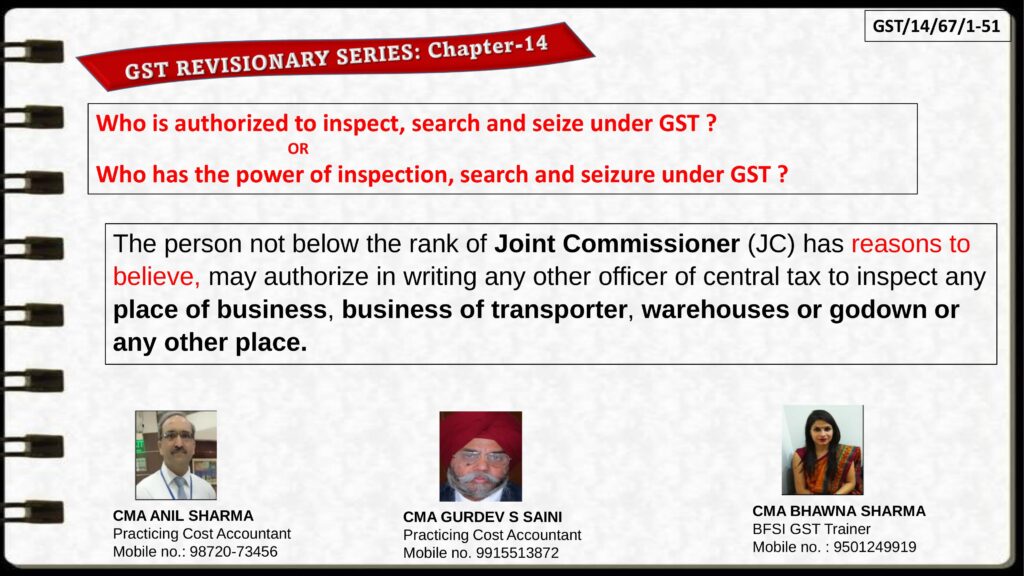
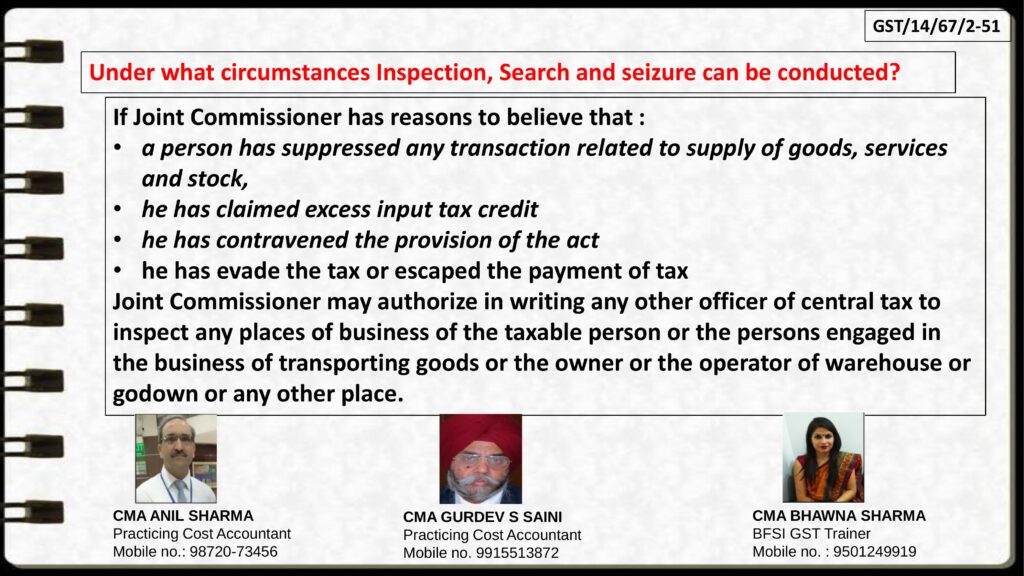
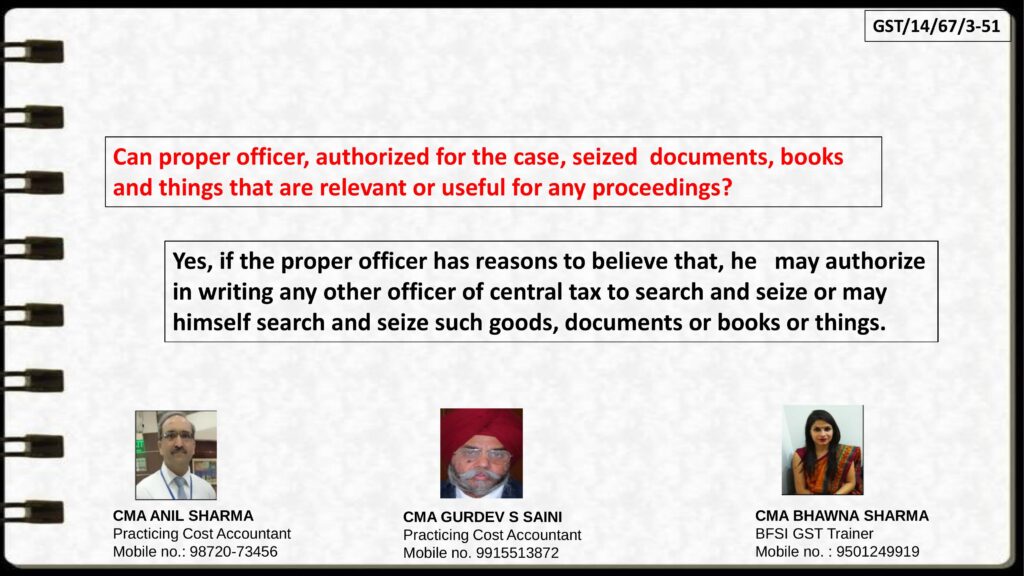
1) Shri CMA Anil Sharma, Shri CMA Gurdev Singh Saini and Smt. CMA Bhawna Sharma posted Chapter-14 containing CGST Act in simple language in PPT format. This is to make dealers, professionals, academicians, students etc. understand the basics of GST laws. Each Chapter in CGST Act, 2017 is explained in the form of Slides as given below for easy understanding of the Act:
|
Chapter-14 slides given below:-
|
|
|
|
|
|
|
|
|
|
5) Book by CMA Anil Sharma, B.Com (Honrs), M.Com, FCMA co-author of the book
|
|
Handbook on GST Audit by Tax Authorities has authored yet another book
|
|
title Goods & Service Tax – Some Perceptions and Reflections. Buy now at Price Rs.300/-.
|
|
|
|
|
|
You wish to publish your Article?
|
If you wish to share your article with maximum readers then please send them at taxupdate.otu@gmail.com. We shall publish it with all due credit to you.
|
|
|
|
|
|
|
Hope the above updates is of use to you. Please share your input and feedback at taxupdate.otu@gmail.com
|
|
|
|
|
|
 
|
Visit our website
|
OTU provides you
|
- Articles on various topics
|
|
- Media - GST, Income Tax & Press R.
|
|
- Notes / Newsletter etc.
|
|
|
|
|