|
|

|
|
|
|
|
|
This website contains information about recent changes mainly in GST laws. It also contains Articles on various topic in GST. Please visit the website and read more.
|
|
|
|
Dear Reader,
|
Please find newsletter for your reading and reference.
|
|
Newsletter no. 91 dated 09.07.2023
|
|
|
Index of the Newsletter
- Recent updates
- GST in Media
- GST Portal
- Article
- Lawgics by Ms.Nidhi Aggarwal
- GST notes by CMA Anil Sharma
- Book by CMA Anil Sharma
|
|
|
|
|
|
|
Central Board of Indirect Taxes and Customs (CBIC) issued Instruction no. 11/2026-Customs dated 23.06.2026 regarding Establishment of Green Channel for Customs Clearance of Pollution Response Equipment and Materials during Oil and Hazardous and Noxious Substances (HNS) Spill Emergencies
|
|
|
|
|
|
|
|
Central Board of Indirect Taxes and Customs (CBIC) issued Instruction no. 10/2026-Customs dated 18.06.2026 regarding Completion of Data Entry in DIGIT.
|
|
|
|
|
|
|
|
Now that the income tax return filing time is here you can start the process by first preparing your tax return information and data. To submit your income tax return (ITR), you will need to use the e-filing ITR portal or the income tax utility. If you are trading in securities and futures and options (F&O) in the stock market, it's important to pay attention to the tax audit requirements.
|
This article explains when stock market traders should conduct a tax audit and then file their ITR.
|
Stock market trading income classification
Taxmann research says that typically intraday trading in the stock market, along with future and option trading, is considered income from speculative business unless you are a registered business that solely engages in stock market trading. If you are a registered business focused only on stock market trading, you will report this income as business income.
|
This article is about those individuals who do not own any registered business, but are simply trading in the stock market, such as students and salaried Employees.
|
According to Taxmann Research, any gains or losses from intra-day trading, classified as speculative transactions, are always subject to taxation under the income category: 'Profits and Gains from Business or Profession'.
|
'Speculative transaction' means a transaction in which a contract for purchase or sale of any commodity including stock and shares is periodically or ultimately settled otherwise than through actual delivery or transfer of the commodity or scrips.
|
The Income-tax Act classifies the business income into 'speculative' and 'non-speculative' categories. There are no separate provisions for computation and taxability of income from speculative business except for the provisions relating to set-off and carry forward of losses.
|
Taxmann Research says the income from speculative business is computed in the same way as normal business and taxed at rates applicable to the individual taxpayer.
|
However, any loss arising from speculative business is not allowed to be set off from any other income including income from non-speculative business. In other words, loss from speculative transactions can be set-off only against income from speculative transactions.
|
Applicability of tax audit for stock market traders
According to Taxmann Research, for checking the applicability of tax audit in such cases, the turnover from intra-day trading first has to be computed.
|
The computation of turnover is a very important factor as the applicability of tax audit is determined on the basis of turnover. In cases where total sales, turnover or gross receipt from the business during the previous year exceed Rs 1 crore, a tax audit is required.
|
However, the raised threshold limit of Rs 10 crore shall be applicable if cash receipts and cash payments during the year do not exceed 5% of the total receipt or payment, as the case may be.
|
In other words, if more than 95% of business transactions are done through banking channels, then tax audit is required only when the turnover exceeds Rs 10 crore.
|
Taxmann Research points out that as intra-day trading in shares is done through banking channels, the tax audit in such cases shall generally be required only when the turnover exceeds Rs 10 crore.
|
Computation of turnover
According to Taxmann Research, the Income-tax Act does not contain any provision or guidance for computation of turnover in the case of intra-day trading. However, the Guidance Note on Tax Audit issued by the ICAI prescribes the method of determining turnover in case of speculative transactions.
|
A speculative transaction refers to a transaction in which a contract for purchase or sale of any commodity or securities, is periodically or ultimately settled otherwise than by actual delivery or transfer of commodity or scrips.
|
Thus, in speculative transactions, there can be both positive and negative differences arising from the settlement of contracts. Each transaction resulting in a positive or negative difference is an independent transaction. In such transactions, though contract notes are issued for the full value of the purchased or sold asset, the entries in the books of account only contain the differences.
|
Accordingly, the aggregate of both positive and negative differences is to be considered as the turnover.
|
For example, Mr. X does the following intra-day trading of shares during the year:
|
Computation of turnover from intra-day trading of shares (speculative transactions).
|
In speculative transactions, the aggregate of both positive and negative differences (income and loss) is considered as the turnover. Thus, the turnover of Mr X shall be computed as follows:
|
Securities Amount of gain or (loss)
|
Set-off and Carry Forward of Losses
According to Taxmann Research, the losses from intra-day trading cannot be set off against income taxable under any other head, i.e., salaries, house property, capital gains and other sources.
|
The losses from speculative business (i.e., loss from intra-day trading) can be set-off only against speculative profits (i.e., profit from intra-day trading). These losses cannot be set off against normal business profits, though both of them fall under the same heads of income: 'profits and gains of business or profession'. However, losses from a normal business can be adjusted against the profits of a speculative business.
|
The unabsorbed loss can be carried forward for up to four Assessment Years. It can be set off only against the speculative business income in the subsequent years. It is important to note that you can carry forward the business loss, provided the ITR is filed on or before the due date.
|
If such ITR is not filed within the prescribed due date, the right to carry forward and set-off is lost.
|
Source: The Economic Times
|
|
|
|
|
|
|
|
When the Goods and Services Tax (GST) was implemented on July 1, 2017, one of its central promises was to eliminate tax cascading and allow seamless flow of input tax credit (ITC) across the value chain.
|
Nearly a decade later, GST has largely succeeded in replacing multiple indirect taxes with a unified system. But one part of the reform continues to generate friction for businesses: input tax credit.
|
Today, ITC has become one of the biggest sources of litigation, working-capital blockage and compliance anxiety under GST. What was designed as a pass-through mechanism has evolved into a compliance-driven process where access to credit depends not only on a company’s own actions, but also on supplier behaviour, invoice matching and portal-based validations.
|
From seamless credit to conditional credit
Experts say GST succeeded in reducing embedded taxation but the architecture of claiming credit has changed significantly.
|
Swaroop Repaka, head of product at ClearTax, told Business Standard that the original design worked on a different principle. “The original promise of input tax credit (ITC) was simple and powerful: kill the cascading of tax and let credit flow seamlessly across the chain. On the first count, GST has genuinely delivered; the embedded-tax problem of the old VAT + service tax + excise era is largely gone.”
|
However, he said, the ITC mechanism has quietly changed character. "We've moved from a self-assessed, trust-based model to a verification-based, supplier-dependent one," he said.
|
Over time, requirements such as invoice matching, GSTR-2B reconciliation, restrictions under Rule 36(4), Section 16(2)(aa), and now the Invoice Management System (IMS) have made credit eligibility more tightly linked to compliance data.
|
Nitin Vijaivergia, partner at Price Waterhouse & Co LLP, told Business Standard, “GST was envisioned as a seamless credit-based tax, eliminating cascading and taxing only value addition. While it has largely delivered on these objectives, the architecture of input tax credit has evolved from a seamless tax mechanism into a conditional entitlement.”
|
“Today, input tax credit is available not merely because tax has been paid, but only when every link in the compliance chain performs flawlessly," he said.
|
Why input tax credit has become a business risk
For businesses, delayed or denied credit directly affects cash flows. Under the current system, companies may have purchased goods, paid suppliers and fulfilled their obligations, but still face delays if supplier filings do not reflect correctly.
|
Maulik Manakiwala, partner - indirect tax, tax & regulatory advisory at BDO India, said: “One of the key challenges is the dependence on GSTR-2B for availing ITC. In cases where suppliers fail to furnish their GSTR-1 within the prescribed time, the corresponding ITC does not reflect in the recipient's GSTR-2B.”
|
This creates “blockage of working capital and delays in credit utilisation”, he told Business Standard.
|
Experts say the debate has gradually shifted from availability of credit to certainty of credit -- a distinction that increasingly influences business decisions and investment planning. Ashish Kumar, head of compliance at supply chain finance platform Vayana, told Business Standard, “Bigger companies have folded this straight into their vendor scorecards. And it's pretty common now for buyers to hold back the GST portion of a payment until the credit actually shows up in their GSTR-2B -- basically tying payment to compliance.”
|
Working-capital pressure and rising disputes
Businesses say supplier defaults are now among the biggest reasons for credit loss or delay.
|
Manakiwala said, “Companies today often lose, delay, or reverse input tax credit (ITC) mainly due to supplier not filing GST returns or paying tax; invoice mismatch or non-reflection in GSTR 2B; missing time limits or delayed claims; and inverted duty structure (higher tax on inputs than outputs).”
|
Sectors with long supply chains or refund dependence are particularly exposed.
|
Vijaivergia said that supplier-side compliance defaults frequently disrupt the flow of input tax credit. He further said inverted duty structures continue creating working-capital stress in sectors such as FMCG, textiles, footwear, fertilisers and renewable energy.
|
Ranjeet Mahtani, partner at tax and regulatory advisory firm Dhruva Advisors, told Business Standard that construction remains particularly vulnerable because project revenues arrive over longer cycles while input costs arise upfront.
|
What businesses want from GST’s next phase
Tax experts argue that the next stage of GST reform may not be about introducing new rules but reducing procedural friction.
|
Businesses want greater certainty that genuine credit will not be denied because of supplier defaults outside their control. Simpler reconciliation processes, clearer buyer protections, faster refunds and easier correction mechanisms remain among the key demands.
|
Repaka said the system has been optimised for revenue protection and the next phase should focus on restoring ease of doing business.
|
Source: Business Standard
|
|
|
|
|
|
|
|
In a dramatic twist, the Central Bureau of Investigation (CBI) on Tuesday arrested senior IAS officer Pardeep Kumar on the very day he retired, tightening its grip on the massive Rs 593-crore Haryana government funds scam.
|
Kumar, the former Member Secretary of the Haryana State Pollution Control Board (HSPCB), is the third IAS officer to be arrested in the case, according to a report of the Times of India. Investigators claim they have uncovered a direct link between him and the alleged siphoning of Rs 169 crore from HSPCB accounts maintained at IDFC First Bank's Sector 32 branch in Chandigarh.
|
The Rs 169-crore loss is being described by the CBI as the biggest financial hit suffered by any department caught in the wider scam.
|
According to the agency, Kumar had been evading investigators for nearly a week and had also sought anticipatory bail from a CBI court. Officials alleged that despite multiple notices, he failed to join the probe. He was eventually tracked down and taken into custody after CBI teams located him.
|
The agency has already arrested two other IAS officers — Ram Kumar Singh and Pankaj Agarwal — in connection with the case.
|
How the Alleged Fraud Worked
The HSPCB case is part of a much larger alleged banking fraud spanning eight Haryana government departments.
|
Investigators claim public money was diverted through fake or non-existent fixed deposits and suspicious banking transactions before being routed through shell companies.
|
The CBI alleges Kumar personally oversaw the investment process and facilitated the transfer of pollution board funds to the Chandigarh branch of the bank, allegedly exceeding prescribed limits for fixed deposits.
|
The probe found that government funds were first moved into a bank account that allegedly lacked documented departmental approval. Officials said the pollution board could not produce records explaining how the account was opened.
|
What investigators found next raised even more questions.
|
According to the CBI, the promised fixed deposits were never created. Instead, funds were allegedly drained through fraudulent debit transactions, resulting in a net loss of Rs 169 crore to the state exchequer.
|
22 arrested so far
With Kumar's arrest, the total number of arrests in the wider scam has risen to 22.
|
The CBI has already filed charge sheets against 17 accused, including six officials from IDFC First Bank and AU Small Finance Bank, three Haryana government officials, two companies, and six private individuals.
|
The agency is also probing related cases involving Chandigarh Smart City Limited (CSCL) and CREST, where charge sheets have already been filed.
|
In another major development, the CBI arrested two former bank officials linked to the Rs 593-crore fraud.
|
A special CBI court in Panchkula remanded Charanjeet Singh Randhawa, former branch head of AU Small Finance Bank, and Mohammad Shamim Dhar, former team head of IDFC First Bank's Government Business Group, to three days of CBI custody.
|
Investigators are continuing to trace the money trail and identify all those involved in what is emerging as one of Haryana's biggest alleged government fund scams.
|
Source: The Economic Times
|
|
|
|
|
|
|
|
CBIC -
To commemorate nine years of the Goods and Services Tax (GST), the Central Board of Indirect Taxes and Customs (CBIC) organized a special celebration at CSOI, New Delhi, on 1 July 2026. The event was held under the theme, ‘सुगम कर व्यवस्था, सशक्त भारत’, highlighting GST's
|
GST Indore -
The 9th #GSTDay was celebrated with great enthusiasm at CGST & Central Excise Commissionerate, Indore under the theme "सुगम कर व्यवस्था, सशक्त भारत".
|
GST Samvad an interaction among officers, taxpayers, trade & industry representatives, and tax professionals was organised on 30.06.2026 to commemorate nine years of GST as a transformative reform. The programme highlighted taxpayer facilitation initiatives, digital services, policy updates, and the importance of timely and voluntary compliance.
|
9 Years of GST! The CGST Indore Commissionerate celebrated the 9th anniversary of the Goods and Services Tax. The event marked nearly a decade of economic transformation and a unified national market.
|
Recognizing Excellence: The Department felicitated leading revenue contributors-Bharat Petroleum( @BPCLimited), HDFC Limited(@HDFCLTD), and MRF Limited(@MRF_Corporate)-for their exemplary tax compliance.10 dedicated departmental officers and a meritorious student were also honored
|
Taxpayer First: CGST Indore Commissioner Shri Peeyoush Bhati highlighted GST’s role in nation-building and announced that the Commissionerate will now regularly host monthly meetings with taxpayers to address grievances and ensure a transparent, efficient regime.
|
GST Aurangabad Commissionerate -
CGST AURANGABAD building lit up to kick in early 9th GST day celebrations
|
CGST Mumbai West -
As part of the #GSTPakhwada on occasion of upcoming 9th GST Day, on this year’s theme "सुगम कर व्यवस्था, सशक्त भारत” (Easy Tax System, Empowered India), CGST Mumbai West Commissionerate organised an Essay Writing Competition for officers and staff.
|
The winners and participants were felicitated by the Hon’ble Commissioner, CGST&C.Ex. Mumbai West appreciating their enthusiasm and insightful contributions.
|
WIRC of The Institute of Cost Accountants of India
Celebrating one of India’s landmark tax reforms that strengthened transparency, unity and the vision of One Nation, One Tax, One Market.
|
DGTPS MUMBAI CBIC
9वें GST दिवस के उपलक्ष्य में DGTS MZU & AZU द्वारा "Nine Years of GST: Perspective from Taxpayers" विषय पर Kendriya Vidyalayas के विद्यार्थियों हेतु एक वेबिनार आयोजित किया गया।
|
इस सत्र के माध्यम से GST के प्रति जागरूकता, वित्तीय साक्षरता को बढ़ावा दिया गया तथा विद्यार्थियों को राष्ट्र निर्माण में कराधान की भूमिका से अवगत कराया गया।
|
CGST Thane -
CGST Thane organized a 'Hindi & Marathi Essay Competition' for officers & staff
|
The Commissioner honored winners with certificates for outstanding performance
|
Celebrating language, awareness & commitment to GST
|
CGST MUMBAI EAST
As part of the 9th GST Day celebrations, CGST & Central Excise, Mumbai East Commissionerate organised Essay Writing and Drawing Competitions for students of Sandesh Vidyalaya & Junior College, Vikhroli (East), on 30.06.2026, with enthusiastic participation from young students.
|
The essay competition focused on GST and citizens’ responsibility towards tax compliance, while the drawing competition encouraged students to express ideas creatively. Prizes were awarded to winners, promoting taxation awareness and responsible citizenship among young minds.
|
As part of the 9th Anniversary celebrations of GST, CGST & Central Excise, Mumbai East Commissionerate organised GST "SAMVAD" and interactive session with members of trade and tax professionals on 29 June 2026 at Vikhroli to mark the occasion with active participation.
|
The session witnessed enthusiastic participation. Queries on filing of appeals, GST returns and other GST-related issues were addressed by officers, making it a valuable platform for knowledge sharing, constructive dialogue and promoting voluntary tax compliance across sectors.
|
CGST & Customs Thiruvananthapuram Zone
On the occasion of International Day Against Drug Abuse & Illicit Trafficking, the officers and staff of CGST & Customs Thiruvananthapuram Zone took a solemn pledge under the #NashaMuktBharatAbhiyan to build a society free from the menace of drugs.
|
DGTS AHMEDABAD CBIC
30.06.2026 को,DGTS AZU और MZU ने JG University के साथ मिलकर GST Awareness & Overview पर एक हाइब्रिड सेमिनार आयोजित किया।DGTS के Pr. ADG,श्री सुमित कुमार ने उद्घाटन भाषण दिया। CBIC के रिटायर्ड सुपरिटेंडेंट श्री जॉन क्रिश्चियन मुख्य वक्ता थे। #DGTS #GST #GSTDAY2026 #CBIC
|
Article Writing Competition 2026
To commemorate 9th Year of GST, Online Tax Update (OTU) launched 'Article Writing Competition 2026'. Registration starts today 1st July 2026 and ends on 15th July 2026. Article submission till 31st July 2026 and Winner Announcement in August, 2026. Cash Award + Certificate of Participation. Participation fees Rs. 300/- Read more
|
|
|
|
|
|
|
|
Centre has extended the last date for filing appeals before the Goods and Services Tax Appellate Tribunal (GSTAT) to July 31, 2026, giving taxpayers an additional month to submit their cases after a surge in filings led to technical difficulties on the GSTAT portal.
|
The extension applies to appeals filed under Section 112(1) read with Section 112(3) of the Goods and Services Tax (GST) law.
|
The revised deadline replaces the earlier cut-off of June 30, 2026, which had been notified by the government on September 17, 2025.
|
The decision follows recent representations from various stakeholders who flagged technical issues arising from a rush of appeals being filed on the GSTAT portal ahead of the deadline.
|
While noting that the original due date had been notified well in advance in September 2025, the government said filing activity had intensified sharply in recent weeks. It said 30,000 appeals were filed in the last 15 days alone, with daily filings touching a peak of 5,500 appeals.
|
Advising against eleventh-hour filings, the government urged taxpayers to complete their appeal submissions well in advance to ease pressure on the GSTAT portal.
|
The GST Appellate Tribunal serves as the first judicial appellate forum for taxpayers seeking to challenge orders issued by GST authorities after the disposal of their first appeals.
|
Source: The Economic Times
|
|
|
|
|
|
|
|
|
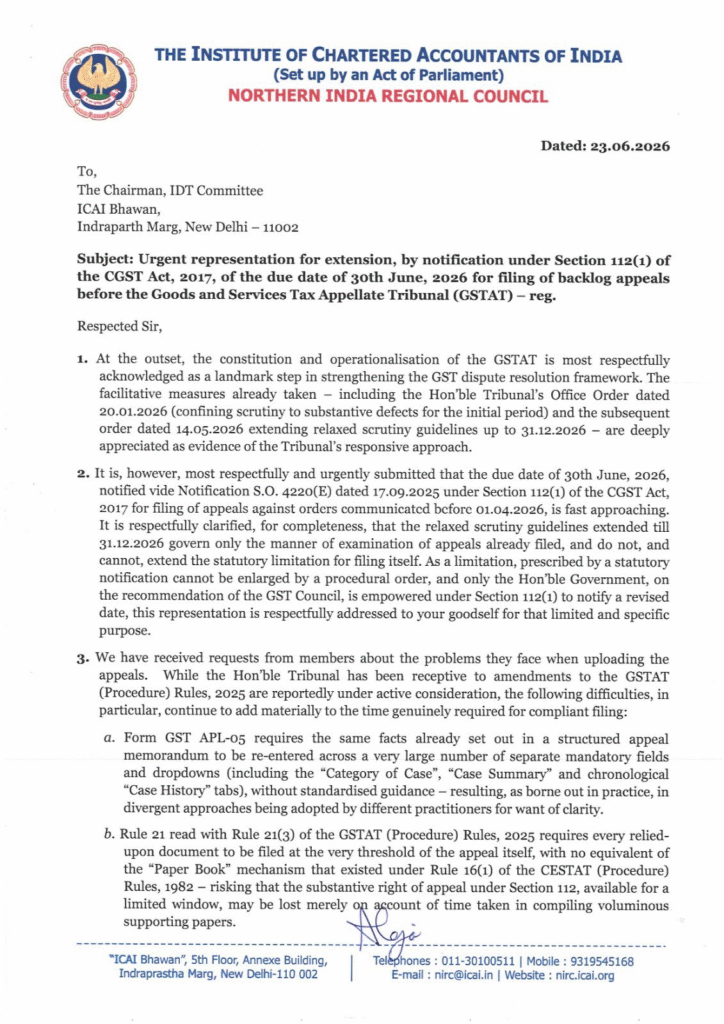
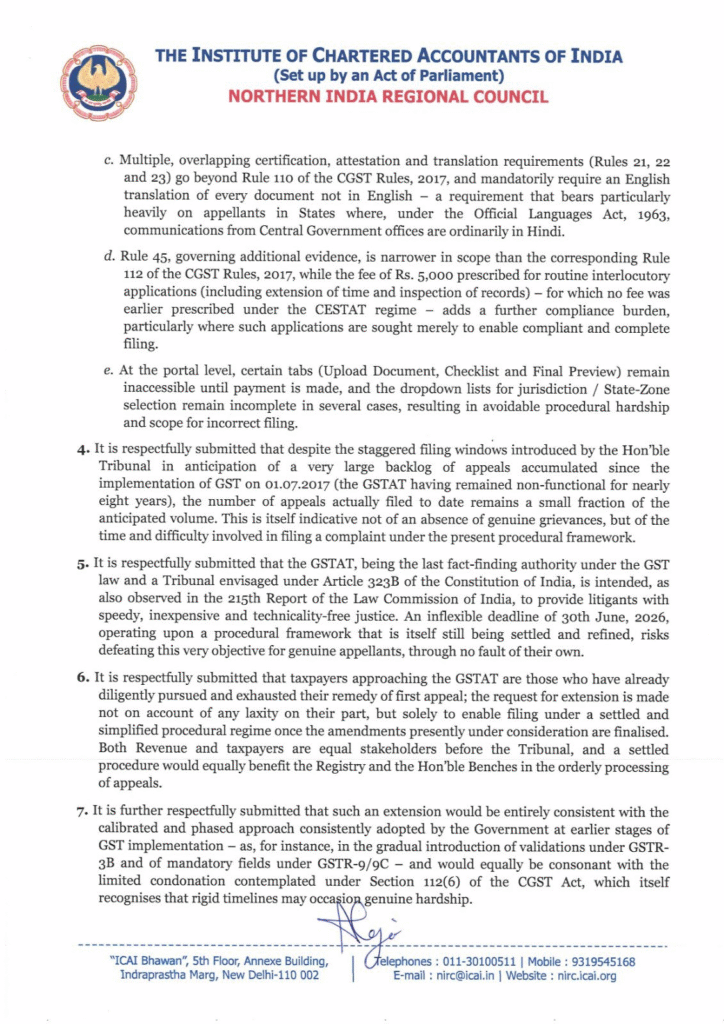
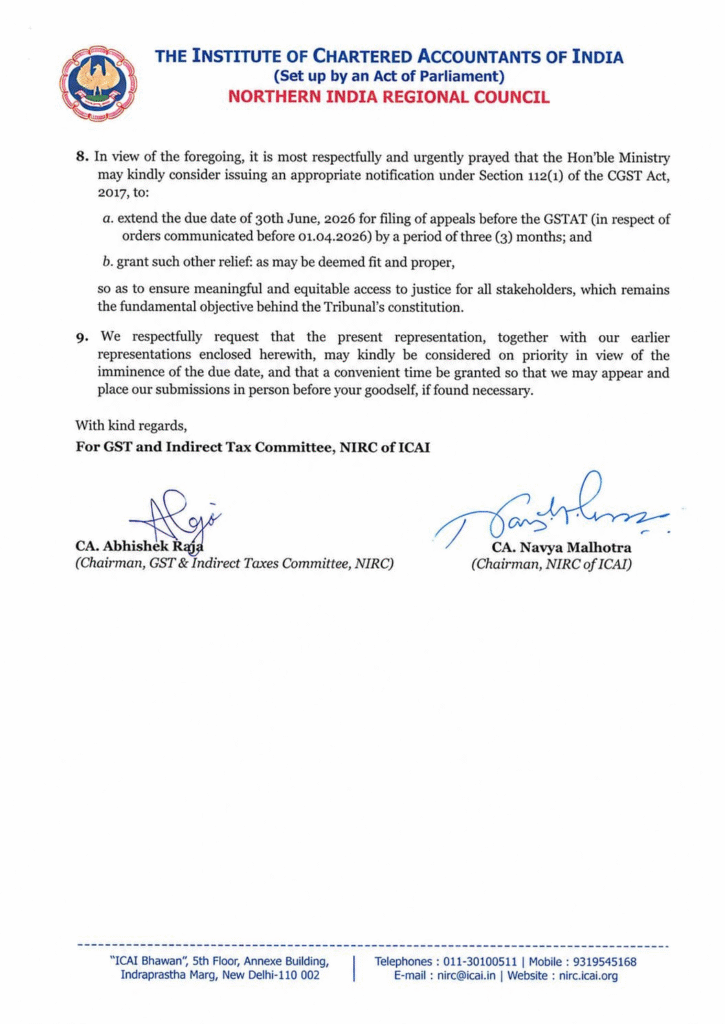
GST & IDT Committee has requested the Chairman, IDT Committee, ICAI, New Delhi to urgently represent before the respective forums for the date extension of GSTAT, i.e., 30-Jun-2026.
|
|
|
|
|
|
|
|
|
|
|
|
|
|
|
|
|
Tata Steel Limited said tax authorities have filed an appeal seeking restoration of penalties worth Rs. 368.72 crore that were earlier dropped in a GST adjudication order, even as proceedings on the underlying demand remain stayed by the Jharkhand High Court, according to a stock exchange filing.
|
"One June 16, 2026, the Assistant Commissioner, Division-I, CGST & Central Excise , Jamshedpur, Jharkhand filed an appeal before the Commissioner (Appeals) of CGST & Central Excise, Ranchi against the above-mentioned Adjudication Order dated December 18, 2026, to the extend that the Adjudicating Authority has dropped the penalty amounting to Rs. 3,68,72,21,158/-," Tata Steel said in its exchange filing.
|
The appeal, filed on June 16 by the Assistant Commissioner, CGST & Central Excise, Jamshedpur, challenges the December 18, 2025, adjudication order to the extent it waived the penalty.
|
The original show-cause notice, issued in June 2025, proposed disallowance of input tax credit for FY 2018-19 to FY 2022-23, with an aggregate GST demand of about Rs. 1,007.55 crore. Of this, Tata Steel said it has already paid Rs. 514.19 crore in the normal course, leaving an alleged exposure of Rs. 493.35 crore.
|
In December 2025, the adjudicating authority confirmed the tax demand of Rs. 493.35 crore, imposed a penalty of Rs. 638.83 crore and applicable interested, while dropping an earlier proposed penalty of Rs. 368.72 crore. Tata Steel subsequently moved the Jharkhand High Court, which granted a stay on all further proceedings in March 2026.
|
"This matter is, inter-alia, contingent upon the final adjudication of the issue concerning the issuance of show cause notices for multiple periods, which is presently sub judice before the High Court," Tata Steel said.
|
Tata Steel added that it has a good case on merit and hence will contest the same before the Appellate Authority within the statutory timelines, noting that the development has no impact on its financial or operational position, arising from the said appeal.
|
Source: The Economic Times
|
|
|
|
|
|
|
|
With the June 30 deadline for filing legacy appeals before the Goods and Services Tax Appellate Tribunal (GSTAT) fast approaching , tax professionals, chartered accountants and industry bodies have urged the Finance Ministry to extend the filing window, warning that persistent technical glitches on the GSTAT portal could prevent thousands of taxpayers from filing their appeals before the deadline.
|
The demand comes as taxpayers seek to file appeals arising from nearly nine years of litigation accumulated during the period when the Tribunal remained non-operational. Experts said the combination of a massive backlog, voluminous documentation and continuing portal-related issues has significantly constrained taxpayers' ability to meet the deadline.
|
According to Aditya Singhania, Founder of Trackase, the backlog is estimated at nearly four lakh to 4.5 lakh legacy appeals, while only around 36,929 appeals have been filed nationalwide so far.
|
"The ground reality is deeply concerning. Against an anticipated backlog of nearly four to four and a half lakh appeals accumulated over nine years of the Tribunal's non-operationality, only around 36,929 appeals have been filed nationally as of now," Singhania said.
|
He attributed the slow pace of filings to the teething troubles of the newly launched e-filing portal, including server time-outs, authentication challenges, payment gateway reconciliation issues and a filing structure that requires considerable time and effort to navigate.
|
Experts cite portal hurdles, record backlog
According to experts and representations submitted to the Finance Ministry, taxpayers continue to face multiple technical issues on the GSTAT portal, including session expiry, repeated login failures., Aadhaar authentication problems, Digital Signature Certificate (DSC) validation failures, payment reconciliation delays and incomplete integration between the Goods and Services Tax Network (GSTN) and the GSTAT portal.
|
Experts said taxpayers are also required to retrieve and compile extensive records accumulated over several years, including adjudication orders, invoices, reconciliations, e-way bills, ledger extracts and other supporting documents, making the filing process particularly time-consuming.
|
CA Nitin Bansal, State-President, BJP CA Cell Haryana, said the Finance Ministry has received several representations highlighting the practical challenges taxpayers are facing in filing appeals before the Tribunal.
|
"With the Tribunal becoming operational after nearly nine years, taxpayers must now prepare and file a substantial backlog of appeals within a limited window, many involving voluminous, multi-year records, even as the GSTAT e-filing portal continues to stabilise," Bansal said.
|
He added that extending the deadline would be revenue-neutral as the mandatory pre-deposit and other conditions would remain unchanged while ensuring genuine taxpayers are not denied their appellate remedy because of circumstances beyond their control.
|
Over-time extension sought
CA Sonu Goel, Chairman, Panipat Branch of the Institute of Chartered Accountants of India (ICAI), said a one-time extension would ensure disputes are decided on their merits rather than procedural constrints.
|
"One-time extension would safeguard taxpayers' right to appeal, uphold the principles of natural justice, and ensure that dispute are decided on merits rather than being defeated by procedural or technological constraints. This pragmatic relief would further reinforce the Government's commitment to ease of doing business while maintaining certainty and confidence in the GST ecosystem," Goel said.
|
Parag Mehta, Partner at N.A. Shah Associates LLP, said the portal continues to experience issues ranging from login failures and incorrect fee calculations to disappearing data.
|
"Considering the fact that the portal is not fully supporting the filing process and the number of appeals filed remains significantly lower than expected, the deadline should be extended. GSTAT is an important appellate remedy and taxpayers should not be deprived of that opportunity," Mehta said.
|
Bas association flags nationwide concerns
The Sales Tax Bar Association has also written to the Finance Ministry seeking an extension of the filing deadline, stating that taxpayers and tax professional across the country continue to face significant practical and technical difficulties while filing appeals through the GSTAT portal.
|
In its representation, the association said the present limitation period covers appellate orders accumulated over nearly nine years when the Tribunal remained non-functional, requiring taxpayers to retrieve historical records and prepare detailed documentation within a limited period.
|
The association highlighted recurring issues including server interruptions, repeated Aadhaar authentication and DSC validation failures, payment gateway reconciliation delays, manual duplication of information already available on the GSTN portal and challenges in uploading voluminous records.
|
It warned that if the deadline is not extended, thousands of taxpayers could lose the opportunity to pursue their statutory appeals because of technological and procedural constraints, potentially leading to avoidable litigation before various High Courts.
|
Prabhat Ranjan, Senior Director at Nexdigm, said extending the filing deadline has become "the need of the hour".
|
"The appellate process should be about the actual merits of the issues between both parties and not technical questions of delay. This is a taxpayer-friendly measure that will make GST dispute resolution processes more fair and credible," he said.
|
As of publication, the government has not announced any extension of the June 30 deadline for filing legacy GSTAT appeals. While the GSTAT has extended the period for relaxed scrutiny of filed appeals until December 31, 2026 , tax professionals, industry experts and representative bodies continue to seek a one-time extension of the filing deadline, arguing that additional time would enable taxpayers to exercise their statutory right of appeal without affecting revenue, as the mandatory pre-deposit requirements would continue to apply.
|
Source: The Economic Times
|
|
|
|
|
|
|
|
Businesses shifting their principal place of business to a new GST jurisdiction will not have to restart pending tax proceedings with the Central Board of Indirect Taxes and Customs (CBIC) clarifying that the new jurisdictional authority will take over and complete all ongoing cases from the stage at which they were left, reported PTI.
|
The clarification comes after the CBIC received references from field formations seeking guidance on the validity of proceedings and the authority responsible for handling cases when a registered taxpayer changes jurisdiction because of a shift in its principal place of business.
|
Under the circular, any action or proceeding - including investigation, audit, show cause notice or adjudication under the Central GST law - initiated by the tax officer having jurisdiction over the registered taxpayer at the time the action was undertaken (transferor jurisdiction authority) will remain valid even if the taxpayer subsequently shifts to another tax jurisdiction (transferee jurisdictional authority).
|
"The transferee jurisdictional authority shall act upon, give effect to, and proceed on the basis of such earlier valid action taken by the transferor jurisdictional authority, as if it had itself initiated the same," the CBIC said in the circular.
|
The indirect tax board further clarified that if any fresh issue comes to the notice of the earlier jurisdictional authority after the taxpayer has shifted, the tax officer should intimate the new jurisdictional officer for appropriate action.
|
"Where the taxable person migrates to another jurisdiction during the pendency of any action or proceeding initiated by the transferor jurisdictional authority, the transferee jurisdictional authority shall take over and conclude the same from the stage at which it stood at the time of migration/ transfer," the CBIC circular said.
|
The new jurisdictional officer will also have the authority to initiate and conclude any consequential proceedings arising from the case.
|
Rajat Mohan, Managing Partner at AMRG Global, said the clarification addresses a key procedural gap under the GST regime.
|
"By clearly defining the responsibilities of transferor and transferee authorities, CBIC has removed ambiguity that often resulted in jurisdictional objections and delays in adjudication," Mohan said.
|
Source: The Times of India
|
|
|
|
|
|
|
|
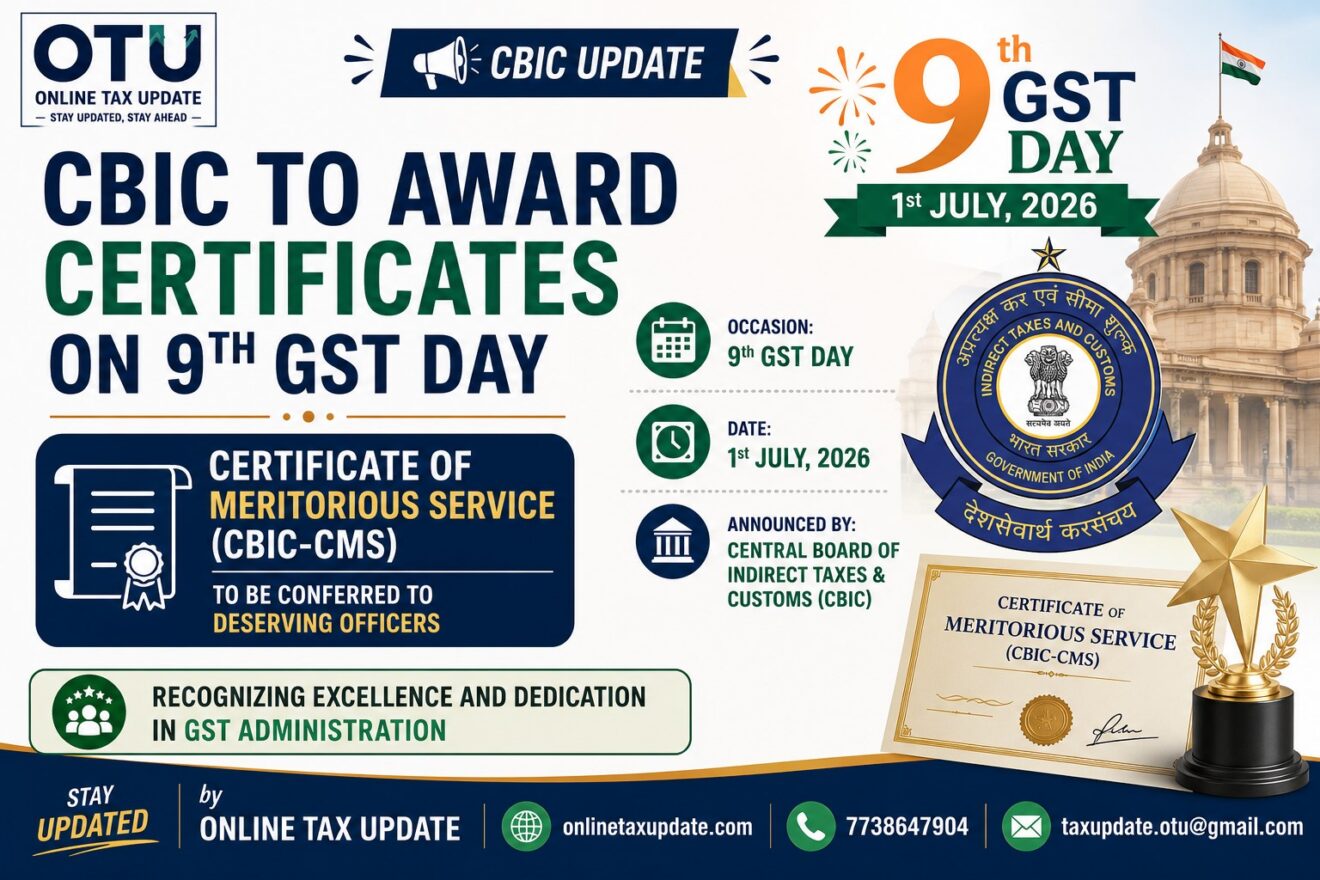
On the occasion of 9th GST Day to be celebrated on 1st July, 2026 the Central Board of Indirect Taxes and Customs vide Office Memorandum dated 29.06.2026 has decided to grant Certificate of Meritorious Service (CBIC-CMS) to the following officers:
|
|
|
|
|
|
|
|
The Malad Chamber of Tax Consultants made a representation to the Hon'ble Union Finance Minister, Smt. Nirmala Sitharaman, New Delhi on 26.06.2026 requesting an extension of the statutory deadline for filing GSTAT appeals under Section 112 of the CGST Act, 2017 from 30th June 2026 to 31st December 2026.
|
|
|
|
|
|
|
|
The recent meeting between Prime Minister Narendra Modi and President Droupadi Murmu, followed by a meeting between Home Minister Amit Shah and the President, have fuelled speculation over a possible Union cabinet reshuffle as well as changes in the BJP's organisational structure.
|
According to sources, the reshuffle is likely to take place before the upcoming Monsoon Session of Parliament.
|
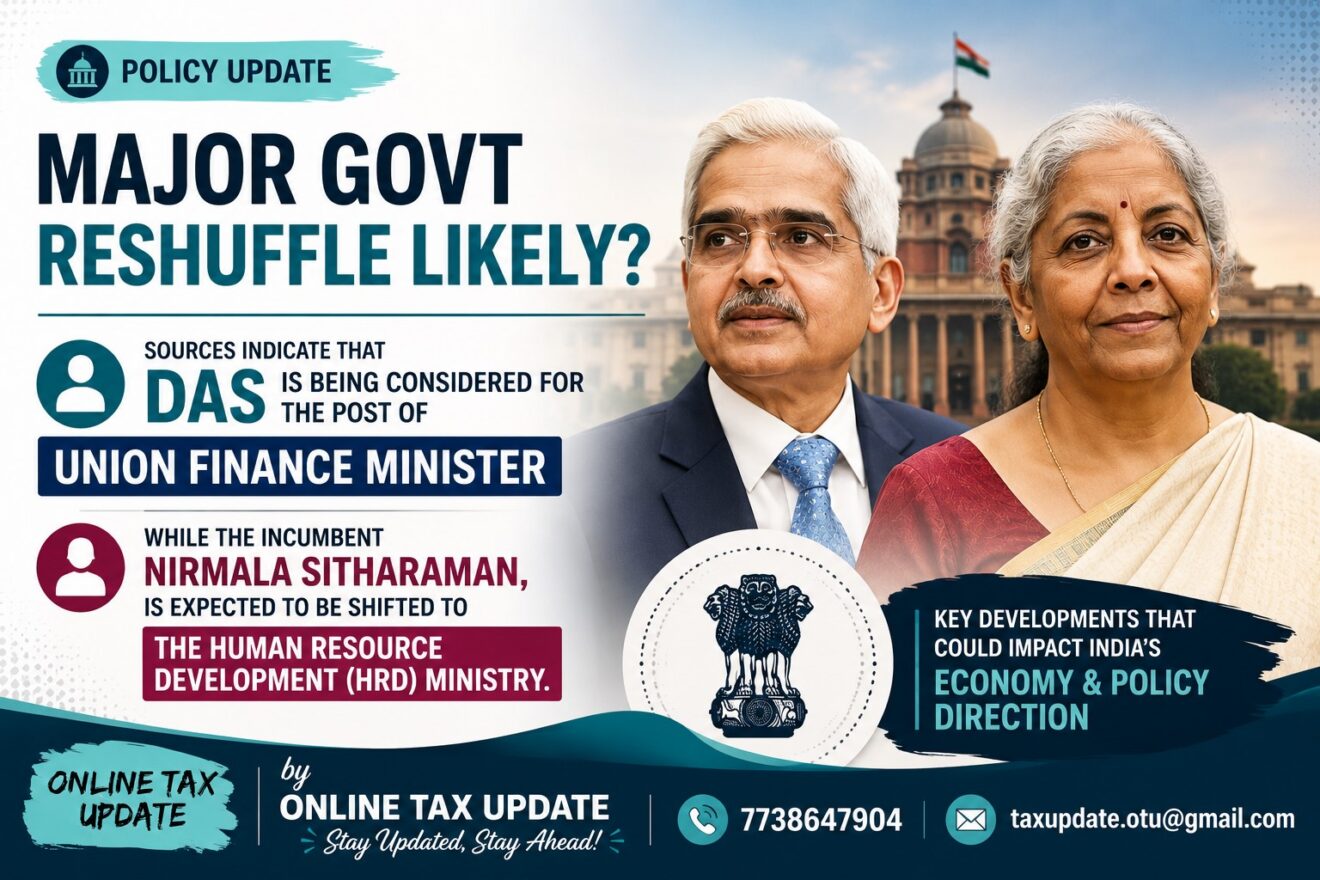
Among the names being discussed is that of former Reserve Bank of India (RBI) governor Shaktikanta Das, who is currently serving as the Principal Secretary to the Prime Minister.
|
Sources indicated that Das is being considered for the post of Union finance minister, while the incumbent , Nirmala Sitharaman, is expected to be shifted to the human resource development (HRD) ministry. Sitharaman has been serving as the Union Minister for finance and corporate affairs since 2019.
|
There has, however, been no official confirmation from either the government or the BJP regarding any proposed changes.
|
If the move materialises, it would bring into the Cabinet a seasoned administrator with more than four decades of experience across several areas of governance.
|
Das served as the 25th Governor of the RBI from 2018 to 2024. Before assuming charge at the RBI, he was a member of the 15th Finance Commission and India's G20 Sherpa.
|
Over the course of his career, Das has held several key positions in both the Central and State governments, handling portfolios related to finance, taxation and industries and infrastructure.
|
During his tenure in the finance ministry, he was closely associated with the preparation of eight Union Budgets, giving him extensive experience in public finance and economic policymaking. Besides, Das was also the senior Department of Economic Affairs official in the finance ministry during the planning and implementation phase of demonetisation.
|
A postgraduate from St. Stephen's College, University of Delhi, Das has also served as India's Alternate Governor to the World Bank, the Asian Development Bank, the New Development Bank, and the Asian Infrastructure Investment Bank. He has represented India at major international forums, including the IMF, G20, BRICS, and SAARC.
|
|
|
|
|
|
|
|
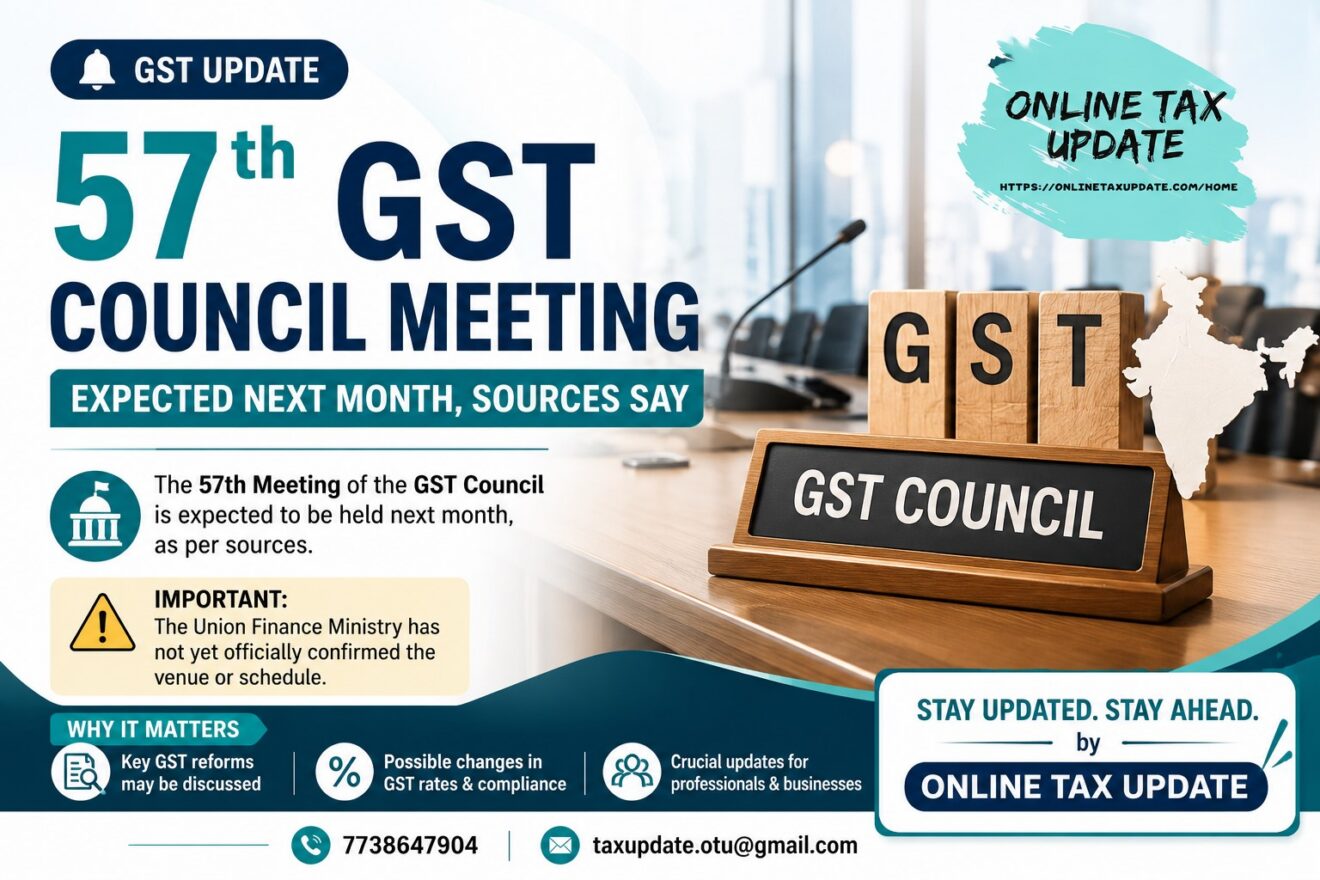
Kolkata is likely to host the 57th meeting of the GST Council next month, sources said, although the Union Finance Ministry has not yet officially confirmed the venue or the schedule. The meeting is expected to be held in the second half of July, and could take up the next round of indirect tax policy reforms.
|
Hosting the meeting in Kolkata holds significance as it would mark one of the first major meetings of a Constitutional federal body in West Bengal after the Assembly elections. While the GST Council independently decides its agenda and meeting schedule, the choice of Kolkata would coincide with the Centre’s broader emphasis on strengthening the State’s profile as a destination for investment and financial activity following the change in government.
|
New reforms
The previous GST Council meeting, held on September 3, 2025, came after a gap of nearly nine months, despite the rules providing for at least one meeting every quarter. That meeting unveiled GST 2.0, including rate rationalisation and measures to ease compliance. Tax experts now expect the council to consider another set of policy reforms, some of which were discussed during 4th Annual Seminar on Direct and Indirect Taxes of the Bengal Chamber of Commerce & Industry (BCCI).
|
Vivek Jalan, Chairperson of the National Fiscal Affairs and Taxation Committee of BCCI, said that in the spirit of GST 2.0, which was launched to strengthen India’s manufacturing base, the council should correct the anomaly of non‑refund of Input Service ITC under the inverted duty structure. While GST 2.0’s rate rationalisation has supported consumption, the cost pressures has deepened on manufacturers. “Addressing this gap will ensure reducing cascading taxes, boosting competitiveness and advancing India’s vision of becoming the world’s third‑largest economy by 2047,” he said.
|
Also, it has been proposed before the GST Council to consider reducing the GST rate on autism care centres and allied sectors from 18 per cent to 5 per cent. Such a measure under GST would ease the financial strain on families and institutions, while reinforcing the government’s vision of inclusive growth. “By aligning tax policy with compassion, the council can ensure that essential services for differently‑abled children remain affordable, accessible and sustainable, a step that truly reflects the spirit of GST reforms,” said Jalan.
|
Source: The Hindu businesline
|
|
|
|
|
|
|
|
The Karnataka State Chartered Accountants Association (R) (KSCAA) has submitted a representation highlighting practical and procedural issues faced by taxpayers and professionals in relation to the Goods and Services Tax Appellate Tribunal (GSTAT). The representation focuses on addressing operational challenges and suggesting measures to enhance the efficiency, accessibility, and effectiveness of the GSTAT framework.
|
Considering the initial challenges faced by stakeholders in adapting to the newly operational GSTAT framework and portal, KSCAA has also requested an extension of the timelines for filing appeals and related compliances, so that taxpayers are not prejudiced on account of procedural and technical difficulties. Addressing these concerns and providing adequate transition time will facilitate smoother implementation, reduce avoidable litigation, and ensure meaningful access to the appellate remedy envisaged under the GST law.
|
|
|
|
|
|
|
|
Nine years after the rollout of the goods and services tax (GST) regime, businesses have largely embraced India's biggest indirect tax reform, with 99% reporting a positive or neutral experience, according to a Deloitte India survey. As the tax regime matures, businesses are now shifting their focus to ‘GST 2.0’, seeking reducing disputes, speeding up of refunds, improving working capital and simplifying compliance.
|
The findings come at a time when GST collections continue to be robust. In May, the Centre and states together collected ₹1.94 trillion in gross GST revenue, before adjusting for refunds, up 3.2% from ₹1.88 trillion mopped up a year ago.
|
The survey covered 1,096 C-suite and C-1 level executives across banking and financial services, consumer, energy, resources and industrials, government and public services, life sciences and healthcare, global capability centres, private equity and venture capital, and technology, media and telecommunications. Respondents included micro small and medium enterprises (MSMEs), large companies and very large enterprises.
|
About 69% respondents identified compliance digitalization as the biggest benefit of GST, followed by supply chain optimization and gains from rate rationalization. The survey noted that confidence in GST has been driven by the digitalization of compliance, automation of tax processes and the stabilization of e-invoicing and e-way bill systems.
|
"GST has significantly improved compliance and transparency with the GST Network as India's trusted tax framework. This digital backbone enables taxpayers, businesses and the government with real-time compliance and data-driven decision-making," said Gokul Chaudhri, president, tax at Deloitte South Asia.
|
Businesses ranked interpretational clarity as their top policy priority, with 87% of the respondents seeking greater certainty in tax administration. This was followed by demands for improved working capital management (67%), uniform audits (61%) and faster refunds.
|
The survey also found strong support for centralized audits, simplified GST rates and allowing reverse-charge mechanism payments through input tax credit.
|
"The key industry expectations include the need to resolve interpretational ambiguities, improve working capital through streamlined refunds and credit utilization, address ITC disputes and implement a unified and harmonized audit process," said Mahesh Jaising, partner and leader, indirect tax at Deloitte India.
|
Addressing inverted duty structures emerged as another major area of concern. Nearly 69% of respondents favoured expanding the refund formula to include all input taxes, while 63% supported further rate rationalization to reduce inversion-related issues. More than half sought refund benefits for accumulated input tax credit balances.
|
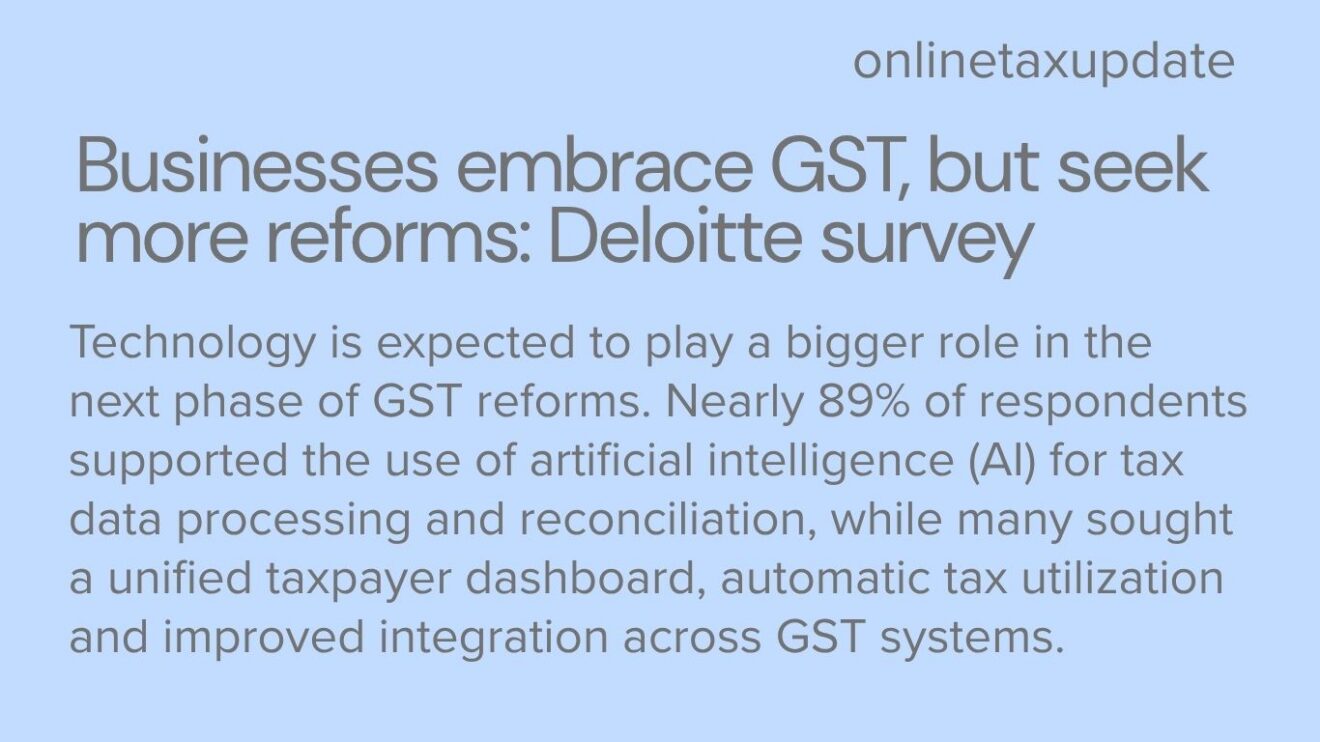
Technology is expected to play a bigger role in the next phase of GST reforms. Nearly 89% of respondents supported the use of artificial intelligence (AI) for tax data processing and reconciliation, while many sought a unified taxpayer dashboard, automatic tax utilization and improved integration across GST systems.
|
The survey found that priorities varied across sectors. Consumer and energy firms highlighted supply-chain optimization as the biggest gain from GST, while technology companies placed greater emphasis on compliance digitalization. Life sciences and healthcare companies cited benefits from competitive pricing following rate rationalization, while BFSI and global capability centres favoured greater automation and integrated digital infrastructure.
|
For MSMEs, quarterly return filing emerged as the most appreciated reform, with positive responses rising to 67% in 2026 from 12% in 2023. Smaller businesses also strongly supported invoice-based input tax credit eligibility, quarterly payment mechanisms and faster refunds to ease liquidity pressures, the survey said.
|
Some economists underscored the need for a more efficient refund mechanism under GST.
|
“Faster and more predictable GST refunds are critical for improving business cash flows. Delays in refunds increase working capital requirements and financing costs," said Dharmveer, assistant professor, economics at the Delhi School of Economics. "A more streamlined refund mechanism would enhance liquidity, especially for MSMEs and exporters, and support investment and growth.”
|
GST was introduced on 1 July 2017 as India's biggest indirect tax reform, replacing multiple central and state taxes with a single tax system. Since then, the regime has evolved with the rollout of e-invoicing, e-way bills and other digital compliance measures aimed at making tax administration easier and more transparent.
|
|
|
|
|
|
|
|
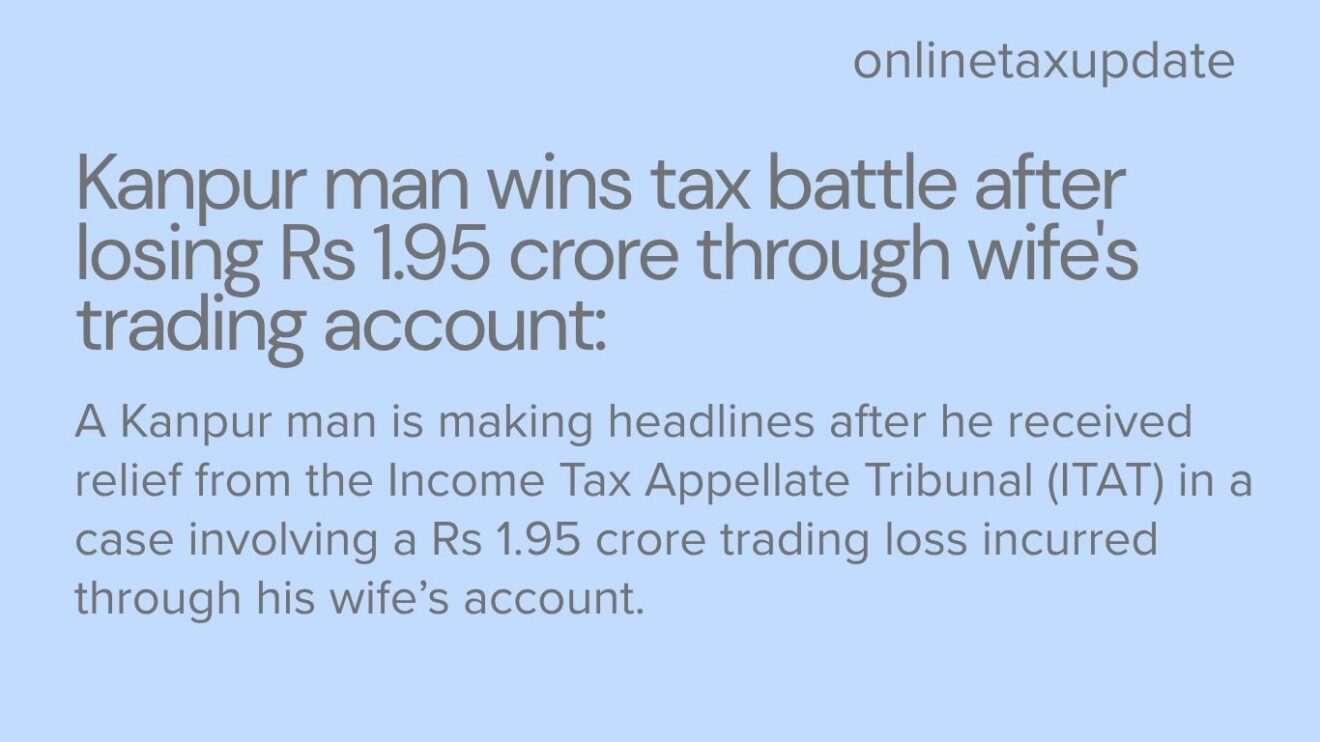
A Kanpur man is making headlines after he received relief from the Income Tax Appellate Tribunal (ITAT) in a case involving a Rs 1.95 crore trading loss incurred through his wife’s account.
|
According to The Economic Times, the man, whose identity remains undisclosed, transferred funds to his wife's account and used it to carry out Futures and Options (F&O) trading. The transactions resulted in a loss of Rs 1.95 crore during the financial year. When filing his income tax return, he reported the loss on his own return and adjusted it against his income.
|
However, the Income Tax Department challenged the claim and raised a tax demand, stating that the loss belonged to his wife's account and therefore could not be adjusted against the husband's income.
|
The dispute eventually reached the ITAT's Lucknow Bench. After examining the facts, the tribunal found that the husband had transferred funds to his wife's account, and that he carried out the trading through his wife's account, and the loss occurred there.
|
The tribunal pointed out that, under the Income Tax Act’s clubbing rules, income generated from assets gifted or transferred to a spouse is typically included in the transferor’s income.
|
|
|
|
|
|
|
|
GSTN Advisory no. 666 dated 01.07.2026
|
It is informed that the Aggregate Annual Turnover (AATO) functionality is currently being upgraded to enable automatic updation of AATO as subsequent returns are filed post amendment window. As this enhanced functionality is being deployed from 1st July 2026, the window for amendment of AATO by taxpayers for FY 2025-26 has been revised on the GST Portal.
|
GSTN had earlier issued an advisory dated 02 May 2022 regarding the functionality for amendment of Aggregate Annual Turnover (AATO) on the GST Portal, which was applicable for AATO till FY 2024-25. Under the said advisory, taxpayers were provided the facility to amend their turnover during the month of May.
|
In continuation thereof, it is informed that the timelines for submission of amendment applications and verification of amended AATO details by Tax Officers, in respect of FY 2025-26, have been revised.
|
To ensure greater consistency, accuracy, and uniformity in the reporting of AATO across various modules of the GST Portal, certain system-level enhancements are being implemented. Consequently, the revised timelines for amendment of AATO for FY 2025-26 by the taxpayers and subsequent action by the tax officers are as under:
|
AATO Amendment Application window for FY 2025-26
01 July to 31 July 2026
|
Review by jurisdictional Tax officer
01 Aug to 15 Aug 2026
|
Accordingly, the facility for amendment of AATO, which was earlier available during May as per the previous advisory, shall now be made available from 01 July to 31 July 2026 for FY 2025-26. The amended AATO details will be available for review of Tax Officers from 01 Aug to 15 Aug.
|
All taxpayers are requested to take note of the revised timelines and carefully review the AATO details while submitting the amendment application and ensuring that the amended details are accurate before submission.
|
In case of any difficulty or concern, taxpayers are advised to raise a grievance through the Self-Service Portal available on the GST Portal, along with all relevant details, to facilitate prompt and effective resolution.
|
|
|
|
|
|
|
|
GSTN Advisory no. 665 dated 01.07.2026
|
Gross and Net GST revenue collections for the month of June, 2026
|
|
|
|
|
|
|
|
GSTN is taking downtime to enhance its services on the GST Portal on 27.06.2026 from 12:00 AM onwards until 2:30 am of 27.06.2026.
|
|
We shall be enhancing services on the GST portal on : 27th June’26 12:00 AM onwards. GST Portal services will not be available until 27th June’26 02:30 AM. The inconvenience caused is regretted.
|
|

|
|
|
|
|
|
|
|
|
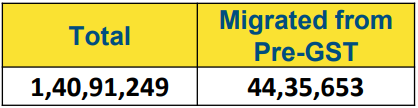
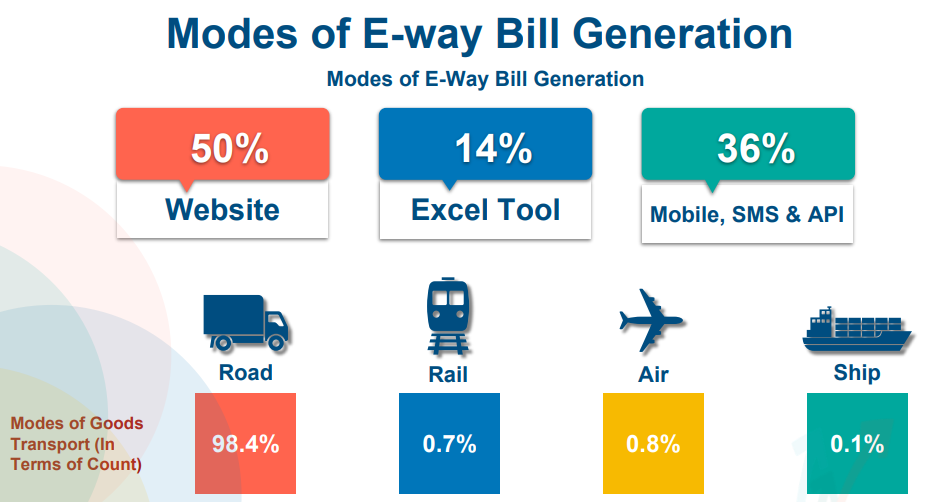
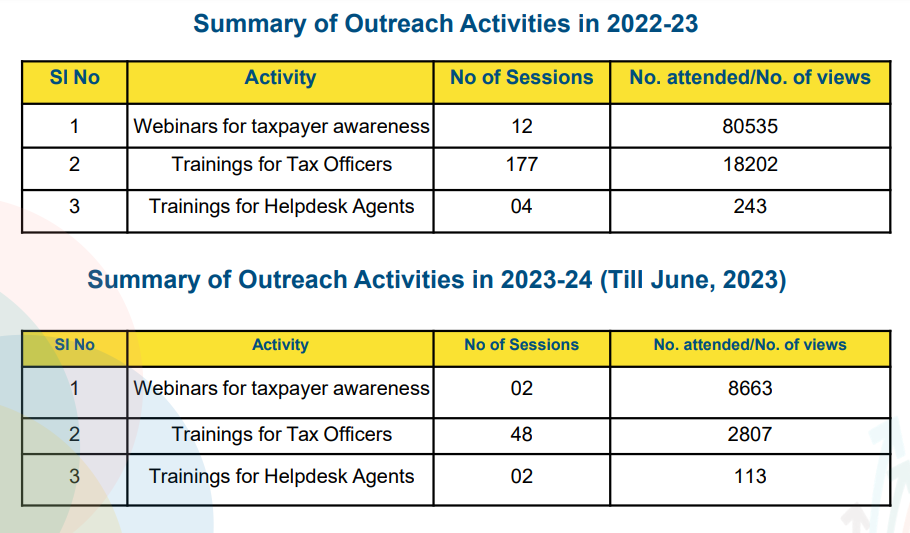
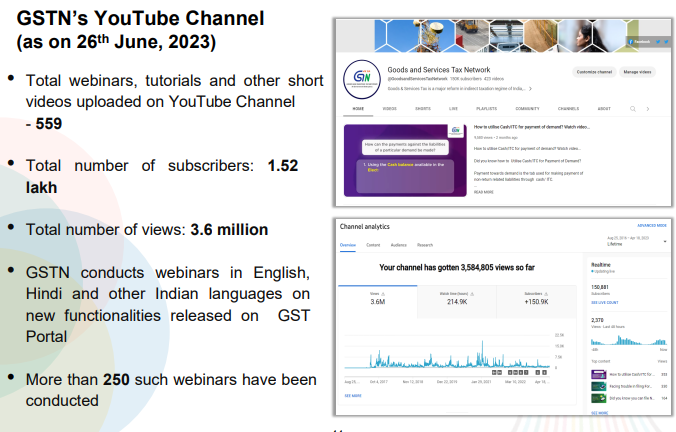
6 years has been completed since the implementation of GST. Goods and Services Tax Network (GSTN) has published a Statistical Report on the completion of 6 years of GST.
|
|
Active Taxpayers as on 30th June, 2023 are 1,40,91,249
|
|

|
|
|
|
|
|
|
|
|
|
|
|
|
|
|
|
|
|
|
|
|
Author: CA Vaishali Kharde
|
GST has undoubtedly transformed the taxation landscape. However, there are certain areas that need to be addressed in order to ensure its continued success and effectiveness. While celebrating ‘6 Years of GST’, let’s take a moment to discuss some important issues that need to address.
|
1. The Recent Surge in GST Litigation
|
In the past two years, the world of litigation has witnessed a significant surge. We have observed the issuance of certain notices that are, quite surprisingly, deemed invalid. For instance, Best Judgement Assessment orders issued under section 62 of the CGST Act are invalid. Also, some Show Cause Notices issued without any rational.
|
Adding to this, the Gujarat High Court recently raised a crucial question regarding the power of the Directorate General of GST Intelligence (DGGI) to issue Show Cause Notices outside its territorial jurisdiction. This development holds immense importance as it directly impacts the jurisdictional authority of the DGGI and the scope of its operations.
|
Thus, while some disputes are due to genuine differences in interpretation, others may be a result of inadequate understanding or compliance gaps. To guarantee proper compliance, it is essential for businesses to stay updated on the latest GST regulations which may help to mitigate the risk of litigation to some extent.
|
2. Notices with respect to ITC
|
Recently, many instances are reported wherein notices are for the discrepancy in claim of input Tax Credit (ITC) as per GSTR-2A /2B and as per GSTR-3B. During the scrutiny of these notices, it is observed that the substantial amount of variation in ITC claim is on account of ITC availed on, inter-alia, import of goods while GSTR 2A reflects only the ITC on inward supplies received from the registered person.
|
Therefore, the reason for differences is that the GST system is not taking into consideration the amount of import of goods (these details are already available with Customs Authorities) and thus, GST system are inadvertently showing that GST payer has claimed higher credit (whereas GST payer has claimed eligible credit of IGST paid on import of goods).
|
Furthermore, several notices are issued without taking into account GSTR-9 filed. As a result, businesses are filing appeals even for error, resulting in a blockage of operational funds due to the 10% pre-deposit requirement.
|
Thus, businesses must take the necessary steps to correct any differences in GST returns filed in order to reduce the risk of litigation due to disclosure error.
|
3. Numerous changes in GST Act and Rules thereunder
|
The trend of numerous changes in GST Act and Rules thereunder has continued even in 6th year which increased uncertainty. Implementing these changes at different times throughout the year is challenging for businesses. It requires adaptability, agility, and a keen eye for detail to ensure compliance and smooth operations.
|
4. Withdrawal of the exemption and/or increase in the GST rate during the fiscal year
|
After implementation of GST, it has suggested numerous significant amendments to GST rates in addition to GST laws and procedures. Significant changes to GST rates were announced on July 18, 2022, including the elimination of exemptions on several consumable commodities and services, a rise in GST rate, and so on.
|
Implementing these amendments throughout the fiscal year is difficult since 'time of supply' provisions need to be followed on the date of such changes in order to determine the applicable GST rate. If these changes are introduced at the beginning of the fiscal year, implementation may be eased.
|
5. E-invoicing implementation could be difficult for small enterprises.
|
The GST Council has announced that the next phase of e-invoicing for enterprises with an annual turnover of more than Rs.5 crore would begin on August 1, 2023. By the end of the fiscal year, it may be extended to enterprises having a revenue of more than Rs.1 crore.
|
The objective of this move is to simplify and digitise the invoicing process, making it more efficient and transparent. While this is a positive step towards simplifying tax compliance, it is important to note that establishing real-time e-invoicing for small enterprises with limited compliance infrastructure may be challenging.
|
6. Duplication of disclosure of same details
|
GST payer is required to furnish details with respect to export supplies at the time of filing shipping bills and once again in GSTR-1 (Table 6A) and further at GSTR-3B . Furthermore, details about imports supplied at the time of submitting the Bill of Entry (BoE) are required to be furnished again at GSTR-3B . Similarly, details are uploaded for e-way bill and/or E-Invoice (for supplies above prescribed threshold for intra-State and inter-State movement) are again confirmed at the time of GSTR-1.
|
The aforesaid requirement to disclose same details two or three times, inherently creates a situation of reconciliation. Currently, GST payer is required to prepare the numerous reconciliation of GSTR 1 vis-a-vis GSTR 3B, GSTR 2A or 2B vis-a-vis GSTR 3B, GSTR 3B vis-à-vis E-Invoice, E-Invoice vis-à-vis E-way bill, GSTR 3B vis-a-vis financials, financials vis-a-vis annual return etc.
|
GST Council should look on reducing compliances to reduce reconciliations.
|
Thus, let's work together as stakeholders to fix these issues and make GST genuinely a gift for consumers as well as businesses on its ‘6th’ anniversary. Let's endeavour to make the GST system more effective, transparent, and taxpayer-friendly.
|
Plea from Flair Writing Industries
|
|
|
|
|
|
5. Lawgics by Ms.Nidhi Aggarwal
|
|
Ms. Nidhi Aggarwal is delighted to present GST Notes/Law in a simplified manner under the title “ Lawgics ”. The note is prepared in a series of PDFs encompassing GST Law and the interpretations thereof in simple manner. The author has so far added 123 slides with a great vision to spread complex GST law in a simple manner amongst the taxpayers, tax professionals, students and knowledge seeker is presenting the Lawgics in piecemeal at regular interval.
|
|

|

|
|
|
|
|
6. GST Notes by CMA Anil Sharma
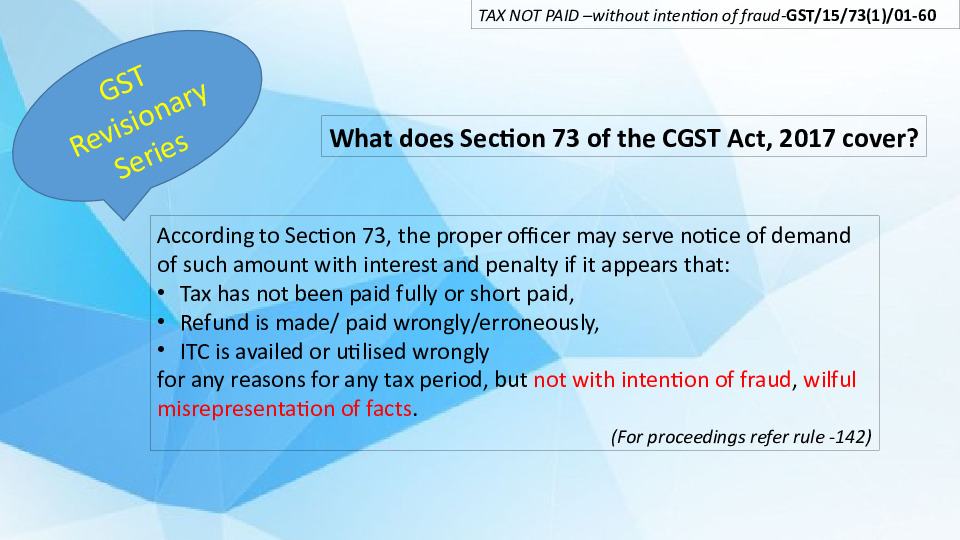
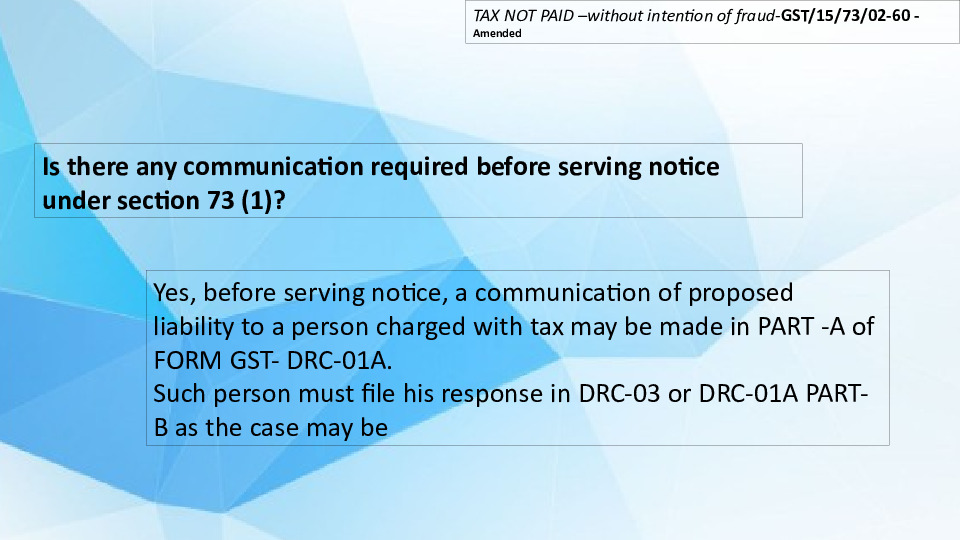
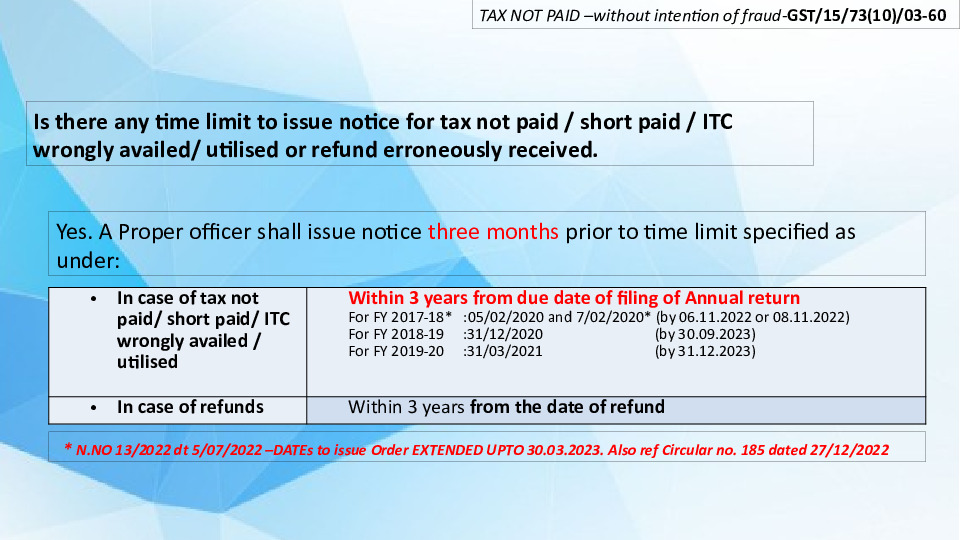
1) Shri CMA Anil Sharma, Shri CMA Gurdev Singh Saini and Smt. CMA Bhawna Sharma posted Chapter-15 containing CGST Act in simple language in PPT format. This is to make dealers, professionals, academicians, students etc. understand the basics of GST laws. Each Chapter in CGST Act, 2017 is explained in the form of Slides as given below for easy understanding of the Act:
|
Chapter-15 slides given below:-
|
|
|
|
|
|
|
|
|
|
|
7) Book by CMA Anil Sharma
|
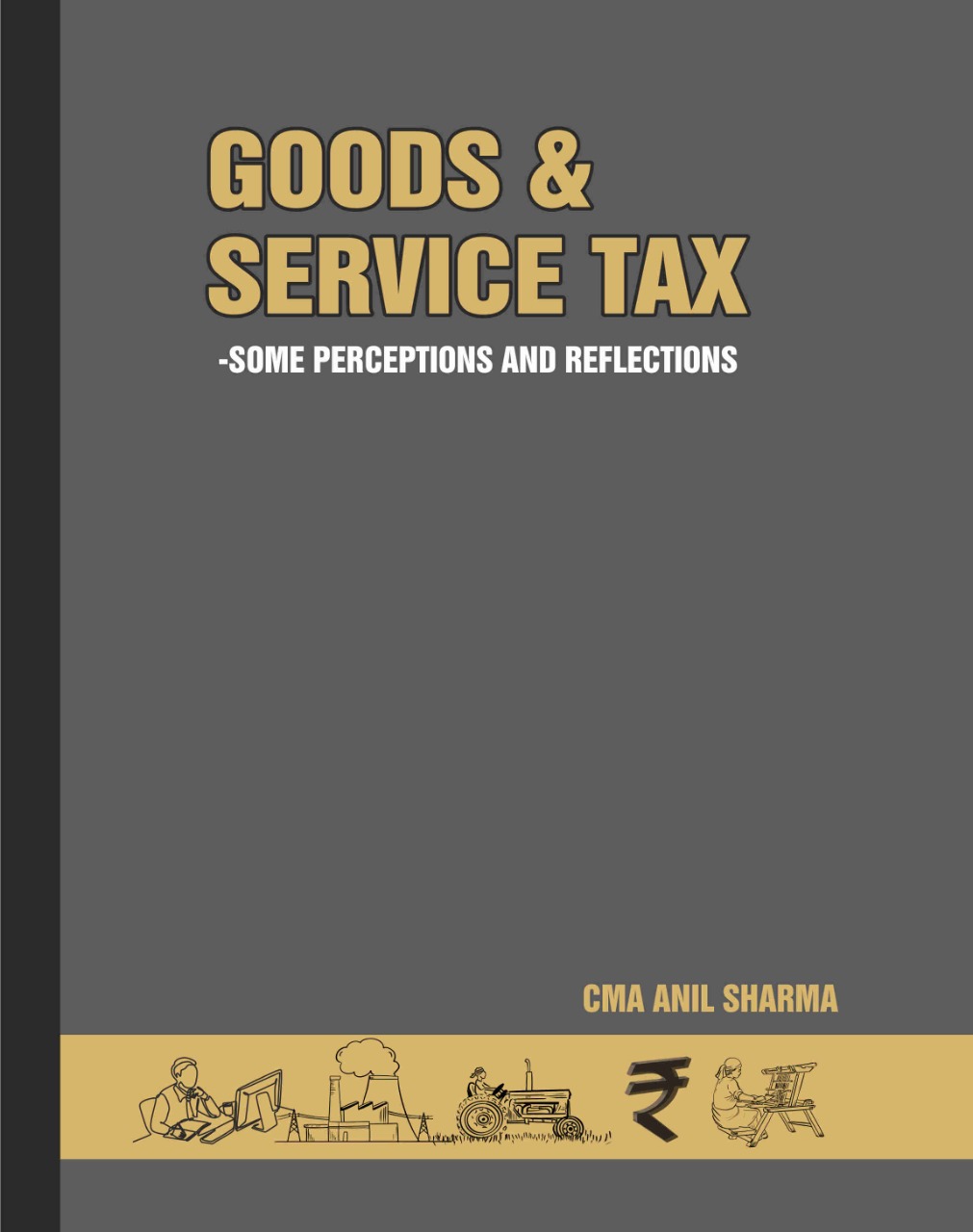
Book by CMA Anil Sharma, B.Com (Honrs), M.Com, FCMA co-author of the book "Handbook on GST Audit by Tax Authorities" has authored yet another book title Goods & Service Tax – Some Perceptions and Reflections. Buy now at Price Rs. 240- (Rs.300/- minus 20% Discount).
|
|
|
|
If you wish to buy this book please write to us at taxupdate.otu@gmail.com
|
|
|
|
You wish to publish your Article?
|
If you wish to share your article with maximum readers then please send the article at taxupdate.otu@gmail.com. We shall publish it with all due credit to you.
|
|
|
|
|
|
|
Hope the above updates is of use to you. Please share your input and feedback at taxupdate.otu@gmail.com
|
|
|
|
|
|
 
|
Visit our website
|
OTU provides you
|
- Articles on various topics
|
|
- Media - GST, Income Tax & Press R.
|
|
- Notes / Newsletter at 149/ p.a.
|
|
|
|
|