onlinetaxupdate team wish to express sincere thanks to all the readers, authors, subscribers for the support extended to us.
|
Newsletter 112 dated 23.02.2024
|
|
|
|
|
|
|
|
|
Dear Reader,
|
Please find newsletter for your reading and reference.
|
|
Index of the Newsletter
- Recent updates
- GST Portal
- Lawgics by Ms.Nidhi Aggarwal
- GST Notes by CMA Anil Sharma
- GST/IT in media
- Press Release
|
|
|
|
|
|
|
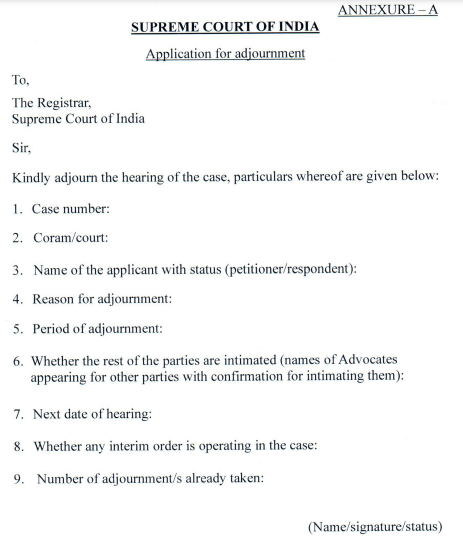
The Hon'ble Supreme Court issued Circular F. No. 4 /Judl./2024 dated 14th February, 2024 laying down the procedure/modalities relating to circulation of Letters for adjournment of cases.
|
F. No. 4 /Judl./2024
14th February, 2024
|
The following will be the procedure/modalities relating to circulation of Letters for adjournment of cases:
|
1) Procedure in after-notice miscellaneous matters:
|
a) No letters for adjournment shall be entertained in cases:
|
i) relating to bail/anticipatory bail;
|
ii) where exemption from surrendering has been granted;
|
iii) where interim order is operating in favour of the party who seeks adjournment; and
|
iv) where suspension of sentence has been sought for.
|
b) In other matters, letters for adjournment can be circulated till one day prior to publication of main list.
|
3) Specific reason for seeking adjournment and number of adjournments already sought shall be mentioned.
|
4) It is mandatory to obtain consent/no objection of advocates/parties appearing on the other side / Caveator before circulating the letter for adjournment.
|
5) Letters can be circulated by one party/counsel to the case only once.
|
6) Two consecutive adjournments, irrespective of which party is seeking an adjournment, shall not be permitted without the matter being listed before the Court.
|
7) Matters so adjourned will be listed before the Court within an outer limit of four weeks with a specific date of listing and no mentioning for seeking preponement of the date in such matters is permitted.
|
8) Letter(s) seeking adjournment shall be placed before the competent authority. If such request(s) is/are considered favourably, the list of matters not listed as per schedule will be notified on the website of this Court.
|
9) Circulating letters for adjournment in fresh and regular hearing matters is not permitted.
|
|
|
|
|
|
|
|
Central Board of Indirect Taxes and Customs (CBIC) issued Notification no. 02/2026 – Central Tax dated 07.05.2026.
|
GOVERNMENT OF INDIA
MINISTRY OF FINANCE
DEPARTMENT OF REVENUE
|
Notification No. 02/2026 – Central Tax dated 07.05.2026
|
S.O. 2286(E).— In exercise of the powers conferred by sub-section (1A) of section 101A of the Central Goods and Services Tax Act, 2017 (12 of 2017) (hereinafter referred to as the said Act), the Central Government, on the recommendations of the Council, hereby empowers the Principal Bench of the Appellate Tribunal, New Delhi constituted under sub-section (3) of section 109 of the said Act, to hear appeals made under section 101B of the said Act.
|
This notification shall be deemed to have come into force on the 1st day of April, 2026.
|
BALASUBRAMANIAN KRISHNAMURTHY,
Joint Secretary
|
|
|
|
|
|
CBIC issued Notification No. 35/2026-Customs dated 24.08.2026 regarding Amendment in the Export Policy of Wheat
|
|
|
|
|
|
Central Board of Indirect Taxes and Customs (CBIC) issued Instruction no. 20/2026-Customs dated 07.10.2026 regarding Amendment to Electronics and Information Technology Goods (Requirement for Compulsory Registration) Order, 2021 – inclusion of Screen Protectors for smartphones
|
|
|
|
|
|
Union Commerce and Industry Minister Piyush Goyal on Wednesday set March 31, 2027 , as the deadline for complete digitisation of services provided by the Directorate General of Foreign Trade (DGFT), aiming to eliminate the need for physical visits to its offices from 01.04.2027, according to a statement by the Ministry of Commerce and industry.
|
The announcement came as Goyal virtually inaugurated Vanijya Bhawan and Udyog Bhawan in Jaipur, making Rajasthan the first state to bring offices of the Ministry and its associated organisations under one roof.
|
Congratulating the Department of Commerce and the Department for Promotion of Industry and Internal Trade (DPITT) on the initiative, Goyal called replicating the model across the country, particularly in all state capitals. He said the proposed centres would serve as one-stop hubs for promoting exports, investments, international trade and industrial development, while supporting businesses in contributing to the vision of Viksit Bharat 2047.
|
"Goyal said that the co-location of offices, digitisation and introduction of faceless assessments would enhance transparency, accountability and public confidence. A unified presence of the Ministry of Commerce and Industry in each State would assure businesses and stakeholders that they could access support and guidance through a single location," the release said.
|
He further emphasised that the initiative should go beyond bringing government offices under once roof and focus on improving service delivery, simplifying procedures and enhancing ease of doing business. He also called for greater participation from government departments, state representatives, exports, importers, investors and industry stakeholders to ensure effective implementation, the Ministry said in the release.
|
Setting March 31, 2027, as the deadline for complete digitisation, Goyal directed that all services, including applications for licenses, permits and Special Chemicals, Organisms, Materials, Equipment and Technologies (SCOMET) approvals, be made available entirely online.
|
He further directed the digitisation of historical data and records maintained by Regional Authorities (RAs) of the Directorate General of Foreign Trade (DGFT) across the country.
|
The Minister said that April 1, 2027 , applicants should no longer be required to physically visits government offices to access these services.
|
For cases requiring verification of original documents, Goyal suggested setting up dedicated counters and installing computers at office entrances to facilitate document verification and uploading.
|
He also advocated greater reliance on self-certification and a trust-based approach towards citizens and businesses, emphasising the need to reduce unnecessary procedural requirements.
|
"Goyal also called for the simplification of processes, formats, and forms, and urged the departments to break organisational silos and work collectively to deliver better outcomes for businesses and citizens. He said that improved coordination between the two departments and the various organisations under the Ministry would be essential to achieving the objectives of the initiative," the release added. (ANI)
|
|
|
|
|
|
|
|
Directorate General of Foreign Trade (DGFT) issued Trade Notice 30/2026-27 dated 13.10.2026 regarding Simplified procedure for expedited issuance of import authorisations for silver bullion under ITC(HS) 7106
|
|
|
|
|
|
|
|
Directorate General of Foreign Trade (DGFT) issued Notification No. 44/2026-27 dated 12.10.2026 regarding Amendment in Export Policy of Prepared Culture Media
|
|
|
|
|
|
|
|
Directorate General of Foreign Trade (DGFT) issued Notification No. 43/2026-27 dated 12.10.2026 to make Amendment in Import Policy of Glufosinate and its salts covered under Chapter 38 of Schedule–I (Import Policy) of ITС (HS), 2022
|
|
|
|
|
|
Office of the Commissioner of Commercial Taxes, Nandanam, Chennai issued Circular No. 07/2026-TNGST dated 25.06.2026 regarding GST- Return Scrutiny under Section 61 of the TNGST Act, 2017 and adjudication proceedings - Prior approval for suo moto scrutiny notices and ex parte orders.
|
Detailed guidelines were issued to the Proper officers for adjudication in the Assessment Circles, in the Circular cited, to make adjudication process more transparent, reduce the litigations and realize revenue.
|
In this direction, system generated scrutiny notices based on risk parameters have been made available to the Proper Officers to ensure uniformity and monitoring of the return scrutiny process. Instructions have also been issued to all Proper Officers to process the system-generated scrutiny notices by following the provisions of the GST Acts and Rules and training has been imparted for adherence to quality standards in the adjudication process.
|
The scrutiny notices generated by the IT wing of the department and made available are detailed below:
|
|
|
|
|
|
|
|
CBIC issued clarification via F. No. CBIC-20016/75/2025-GST dated 25.09.2025 on requirement of separate GST registration for importers storing goods in Warehouses in other States
|
|
|
|
|
|
|
|
Department of Trade and Taxes, New Delhi issued Circular No. F.IV/42/T&T/Admn./Misc./2025/8464-67 date 23.07.2025
|
Several instances have come to the notice of the Competent Authority that GSTIs/ Field Functionaries to whom the physical verification visit of 'High Risk Score' Registration Application are marked, are not submitting the verification reports on time and in some cases the report is submitted with remarks that the address mentioned in the ARN is not in their jurisdiction.
|
The Competent Authority has taken a serious note of the aforementioned conduct of officials and directed that it is imperative upon the GSTI to whom the visit is marked, to conduct the visit and submit the report timely.
|
Any dereliction shall be viewed adversely and invite strict action as per rules.
|
|
|
|
|
|
Income tax department issued FAQs on the Taxation and Other laws (Amendment) Bill, 2026.
|
|
|
|
|
|
Department of Consumer Affairs, Weights and Measures Unit, issued circular on 18.09.2025 vide no.I-10/14/2020-W&M to relax provisions contained in Rule 18(3).
|
Pursuant to advisory dated 09.09.2025 on the above subject, the Central Govt., has received representation from industry & trade associations about the need for simplifying the procedure for legal compliance by manufactures and importers of pre-packaged commodity in the wake of GST revision.
|
2. After considering the concerns of the industry and in supersession of earlier advisory dated 09.09.2025, the Central Government, has decided to allow such manufacturers/ packers/ importers / their representatives who may like to voluntarily affix additional revised price sticker, on unsold packages manufactured before 22nd September, 2025 and are lying with them, provided the original price declaration on the package is not obstructed. In this context, it is underlined that extant Rules do not mandate affixing revised price sticker by manufacturer/ packer/ importer/ their representatives on unsold packages manufactured before 22nd September, 2025 and are lying with them.
|
3. Apart from above, by virtue of powers vested under Rule 33 of the Legal Metrology (Packaged Commodities) Rules, 2011, the Central Government, has decided to waiver off the requirement in Rule 18(3) to issue Advertisement, about revised prices in two newspapers by manufacturers and importers.
|
4. Consequently, the manufacturer/ packers/ importers are now required to send only circulars to wholesale dealers/ retailers, etc. about revised prices with copy thereof endorsed to Director, Legal Metrology of the Central Government and Controller, Legal Metrology of All States/ UTs and to ensure price compliance at the retailer level.
|
5. However, the manufactures/ packers/ importers shall take immediate measures to sensitise dealers /retailers/ consumers about revision in GST rates through all possible channels of communication including electronic, print and social medial.
|
6. It is also clarified that any packaging material or wrapper which could not be exhausted by the manufacturer or packer or importer prior to revision of GST, may be used for packing of material upto 31st March, 2026 or till such date the packing material or wrapper is exhausted, whichever is earlier, after making corrections required in retail sale price (MRP) on account of implementation of GST by way of stamping or putting sticker or online printing as the case may be, at any place on the package.
|
7. Further to Para-6 above, it is informed that the declaration of the revised unit sale price on unsold pre-packaged commodities/ unused packaging material or wrapper bearing a pre-printed MRP is not mandatory. However, manufacturers/ packers/ importers / their representatives may declare the revised unit sale price voluntarily, if they so desire.
|
|
|
|
|
|
|
|
|
GSTN issued Advisory no. 689 dated 20.11.2026 In accordance with Notification No. 05/2026–Central Tax dated 26.10.2026, effective from 01.11.2026, Metro Rail has been included under Rule 138(2A) of the CGST Rules, 2017, for the transportation of goods. Accordingly, Metro Rail has been introduced as an additional mode of transport in the E-Way Bill system. Taxpayers and transporters can now select …
|
|
|
|
|
|
|
|
|
|
|
GSTN issued advisory no 688 dated 17.11.2026 regarding the implementation of e-invoicing for RCM and import of services.
|
|
|
|
|
|
|
|
3. Lawgics by Ms.Nidhi Aggarwal
|
|
Ms. Nidhi Aggarwal is delighted to present judgment with a great vision to spread complex GST law in a simple manner amongst the taxpayers, tax professionals, students and knowledge seeker.
|
|
|
|
|
|
|
|
4. GST Notes by CMA Anil Sharma
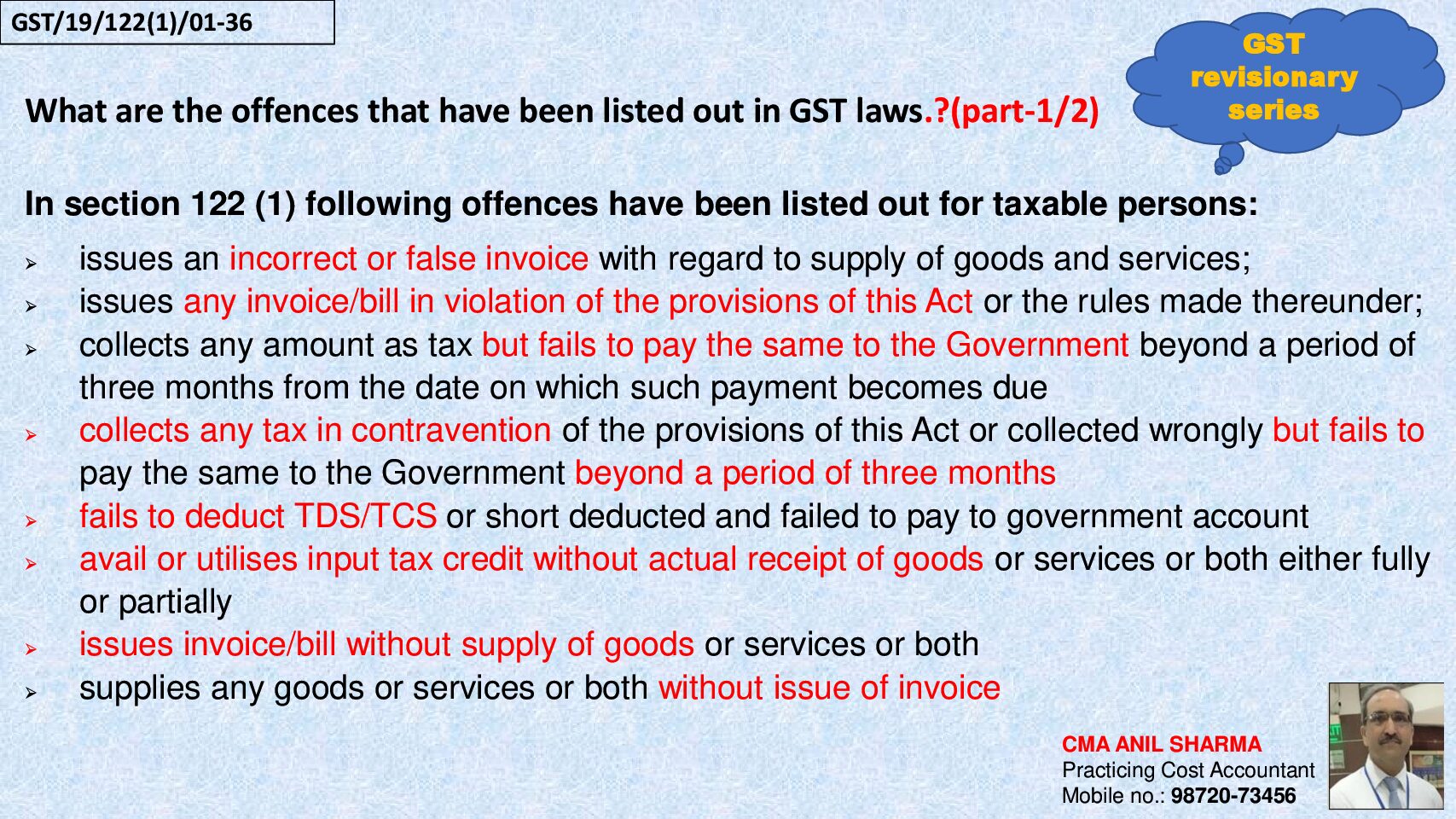
1) Shri CMA Anil Sharma, Shri CMA Gurdev Singh Saini and Smt. CMA Bhawna Sharma posted Chapter-19 recently containing CGST Act in simple language in PPT format. This is to make dealers, professionals, academicians, students etc. understand the basics of GST laws.
|
Chapter-19th slide is given below.
|
|
|
|
|
|
|
|
|
5. GST/Income Tax in Media
|
|
|
- Retail e-invoicing pilot likely from April 2027 to improve GST compliance
- Alternate Mechanism of Liability and ITC in Form GSTR-3B - Public Consultation till 30th Nov.,26
- Next-Gen GST and India's next phase of growth
- ₹5.55 Crore GST Credit Under Scanner, Pharma Company MD Arrested
- GST Fraud: Partner Arrested for Rs 15.78 Cr ITC Claims
- Central GST officer caught accepting bribe in Bengaluru
- 170 vehicles detained, goods worth Rs 5 cr seized: Cheema
- Telangana tax dept holds officers personally accountable for unauthorised AI sharing of taxpayer data
- Tax department turns to AI for sharper scrutiny, compliance
- CBI Catches CGST Superintendent and Consultant Red-Handed in ₹1 Crore Bribery Trap Over New Panvel Flat Redevelopment
- Tax officials barred from sharing taxpayer data with AI tools
- Sirmaur pharma company MD held in Rs 6.55 crore GST refund fraud case
- West Bengal AAR says actual-cost electricity recovery not liable to GST
- Haryana: GST officer, CA held red-handed taking ₹3 lakh bribe
- HDFC Life Insurance faces ₹3,365 crore GST tax demand and penalty after appeal order
- GST data to track Andhra Pradesh’s economic growth live
- Gujarat Assembly passes GST amendment, livestock feed regulation bills
- SBI to use UPI data to lend to small businesses without GST registration
- IAMAI wants 5% GST dropped for app-based rides
- Rajasthan govt seizes 44 vehicles in 3 weeks in tax evasion crackdown
- States reject Gauba panel's push for single, nationwide GST registration
- Maruti sees strong growth as GST 2.0 pushes more customers to upgrade to cars, says Partho Banerjee
- Credai-Gujarat seeks GST clarity on FSI purchases
- Tata Steel gets major Supreme Court relief in ₹890 crore GST dispute
- TN Govt earns ₹50,845 crore from sales tax and excise revenue in liquor, aims for revenue expansion and de-addiction initiatives
- Despite GST Council’s no, legislators in UP, other states want Vidhayak Nidhi outside tax net
- CEAT wins ₹107 crore GST appeal, says no impact on financials or operations
- Mahindra Holidays receives ₹11.34-cr GST demand notice
|
|
|
- Income Tax tribunal open to camp offices in HP, J-K to ease litigants’ burden; pendency down from 3 lakh to 60,000
- Can a widow be taxed on Rs.60 lakh gifted by her late husband? ITAT ruling offers clarity
- Ahead of Budget 2027, Sebi recommends removal of 12.5% LTCG tax imposed on foreign investors
- FM Nirmala Sitharaman for dialogue over litigation in business disputes
- Uttar Pradesh Global Capability Centres Policy, 2024: Key features, incentives, and eligibility
- Will the government extend the September 30 tax audit deadline?
- Centre moves Supreme Court over striking down of Income Tax Section 147A
- She declared Rs.43,796 income but omitted Rs.14.02 lakh interest from her ITR
- Mumbai police arrest 2 income-tax officials in fake raid, extortion case
- Partnership firm declared rental income, but landowners were taxed again; ITAT Bangalore rules against double taxation
- Income Tax searches Dentsu Media Group offices over suspected evasion
- Reliance Jio gets tax relief as ITAT deletes ₹11,003 cr disallowance
- High-value gifts to influencers can trigger tax, say CAs
- Rs 555 crores smuggled abroad by creating fake documents! The infamy of CA siblings in Kolkata exposed
- ITAT Mumbai ruling: ₹16.64 lakh cash seized in tax raid, taxpayer wins ₹8.87 lakh unexplained cash dispute
- FAST-DS 2026: Income Tax Department makes Form 1 available for declaring undisclosed foreign assets
|
|
|
|
|
|
|
|
|
Press release dated 18.08.26
|
Based on ground intelligence and analysis of data on outward foreign remittances, the Income Tax Department has identified several suspicious entities that remitted large amounts of foreign exchange over the last three years. A nationwide network of entities engaged in remitting funds abroad was uncovered during a search operation conducted on a group of fictitious charitable trusts involved in providing accommodation entries against bogus donations/contributions. Preliminary ground verification revealed that the entities making these remittances were either non-filers or were filing income-tax returns showing very small turnovers. The turnovers had no apparent correlation with the large amounts of money being remitted abroad. They also did not appear to match the stated purpose of the remittances, such as payment for freight, import of software, or import of consulting services. Further ground-level intelligence revealed that these entities were not actually operating from the addresses declared by them.
|
Further analysis of the data also revealed that a large number of Form 15CB certificates were issued by a relatively small group of professionals. The remitted funds were also received by a clustered group of entities. Form 15CB, read with Rule 37BB of the Income-tax Rules, 1962 (corresponding to Form 146 read with Rule 220 of the Income-tax Rules, 2026), requires the Accountant certifying a foreign remittance to verify its taxability with reference to the books of account and other relevant documents. However, the findings raise concerns about whether adequate due diligence was carried out by the Accountants before issuing these certificates.
|
On 18.08.2026, the Department launched a nationwide detailed verification exercise to verify these foreign remittances, focussing on shell entities, the persons behind them, and the professionals who have issued Form 15CB certificates. Entities located in districts along the country’s land borders and remitting significant amounts of money abroad have also been covered in the exercise. The exercise has covered approximately 394 entities (including 117 entities located in land-border States), and 36 professionals.
|
The Department emphasises that Accountants issuing certificates in Form 15CB/Form 146 are expected to exercise due care, diligence and professional judgment. They should properly examine the underlying transactions and relevant facts before certifying the remittances, as these certifications play an important role in maintaining trust in the system.
|
Further investigations are currently underway.
|
|
|
|
|
|
|
|
Months long investigation reveals defrauding exchequer of over Rs. 2,500 crore (approx.); Rs. 75 lakh cash, 160 MT areca nuts seized (approx.); Nine arrested
|
Syndicates imported areca nuts into India from Indonesia, Thailand, Malaysia and other South-East Asian countries by mis-declaring country of origin as Bangladesh
|
Licence of Customs Broker firm responsible for clearance of most of the fraudulent imports of areca nuts suspended
|
Press release no. 2300102 dated 16.08.2026
|
The Directorate of Revenue Intelligence (DRI), in a month-long intelligence-led operation, has dismantled a major network involved in importing South-East Asian areca nuts into India by falsely declaring them as Bangladeshi origin and fraudulently availing concessional duty benefits under the South Asian Free Trade Area (SAFTA). The investigation has so far revealed a potential revenue loss of more than Rs. 2,500 crore. Nine persons have been arrested in connection with the case.
|
|
The import of areca nuts into India attracts a Basic Customs Duty (BCD) of 100%. However, eligible imports of areca nuts made under SAFTA agreement are fully exempt from customs duty. The areca nuts originating from Bangladesh are entitled to exemption under SAFTA if imports meet the prescribed Rules of Origin criterion.
|
|

|

|
|
Intelligence gathered and developed by DRI indicated that certain syndicates were fraudulently claiming the SAFTA benefits on a very large scale on imports of areca nuts. While they were importing areca nuts originating and sourced from Indonesia, Thailand, Malaysia and other South-East Asian countries, they were mis-declaring the country of origin of areca nuts imported into India as Bangladesh.
|
|
|
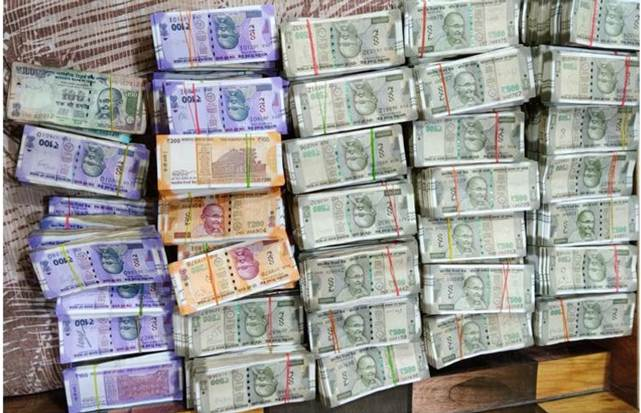
Thereafter, simultaneous searches were conducted at multiple premises linked to importers, Customs Brokers and IEC holders in Kolkata and Visakhapatnam. Several incriminating documents and substantial evidences establishing the South-East Asian origin of Areca nuts were recovered. DRI officers also recovered and seized around Rs. 75 lakh in cash, believed to be sale proceeds of the illegally imported goods. A live consignment of around 160 MT of areca nuts.
|
The investigations so far have revealed huge scale of fraudulent imports of areca nuts in which exchequer has been duped of customs duty in excess of Rs 2,500 crore in recent years. The masterminds were facilitating the import of areca nuts from South-East Asian countries into one of the EPZ in Bangladesh and thereafter routing the goods to India merely changing containers and bags and passing them off as Bangladeshi-origin areca nuts. They had fraudulently obtained SAFTA Certificates of Origin from Bangladeshi authorities. The masterminds were charging substantial commissions from Indian importers for arranging the routing, documentation, clearance and transportation of the consignments and massive collection of payments in cash... The investigation has also brought to light the use of hawala channels and dummy entities for movement and layering of the financial proceeds.
|
Investigation has further revealed that one Customs Broker firm was particularly responsible for clearance of most of the fraudulent imports of areca nuts identified in the case. Consequent to the ongoing investigation by DRI, the Customs Broker's licence has been suspended by the competent authority. Nine persons have been arrested so far in connection with the case.
|
Such illegal imports adversely impact domestic areca nut growers and legitimate trade by creating unfair price distortion, and disrupting the level playing field for legitimate businesses. Besides causing huge loss to the Government revenue, these illegal activities also undermine regulated trade practices and economic security in the border regions.
|
With this operation, DRI has effectively disrupted a well-organised network involved in systematic mis-declaration of country of origin, fraudulent availment of SAFTA benefits and large-scale evasion of customs revenue.
|
|
|
|
|
|
|
|
The amendments in the MSMED Act to facilitate growth and development of MSME sector
|
Press release no 2296358 dated 07.08.2026
|
The Micro, Small and Medium Enterprises Development (Amendment) Bill, 2026, was passed by the Lok Sabha on 7th August, 2026, subsequent to its passing by the Rajya Sabha on 3rd August, 2026. The Micro, Small and Medium Enterprises Development Act (MSMED Act) was notified in 2006 and has completed 20 years of its enactment. Over the years, the MSME landscape has witnessed rapid changes due to technological advancements, emergence of IT enabled systems and changing legal landscape, which required that the MSMED Act be amended to facilitate growth of MSMEs. The number of MSMEs registered on Udyam have increased from 1.65 crore as on 01.04.2023 to 9.16 crore now. MSME sector provides employment to over 40 crore people and is considered to be the backbone of Indian economy.
The amendments in the MSMED Act have been done to strengthen the legal framework governing the development of MSME sector, improving the ease of doing business, creating an enabling business environment through decriminalisation, providing institutional mechanisms for promotion of MSMEs and addressing delayed payment issues faced by the Micro and Small Enterprises.
|
The following are the salient features of the amendments done in the MSMED Act:
i. To align the Act with changing MSME landscape: MSME classification based on twin criterion of “Investment in plant/machinery” and “Turnover” has been incorporated in the Act. The Bill provides permanence to the Udyam Registration Portal as a Digital, free, and voluntary registration platform for MSMEs. The registration for MSMEs is voluntary.
|
ii. To strengthen the mechanism for addressing Delayed Payments and provide for enforcement of arbitral awards for the MSEs: The amendment provides for Online Dispute Resolution to ensure that MSEs are able to resolve their disputes in a timely and cost-effective manner. It mandates the courts to order for payment at least fifty per cent. of the awarded amount to the micro and small enterprises suppliers, if the application to set aside decree, award or order is pending for more than six months.
|
iii. To ensure faster adjudication of delayed payments disputes: The amendment introduces timelines to ensure faster adjudication of delayed payment disputes. Under the amended provisions, the MSEFCs or mediation service provider, as the case may be, is required to complete the mediation within a period of ninety days from the date fixed for first appearance. Thereafter, the MSEFCs are required to refer the matter for arbitration within a period of thirty days from the date of termination of mediation. Subsequently, the MSEFCs or any institution or centre providing alternative dispute resolution services, as the case may be, is required to make the award within a period of ninety days from the date of completion of pleadings.
|
iv. To strengthen recoveries of dues: Under the amended Act, any mediated settlement agreement or arbitral award made by the Facilitation Council, or through a mediation service provider or any alternative dispute resolution institution under Section 18, can be recovered as an ‘arrear of land revenue’ through the District Collector, Deputy Commissioner, or any notified authority in the jurisdiction where the buyer's assets are located.
|
5. To facilitate faster payments to MSMEs: All Central Public Sector Enterprises (CPSEs) to route the settlement of invoices through a Trade Receivables Discounting System Platform (TReDS) for procurement of goods and services from MSMEs. The amendment also provides an enabling mechanism for States to nudge their PSEs to avail invoice settlement through TReDS. It is pertinent to note that TReDS has emerged as an institutional platform to provide additional liquidity and ensuring timely payments to the MSMEs. The volume of invoice discounting on TReDS has increased from Rs. 40,000 crore in 2022-23 to Rs. 3.47 lakh crore in 2025-26. The compulsory routing of invoice settlements by CPSEs will further mitigate the payment issues of MSMEs.
|
v) To introduce flexibility and create enabling provisions for States to decide composition of Micro and Small Enterprises Facilitation Council (MSEFC) thereby forming more MSEFCs: The composition of MSEFCs has been rationalized to enable State governments to establish multiple MSEFCs for faster disposal of disputes regarding payments due to MSEs. The amendment also empowers the State Governments to make rules for MSEFCs.
|
vi. To enhance the Ease of Doing Business and bring trust-based regulations in the MSME ecosystem: The amendment provides for decriminalisation and replaces conviction-based fines with graded civil penalties. Earlier, under the MSMED Act, non-filing of registration or non-supply of information was penalised with conviction and a fine. Now, under the amended provisions of the Act, the penal provisions have been decriminalised. In the instances of furnishing wrong information, a warning will be issued in the first instance, and a penalty will be levied in case of second and subsequent instances. The conviction and fine for non-disclosure of unpaid amounts with interest in annual accounts by buyers has been replaced with a warning on the first instance, a penalty for the second instance, and a fine for the third and subsequent instances. It promotes Ease of Doing Business and fosters a trust-based regulatory environment.
|
These amendments are in line with the Government's commitment to the vision of Viksit Bharat @2047. A vibrant MSME sector is the key for achieving inclusive, sustainable and employment-intensive economic growth. The amendment of MSMED Act will boost formalisation of enterprises, provide pathway for scaling-up of MSMEs, enabling them to become Champions of growth. This will also augment Ease of Doing Business and promote compliance.
|
|
|
|
|
|
|
Hope the above updates is of use to you. Please share your input and feedback at taxupdate.otu@gmail.com
|
|
|
|
|
|
|
|
 
|
Visit our website
|
OTU provides you
|
- Articles on various topics
|
|
- Media - GST, Income Tax & Press R.
|
|
- Notes / Newsletter at 149/ p.a.
|
|
|
|
|
