
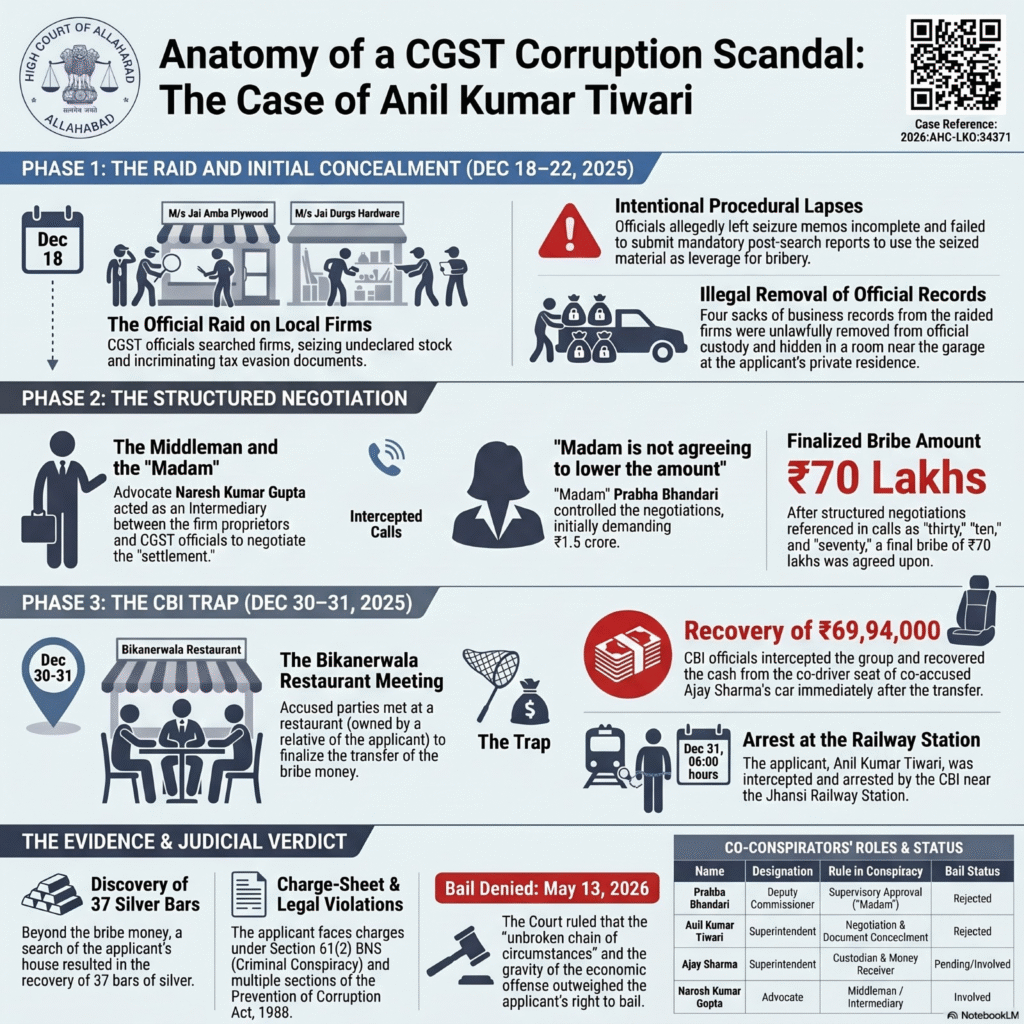
Phase 1: The Raid and Initial Concealment (Dec 18-22, 2025)
The Official Raid on Local firms : CGST officials searched firms, M/s Jai Amba Plywood & M/s. Jai Durgs Hardware, seizing undeclared stock and incriminating tax evasion documents.
Intentional Procedural Lapses: Officials allegedly left seizures memos incomplete and failed to submit mandatory post-search reports to use the seized material as leverage for bribery.
Illegal Removal of Official Records: Four sacks of business records from the raided firms were unlawfully removed from official custody and hidden in a room near the garage at the applicant’s private residence.
Phase 2. The Structured Negotiation
The Middleman and the “Madam” : Advocate Naresh Kumar Gupta acted as an intermediary between the firm proprietors and CGST officials to negotiate the “settlement”.
“Madam is not agreeing to lower the amount” : Madam” Prabha Bhandari controlled the negotiations, initially demanding Rs. 1.5 crore.
Finalized Bribe Amount: Rs. 70 lakhs – After structured negotiations referenced in calls as “thirty”, “ten”, and “seventy”, a final bribe of Rs.70 lakhs was agreed upon.
Phase 3: The CBI Trap (Dec 30-31, 2025)
The Bikanerwala Restaurant Meeting: Accused parties met at a restaurant (owned by a relative of the applicant) to finalize the transfer of the bribe money.
Recovery of Rs. 69,94,000
CBI officials intercepted the group and recovered the cash from the co-driver seat of co-accused Ajay Sharma’s car immediately after the transfer.
Arrest at the Railway Station : The applicant, Anil Kumar Tiwari, was intercepted and arrested by the CBI near the Jhansi Railway Station.
The Evidence & Judicial Verdict
Discovery of 37 Silver Bars : Beyond the bribe money, a search of the applicant’s house resulted in the recovery of 37 bars of silver.
Charge-Sheet & Legal Violations : The applicant faces charges under section 61(2) BNS (Criminal Conspiracy (and multiple sections of the Prevention of Corruption Act, 1988.
Bail Denied : May 13, 2026 : The Court ruled that the “unbroken chain of circumstances” and the gravity of the economic offense outweighed the applicant’s right to bail.

Share this content: